Australia and New Zealand sit close on a map, yet their clocks can feel worlds apart. Add long distances, island territories, and daylight saving changes, and it is easy to miss a meeting or call someone at the worst possible hour. This guide keeps it simple. You will see the main time zones, the city clocks people actually use, how daylight saving works, and how to convert times cleanly across the Tasman and beyond.
Key takeaway
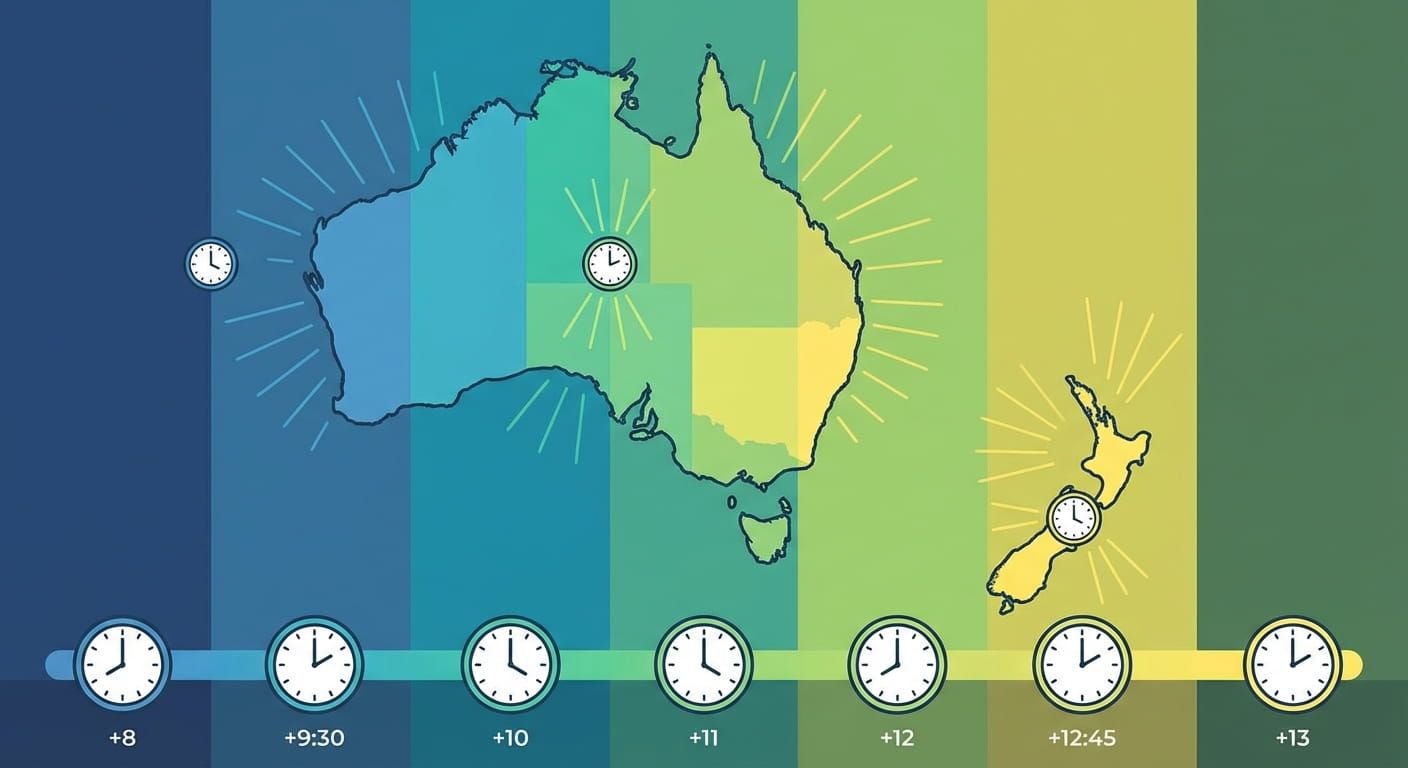
Australia runs on three core mainland time zones plus several regional ones, while New Zealand uses one main time zone plus its own daylight saving shift. Sydney, Melbourne, Canberra, Hobart, and Brisbane often differ from Perth, Adelaide, and Darwin. Auckland and Wellington usually sit ahead of eastern Australia, and the gap changes when daylight saving starts or ends on different dates. Use clear city labels, confirm daylight saving, and convert with care.
Mini quiz
Tap an option, then check your score. Answers are explained after you submit.
How Australia and New Zealand organize their clocks
Both countries anchor their civil time to UTC offsets, then adjust parts of the country seasonally. Australia is wide, spanning several time zones from west to east. New Zealand is narrower, yet it still shifts with daylight saving and has an outlying group of islands that run on a different clock. In everyday life, people usually talk in city terms, not in map terms. That is why you will see Sydney time, Perth time, Auckland time, and Wellington time mentioned more often than formal geographic boundaries.
Time tip you can trust
Always pair a time with a city and a date. The date matters because daylight saving can change the offset even if the time zone name looks familiar.
Australia’s main time zones and the cities that use them
Most visitors only need three Australian time zones: eastern, central, and western. A few regions add extra twists, including a half hour difference in the south, and special local rules in certain territories. The easiest path is to start with the places you will call and the places you will visit.
- Eastern commonly covers Sydney, Melbourne, Canberra, and Hobart. It is often labeled AEST during standard time and AEDT during daylight saving in states that observe it.
- Central commonly covers Adelaide and surrounds, plus many parts of the Northern Territory on standard time. Central time is often labeled ACST and shifts to ACDT where daylight saving is used.
- Western commonly covers Perth and much of Western Australia. It is typically labeled AWST.
Brisbane is a frequent surprise for travellers. Queensland typically stays on standard time, while cities further south may shift for daylight saving. That means Sydney and Brisbane can match for part of the year, then drift apart for months. This is a classic trap for remote classes, sports fixtures, and online gaming nights.
New Zealand time zones, plus the islands people forget
New Zealand standard time is widely shown as NZST, and daylight saving time as NZDT. Auckland and Wellington run on the same clock. Christchurch and Dunedin also align. That simplicity is great, yet the daylight saving dates may not match the dates used by Australian states. Even a one or two week difference can matter for international calls.
There is also the Chatham Islands, which run on a distinct offset that is not shared by the main islands. If you are planning travel, film shoots, or freight deliveries to outlying areas, confirm the local time carefully.
Daylight saving rules that change the gap across the Tasman
Daylight saving is the reason many people get tripped up. Australia does not apply one national rule. Each state or territory decides. New Zealand applies daylight saving nationally for its main islands. The result is a moving time gap between cities that feel like they should have a stable difference.
Keep these patterns in mind:
- Some Australian states shift their clocks forward during warmer months, while others do not.
- New Zealand shifts as a country for its main islands.
- Start and end dates can differ, which changes the gap even if both places use daylight saving.
- Airline schedules and event tickets often show local time at the venue, which can hide your home time difference.
- For online meetings, use a converter that understands daylight saving rules and dates, not just raw offsets.
A simple habit that prevents mistakes
Write times as: day, date, city, and local time. Example: Tuesday 7 April, Auckland, 9:00 am.
UTC and GMT in plain language for this region
UTC is the baseline time standard used for global coordination. GMT is often used informally, and it shows up in travel, shipping, and older systems. If you want a clear baseline for time math, use UTC. If you want a friendly explanation of how the two labels relate and why they show up differently in software and documentation, this page helps: utc vs gmt standards.
In practice, you can think of UTC as the universal reference. Australia and New Zealand sit ahead of it. Their offsets shift depending on region and daylight saving. That is why an offset only is not enough for planning months ahead. Rules matter.
Common city pairings and what they mean for daily life
People rarely schedule by geography. They schedule by the places they know. Below are the pairings that show up most in messages, calendars, and group chats.
Scheduling reality check
Sydney to Auckland feels close. The clock gap still changes across the year. Check it each time you set a new recurring meeting.
Here are a few patterns you will notice:
- Perth often sits well behind Sydney and Melbourne, and the gap can shape workday overlap.
- Adelaide can be a half hour different from many major Australian cities, which matters for live broadcasts.
- Brisbane can match Sydney for part of the year, then differ during daylight saving in the south.
- Auckland and Wellington typically sit ahead of Sydney and Melbourne, yet the difference is not always the same through the year.
A professional reference table you can scan fast
This table gives a city first way to think about time zones. It is not meant to replace official government notices for edge cases. It is meant to help you plan your day without mental gymnastics.
| Place | Typical label | Notes you will actually use |
|---|---|---|
| Sydney, New South Wales | AEST or AEDT | Often shifts for daylight saving, big hub for flights and events |
| Melbourne, Victoria | AEST or AEDT | Commonly aligns with Sydney, also shifts for daylight saving |
| Canberra, Australian Capital Territory | AEST or AEDT | Usually follows the same pattern as Sydney |
| Hobart, Tasmania | AEST or AEDT | Daylight saving is common, check dates for seasonal events |
| Brisbane, Queensland | AEST | Often stays on standard time, can differ from Sydney in warmer months |
| Adelaide, South Australia | ACST | Half hour offset catches people out, daylight saving may apply seasonally |
| Darwin, Northern Territory | ACST | Usually stays on standard time |
| Perth, Western Australia | AWST | Big gap from east coast, plan overlap windows carefully |
| Auckland, New Zealand | NZST or NZDT | Often ahead of eastern Australia, gap can change with daylight saving dates |
| Wellington, New Zealand | NZST or NZDT | Same clock as Auckland, great anchor city for national scheduling |
Time conversions that stay accurate
People often try to convert times by memorizing offsets. That works until daylight saving changes, then it breaks. A better approach is to rely on time tools that store rules for each zone and each year. If you need to plan a call between Perth, Adelaide, Sydney, and Auckland, the easiest route is to use the time zone converter and set each city as a separate reference.
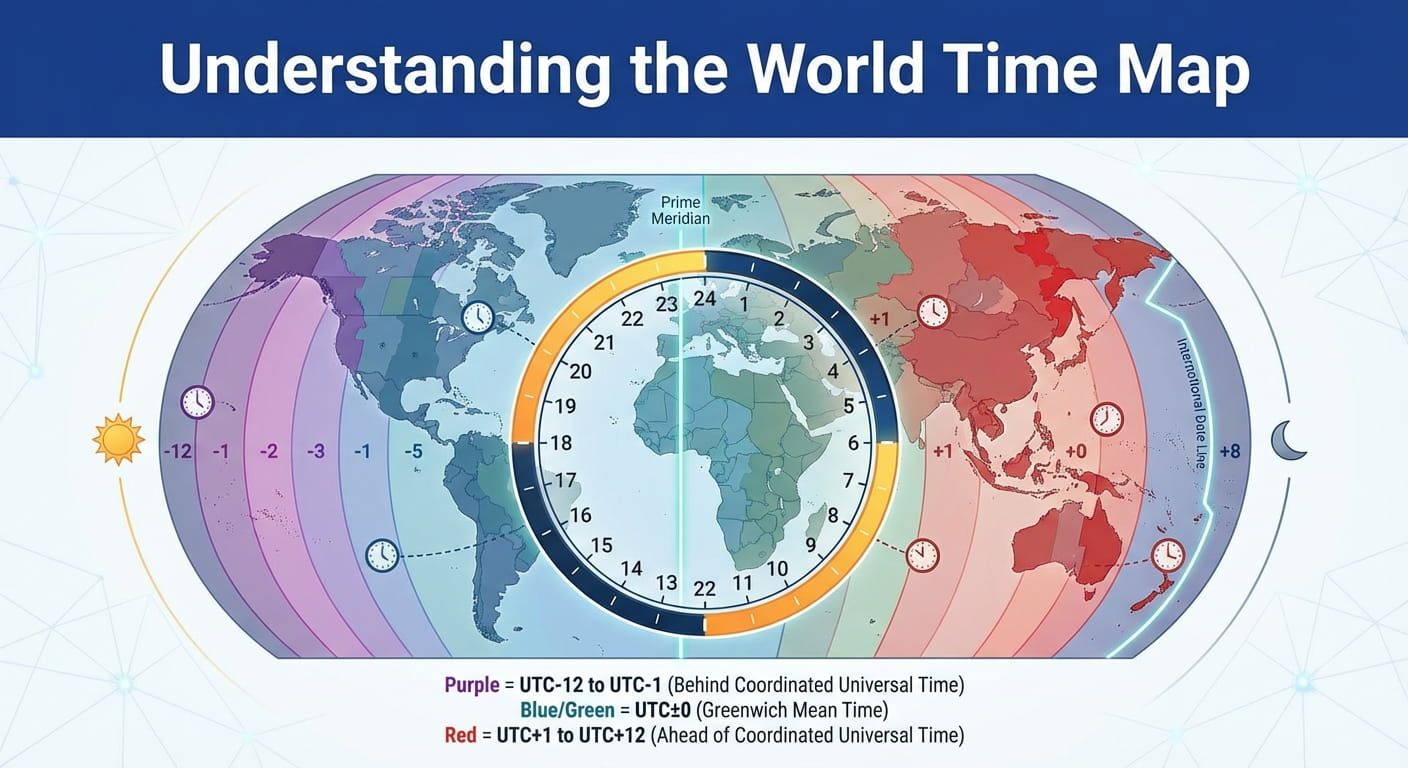
For a daily glance, the world clock is handy for keeping several cities visible at once. If you prefer a visual feel for the geography, the time zone map helps you see why the gap exists in the first place.
One clean method for planning meetings across cities
Here is a method that works for school projects, remote work, esports teams, and family calls. It removes guesswork and keeps everyone on the same page.
- Pick one anchor city. Many groups choose Sydney or Auckland.
- Pick two candidate times, not one. This gives flexibility if someone is at dinner or commuting.
- Convert both candidate times into each participant’s city time.
- Write the final invite in plain text inside the description: city, date, and time for each key location.
- On the day, double check on a live clock page if daylight saving is active in any participant city.
Template you can copy
Meeting time: Thursday 12 June, 7:00 pm Sydney, 6:30 pm Adelaide, 5:00 pm Perth, 9:00 pm Auckland.
Travel and event planning across Australia and New Zealand
If you are booking flights between Melbourne and Auckland, or planning a concert tour from Perth to Sydney to Wellington, time zones shape your whole itinerary. Departure and arrival times are shown in local time at each airport. That is helpful, yet it can hide how long your day will feel. Add in overnight flights, and your body clock can take a hit.
Event planners often need a single shared reference. Many teams use UTC internally, then publish local times for audiences. For personal plans, pick the city you will be standing in at the moment the event starts. That is the only time that truly matters. If you are coordinating with a group across multiple cities, the event planner can help you pick a time that lands in a reasonable window for everyone.
Helpful city examples you can reuse in chats
These examples use the cities people mention most. They are meant to show how to write times clearly in a message.
- “Call at 8:00 pm Melbourne time on Friday, that is 10:00 pm Wellington time.”
- “Game starts Saturday 6:30 pm Adelaide, please join ten minutes early in Sydney and Brisbane.”
- “Landing in Perth at 9:15 am local time, hotel check in at 2:00 pm Perth time.”
- “Livestream goes live at 7:00 pm Auckland, friends in Hobart watch at 5:00 pm local time.”
Small mistakes that cause the biggest headaches
Most time errors are not dramatic. They are small, quiet, and annoying. They lead to missed calls, late arrivals, and awkward apologies. Watch out for these:
- Assuming Brisbane matches Sydney all year
- Forgetting Adelaide’s half hour offset
- Using offsets only and ignoring daylight saving
- Sharing a time without a date
- Copying an abbreviation without checking what it means in that context
Turning time zones into a daily advantage
Once you understand how Australia and New Zealand set their clocks, you can use the differences to your benefit. Perth can start earlier for some tasks while Sydney and Melbourne are still waking up. Auckland can wrap up later while parts of Australia wind down. With clear city labels, solid conversion habits, and a quick glance at a reliable clock, your plans stay calm and your messages stay clear. That is the real win: less time fixing mistakes, more time enjoying the day.