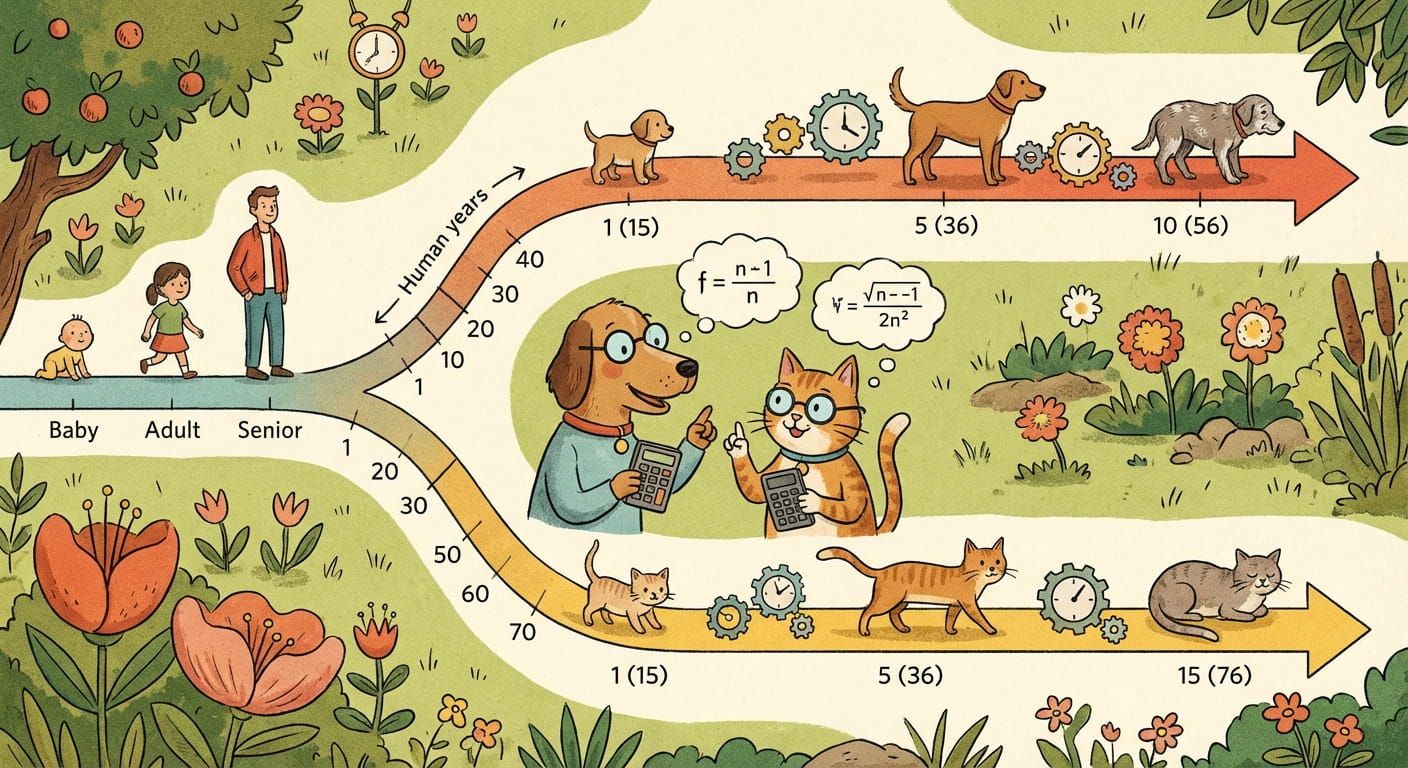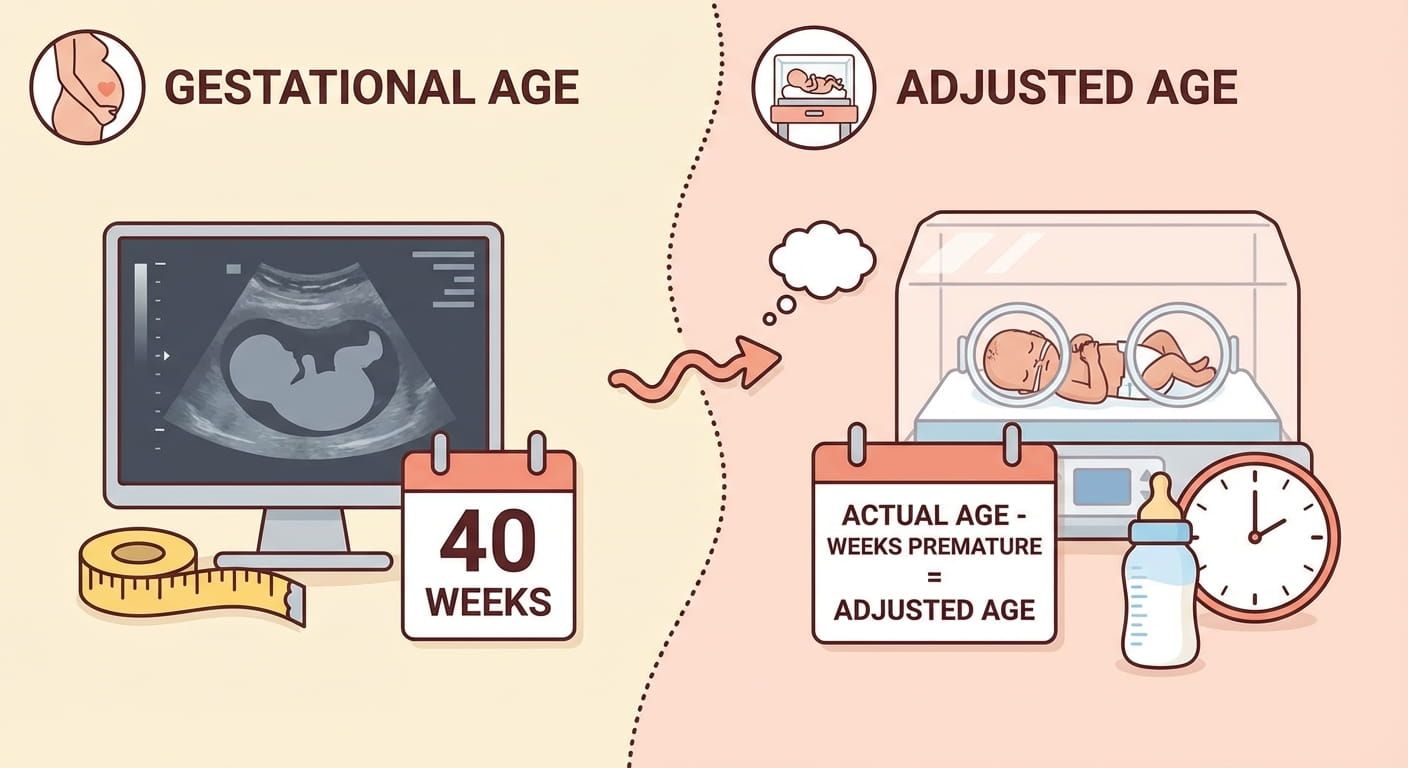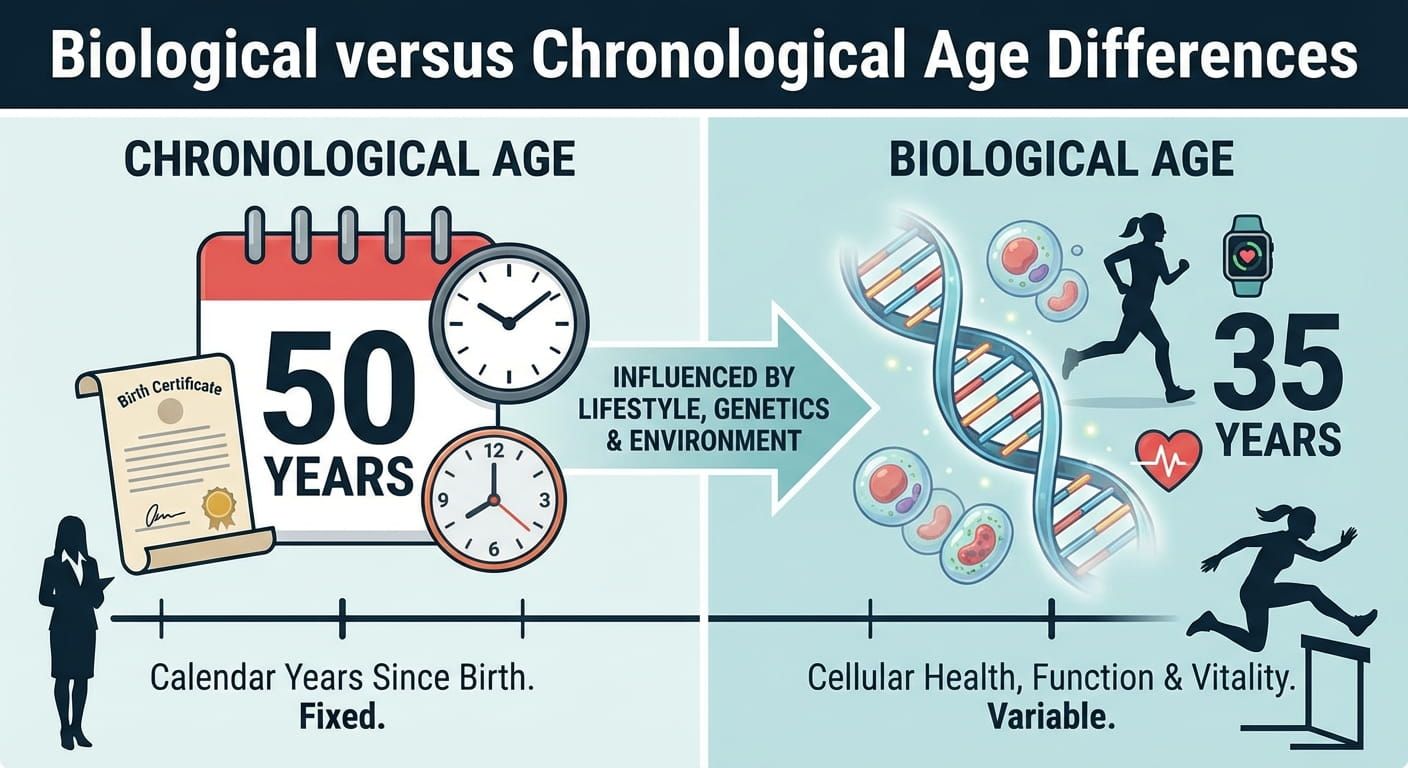
Two people can share the same birthday year and still feel wildly different in energy, recovery, mood, and health. That gap is the heart of biological age versus chronological age. Chronological age is the simple count of years since birth. Biological age is a snapshot of how your body is functioning right now, shaped by genetics, sleep, stress, movement, food, environment, illness history, and even how connected you feel to other people.
Key takeaway
Chronological age is time passed since birth, biological age is how “old” your body behaves. The difference can come from lifestyle, stress, sleep, fitness, medical conditions, and environment. You cannot change the calendar, but you can often shift biological age trends by improving habits that support recovery and long term health. Use time based tools to track routines consistently, then review patterns, not single days. Your goal is steady progress, not perfection.
A short quiz to spot the difference
This mini quiz checks whether you can tell chronological age facts from biological age clues. Pick an answer, then tap score.
1) Which one is always the same for everyone?
2) A blood test suggests your body is functioning “younger” than your birth age. That is describing:
3) Which factor can change biological age trends over time?
4) Which statement fits chronological age best?
5) A wearable shows improved resting heart rate and recovery for weeks. That is closer to:
What chronological age really measures
Chronological age is the easiest kind of age. It is the time elapsed since the day you were born. That is it. It does not care how you slept last night. It does not care if you run, if you sit, if you are stressed, or if you are calm. It ticks upward at the same pace for everyone: one day per day.
Chronological age is useful because it is stable. It lets doctors, schools, sports leagues, and governments set rules. It helps researchers compare groups. It helps you plan milestones and tell stories about your life. It is also the number most people mean when they ask, “How old are you?”
If you want the simplest way to measure it, age calculator tools remove guesswork around leap years and exact dates. That matters if you are counting days to a specific birthday, checking eligibility rules, or logging accurate records for forms.
What biological age tries to capture
Biological age is not a single number that lives on your birth certificate. It is an estimate of how “old” your body behaves, compared with average bodies at different ages. It is based on function and condition. Think of it as the body’s report card, written in markers like cardiovascular fitness, blood pressure, inflammation, metabolic health, muscle mass, balance, cognitive sharpness, and recovery speed.
Some people at 40 show markers that resemble an average 30 year old. Others at 40 show markers closer to an average 55 year old. That does not mean a person is “doomed” or “fixed.” It means their current state is leaning in a direction. Many pieces can improve. Some are harder. Still, trends can shift.
Biological age is also a reminder that health is not only one system. Your heart, liver, muscles, brain, hormones, immune system, and sleep cycle all talk to each other. A single habit can ripple through many markers. A single stressor can also ripple the other way.
Quote to keep in your pocket
Chronological age answers “how long.” Biological age tries to answer “how well.”
Why the two ages can drift apart
Even if two people share the same chronological age, their days may look nothing alike. One might sleep deeply, move often, eat in a way that supports stable energy, and recover well. Another might be stuck in stress loops, get short sleep, move rarely, and rely on habits that spike and crash blood sugar. Over time, that difference shows up in markers that feed biological age estimates.
Here are common reasons the ages drift apart:
- Sleep debt that becomes normal, with short or broken nights.
- Chronic stress that keeps the body in a high alert state.
- Low movement and long sitting, which affects circulation and insulin sensitivity.
- Low muscle mass or weak strength, which changes metabolism and stability.
- Nutrition patterns that lack protein, fiber, or micronutrients, or rely on frequent sugary hits.
- Smoking and high alcohol intake, which strain multiple systems.
- Medical conditions like sleep apnea, autoimmune disease, or untreated high blood pressure.
- Environmental exposure to pollution, poor light cycles, or shift work schedules.
None of this is meant to blame anyone. Life is messy. Access is uneven. Stress is real. The point is that biological age is sensitive to your lived conditions. That sensitivity can be frustrating, yet it is also hopeful, because it means improvements can show up in your markers.
How biological age is estimated in real life
Different services use different ingredients. That is why two biological age numbers can disagree. One method might lean heavily on blood biomarkers. Another might use fitness testing. Another might combine surveys with wearables. Each method carries assumptions and uncertainty.
Common categories used in biological age estimation include:
- Blood based markers like glucose control, lipid levels, inflammation signals, kidney and liver function, and hormone related markers.
- Cardiorespiratory fitness measured by VO2 related tests, heart rate response, and endurance.
- Body composition including muscle mass, fat distribution, and waist measurements.
- Strength and function like grip strength, chair stands, balance, and walking speed.
- Sleep and recovery estimated by sleep duration, variability, and resting heart rate trends.
- Long term risk patterns based on family history, diagnosis history, and medication use.
It helps to treat biological age as a trend tool. It is less like a ruler and more like a weather report. A single reading can be noisy. A series of readings, plus context, is where insight grows.
Compare the two ages
| Topic | Chronological age | Biological age |
|---|---|---|
| Definition | Time since birth | Estimated body function compared with norms |
| Changes with lifestyle | No | Often, yes over weeks and months |
| Best used for | Rules, timelines, milestones | Health trends, habit feedback, risk awareness |
| Can vary between tests | No | Yes, depends on method and data |
| Common mistake | Treating it as health status | Treating one reading as destiny |
How time tracking tools help you work with biological age
Biological age is influenced by daily choices, but your brain is not built to remember patterns accurately. That is where time tools shine. They turn fuzzy intentions into measurable routines. They also help you see what you actually do, not what you hope you do.
Start with one habit you can repeat. Sleep timing is a strong candidate because it affects hunger, recovery, and mood. A consistent morning routine is another candidate because it sets the tone for movement and light exposure. You can use a simple alarm to protect bedtime, not only wake time. That sounds small, yet it can shift your whole day.
Movement breaks matter too. If you sit for long periods, set a gentle cue with pomodoro timer intervals. The goal is not to squeeze every second. The goal is to create regular moments where your body gets blood flow, your eyes rest, and your nervous system gets a reset.
To make timing more precise for planning, a time calculator helps you add and subtract duration without mental math errors. That is useful for figuring out how long you can sleep if you need a buffer before school, training, or travel.
The biology behind “feeling older” or “feeling younger”
People often describe biological age in feelings: energy, soreness, brain fog, mood stability, and resilience. Those feelings are real, but they are not always a perfect mirror of internal markers. Still, understanding a few body systems can help the concept click.
Inflammation and recovery
Inflammation is part of healing. It becomes a problem when it stays high for too long. Poor sleep, chronic stress, inactivity, and some diets can keep inflammation elevated. High inflammation can affect joints, skin, digestion, and mood. Over time it can also nudge biological age estimates upward because many tests use inflammation related signals.
Metabolism and energy stability
Your body prefers steady fuel. Big swings in blood sugar can leave you tired, hungry, and irritable. Strength training, daily movement, fiber, protein, and enough sleep all support steadier energy. Metabolic signals show up in many biological age models because they link to long term risk.
Cardiovascular fitness
Your heart and blood vessels are like a delivery system. They carry oxygen and nutrients everywhere. Fitness tends to improve resting heart rate, blood pressure, and recovery. These markers often improve with regular walking, cycling, swimming, sports, or structured training, plus enough rest.
Muscle, bone, and balance
Muscle is not only about looks. It is a metabolic organ. It supports glucose control, protects joints, and improves stability. Bone health also responds to movement, especially impact and strength. Balance matters more than people think because it reflects nervous system coordination. Many biological age estimates use function tests that indirectly reflect strength and balance.
Common misunderstandings that make the topic confusing
This topic gets messy because people mix three ideas: age, appearance, and health. They overlap, but they are not the same.
- Looking young is not the same as being biologically young. Skin can look great while blood pressure is high, or vice versa.
- One lab result does not define you. A single bad night can shift some markers temporarily.
- Different biological age tests can disagree. They may measure different systems.
- Stress can age markers even when life looks “healthy.” Emotional load counts.
- You can improve trends without chasing perfection. Consistency beats intensity most of the time.
Measuring the difference between the two ages
The simplest way to talk about the gap is: biological age minus chronological age. If biological age is higher, the body is behaving older than expected. If it is lower, the body is behaving younger than expected. Many people want a single neat number, yet the deeper value is the story behind the number.
If you like to quantify the gap for planning and motivation, age difference pages can help you frame the concept in a familiar way. Treat it as a starting point, then zoom in on what is driving the gap.
Ask yourself:
- Which daily habit seems to push my energy in the right direction?
- Which habit reliably drains me, even if it feels harmless in the moment?
- Which system needs support most right now: sleep, movement, stress, food, social connection, or medical care?
- What is one change I can keep for four weeks without drama?
Ways to support a younger biological trend
- Protect sleep timing. Pick a realistic bedtime and keep it most nights.
- Get morning light. Step outside soon after waking when possible.
- Move daily. Even a brisk walk counts. Consistency matters more than intensity.
- Train strength a few times per week. Bodyweight, bands, or weights all work.
- Eat for steady energy. Pair carbs with protein and fiber.
- Hydrate. Mild dehydration can feel like fatigue and brain fog.
- Build recovery. Rest days, gentle stretching, and calm down time are part of training.
- Reduce repeated stress loops. Short breathing practice can help, especially before sleep.
- Keep checkups current. Treating blood pressure, anemia, sleep apnea, or thyroid issues can change everything.
- Choose supportive environments. Air quality, noise, and social safety shape biology.
Using timers and stopwatches to make healthy habits stick
Many people think motivation is the main ingredient. It helps, but structure is more reliable. Time tools can give structure without turning life into a spreadsheet.
A timer can support small habits that feel too easy to count, like a ten minute walk after dinner, a stretch routine, or a wind down block before bed. Starting is the hardest part. A timer lowers the start friction. You press start, then you just follow.
A stopwatch helps with awareness. If you think you scroll for five minutes and it turns out to be forty, that is data you can use. The goal is not shame. The goal is clarity.
If focus is a challenge, habits may fail because attention is constantly interrupted. There is a reason people pair routine building with focus sessions. A practical read on this idea lives in timers stopwatches improve focus, and it ties attention to consistent action, which is the real engine behind long term biological change.
Countdowns for motivation without pressure
Some people do better with a target date. Others feel stressed by it. A countdown can be used gently. It can mark a race day, a medical check in, a holiday, or a school event. The trick is to use it as a reminder, not a threat.
If you want that visual progress bar feeling, countdown tools can make the time horizon feel real. Pair it with small weekly goals: consistent sleep for seven days, three strength sessions, or daily walks. Those goals are easier to keep than a huge promise like “change my life.”
How time zones affect sleep and biological signals
Your body runs on rhythms. Light, meals, and activity act like signals that set those rhythms. Travel and late nights can throw them off. That can temporarily worsen markers like glucose control, appetite, and mood. For many people, jet lag feels like instant aging. That is not permanent aging, but it shows how sensitive biology can be.
Time zone shifts get extra confusing if you work with non standard time systems. If you deal with emergency services, aviation, or certain industries, you might cross paths with military time notation. It is a clean way to avoid confusion, yet it can also make sleep scheduling feel odd at first. Once you adapt, it can reduce mistakes and reduce stress, which indirectly supports recovery.
Where Unix time fits into health and age tracking
If you log steps, sleep, workouts, or meals with apps, you are interacting with timestamps under the hood. Many systems store time in Unix format. You might see it in exports, developer dashboards, or data files. Understanding it can help you merge logs from different tools and avoid confusion.
If you ever need to translate raw timestamps, unix time tools can turn those numbers into normal date and time. That is helpful when you want to check patterns like sleep start time, wake time, or how long recovery takes after hard training days.
How to interpret results without spiraling
Because biological age is personal, it can trigger emotion. You might feel proud. You might feel worried. Both are normal. The key is to hold the number lightly and focus on what you can control.
Use these guardrails:
- Trends beat snapshots. Compare months, not days.
- Context matters. Bad sleep week, exams, illness, travel, and stress can shift markers.
- Pick one lever at a time. Too many changes collapse fast.
- Protect recovery. Hard work without rest can backfire.
- Ask for help when needed. Medical concerns deserve real support, not only internet advice.
A gentle mindset shift
A biological age number is feedback, not a label. Use it to choose your next small step.
Life stages, stress, and why teens and adults interpret age differently
People at different life stages experience “age” differently. Teens can feel older because school pressure and social stress are intense. Adults can feel older because responsibilities stack and sleep gets squeezed. Biological age ideas can be useful at any stage, yet the focus should match the stage.
If you are a teen, the biggest wins often come from sleep consistency, movement you actually enjoy, and stress tools that fit real life. That might look like a daily walk with music, a sport, or short strength sessions. If you are an adult, work hours, caregiving, and chronic stress may be the bigger drivers, and time tools become crucial for boundaries.
In both cases, the “difference” between biological and chronological age is often less about one perfect health hack and more about how your days are organized.
Stress timing: the hidden clock inside your body
Stress is not only a feeling. It is a body state. Your nervous system shifts gears based on perceived threat and safety. Short stress can be helpful. Long stress without recovery can raise inflammation, worsen sleep, and change appetite signals.
Timing matters. Late night stress is extra costly because it collides with sleep. If your brain wants to replay the day at midnight, try a short wind down ritual. Keep it simple: dim lights, a warm shower, journaling, light stretching, or a few calm breaths. Time tools can help you start the ritual before you are exhausted.
If you want a structured approach, set a wind down timer and keep it the same length each night. Over time, the body learns the cue. That learned cue can lower sleep onset time and improve recovery.
Food timing and biological signals
Food is not only what you eat. It is also when you eat. Late heavy meals can disturb sleep for some people. Long gaps without food can backfire for others. The best pattern is the one that supports steady energy and good sleep in your own life.
Try a simple experiment for two weeks:
- Pick a consistent breakfast window.
- Keep caffeine earlier in the day if it affects sleep.
- Have a balanced meal with protein and fiber.
- Notice how your energy feels in the afternoon.
- Notice how long it takes to fall asleep.
Write down what you notice. You are looking for patterns, not perfect days. If you have medical conditions, talk with a professional before making big dietary changes.
Movement that ages you well, without turning life into a gym plan
Movement is one of the most reliable levers for biological age trends. It touches cardiovascular health, muscle, insulin sensitivity, mood, and sleep. Yet the best plan is the one you keep.
Here is a simple, realistic week structure that many people can adapt:
- Daily: a walk, even short, plus a few minutes of mobility.
- Two or three days: strength work, full body, basic moves.
- One day: longer easy activity, bike ride, hike, sport, or swimming.
- One day: recovery focus, gentle movement only.
If you love sports, that counts. If you hate gyms, skip them. You can build strength with bodyweight, resistance bands, or household items. Consistency builds capacity. Capacity supports recovery. Recovery is a big part of “feeling younger.”
Sleep quality: the quiet driver behind many age markers
Sleep affects nearly everything people link to biological age: metabolism, inflammation, mood, immune function, and appetite. It also affects performance and injury risk. Good sleep does not need to be perfect. It needs to be consistent enough to let your body repair.
Simple sleep supports that often help:
- Keep wake time steady most days.
- Keep the bedroom cool and dark if possible.
- Reduce bright screens late at night.
- Move during the day, especially in daylight.
- Have a short wind down routine that signals safety.
Sleep struggles can be caused by stress, caffeine timing, late naps, anxiety, or medical issues. If snoring is heavy or daytime sleepiness is intense, it is worth a medical check.
How to use time tools to plan checkups and follow through
Biological age talk often leads to medical questions. That can be a good thing. Many serious issues improve with early detection. Yet follow through is hard. People forget appointments. People delay labs. People do not return calls.
Use time tools as a support system:
- Set an alarm reminder for scheduling, not only for the appointment day.
- Block a small window for paperwork so it does not pile up.
- Use a timer during phone calls so you do not avoid them due to fear of time loss.
- After results, set a short review session to translate them into actions.
That last step matters. Numbers without a plan are just noise. A plan can be small: walk more, sleep earlier, reduce high stress loops, follow treatment, or check again in a few months.
Why people love a single age number, and why you should be cautious
Humans like simple scores. It is normal. A single number feels clean. It feels like a verdict. Yet biological age estimates are built on models. Models are only as good as the data they include. They can be helpful, but they are not magic.
Use biological age numbers as a conversation starter with yourself:
- What is this number mostly based on?
- Which markers drove it up or down?
- Is this a short term fluctuation or a long term pattern?
- What is one change I can repeat without burnout?
If a service refuses to explain what it measures, treat the number with extra caution. Transparency matters.
When a higher biological age is not your fault
Some drivers are outside personal control. Chronic illness, disability, medication side effects, trauma, unsafe housing, food insecurity, and heavy caregiving can all affect markers. Stress from discrimination and lack of support can also play a role. None of that is a personal failure.
In those situations, the best approach is often “reduce the load where possible.” That might mean asking for help, getting medical support, seeking school accommodations, improving sleep environment, or building routines that fit energy limits. Even small improvements can matter.
Building a simple tracking system that stays friendly
You do not need a complicated dashboard. A simple system works better because you will actually use it. Here is one approach that uses time tools without turning your life into a project:
- Pick one focus for four weeks: sleep, movement, or stress relief.
- Set one daily cue: an alarm at the same time, or a timer after dinner.
- Track one metric: bedtime, steps, or minutes moved.
- Review weekly: what helped, what got in the way, what is the next tweak.
- Repeat or shift focus after four weeks.
This is where Time.you shines as a practical hub. It already centers around accurate time worldwide, so the same mindset can apply to habits: steady, precise, and consistent.
How accurate time supports better routines
It might sound funny, yet accurate time reduces friction. If you are coordinating across countries, sleep and meetings collide fast. If you are travelling, your body clock can get confused. If you are planning a study block, a workout, or a bedtime routine, you need timing you can trust.
Time.you focuses on exact time for any time zone with atomic clock synchronized accuracy, which supports reliable planning across cities, countries, and time zones. That matters for habits because habits are often lost in “close enough” timing. Small time slips become big schedule drift.
A more personal way to think about “younger” biology
Instead of chasing a number, chase capabilities. Capabilities are tangible. They show up in your real life.
Ask yourself what you want to be able to do comfortably:
- Wake up without feeling wrecked.
- Focus in class or at work without constant fog.
- Recover from workouts and feel stronger over time.
- Walk stairs without feeling out of breath.
- Handle stress without crashing later.
- Enjoy social time without feeling drained for days.
These are the kinds of changes that often align with improved biological markers. They are also more motivating than a score on a screen.
Signs that your biological trend is improving
Biology shifts slowly, yet you can notice early signs. Not all will apply to everyone, and none are perfect proof, but they are encouraging signals:
- More stable energy across the day.
- Better sleep onset and fewer night wakes.
- Improved mood resilience after stress.
- Better workout recovery and fewer aches.
- Improved resting heart rate trends.
- Less intense cravings and steadier appetite.
- More motivation for movement, because movement feels easier.
If you track routines with time tools, you can connect these changes to behaviors. That connection helps you keep what works.
When to talk to a professional
Biological age is not a diagnosis. If you have symptoms that worry you, get help. If your blood pressure is high, do not ignore it. If fatigue is extreme, do not write it off as “getting older.” If your mood is persistently low, you deserve support.
Professional support can also help you interpret lab results, choose safe training, and avoid extreme plans that backfire.
Living with both clocks at once
You will always have two clocks running. The calendar clock, which is chronological age. The body clock, which is biological age signals and trends. The calendar clock is steady. The body clock responds to your routines and your environment.
If you want a clean mental model, keep it simple:
- Use chronological age for timelines, milestones, and rules.
- Use biological age as feedback for health habits and recovery.
- Use time tools to support routines, not to punish yourself.
- Focus on trends that feel better in daily life.
Where your next year can feel different
The gap between biological and chronological age is not a moral score. It is a reflection of wear and repair. Repair happens when you sleep, when you recover, when you eat in a supportive way, when you move regularly, and when you feel safe enough to relax.
The calendar will keep moving. That part is non negotiable. Your body’s trend has more room than you might think. Small routines, repeated with the help of accurate time and simple tools, can make next month feel steadier, and next year feel stronger.
If you want to go deeper into this topic inside the Time.you ecosystem, the article biological vs chronological adds extra context around the same core idea: one age is measured by the calendar, the other is reflected in how your body functions.