Holiday planning gets messy when the calendar says one thing and your money timeline says another. You might be free from work, yet a transfer sits pending. Or you might be at your desk, while your bank branch is shut and a payment cut off has already passed. The difference between bank holidays and public holidays is not just vocabulary, it shapes real life timing.
Summary
Public holidays are official days of observance set by governments, often affecting schools, public services, and many workplaces. Bank holidays are days when banks and key financial operations run on reduced schedules or pause settlement and clearing, which can shift when transfers complete and when branches open. In some countries the two are the same, in others they only overlap sometimes. To avoid surprises, check both the holiday calendar and your bank cut off times.
A quiz for holiday know-how
Try it for a clearer gut feel
What a public holiday means in daily life
A public holiday is an official day of observance recognized by a government or public authority. It can celebrate a national milestone, honor a historical event, or mark a religious or cultural festival. The exact rules differ by country, and sometimes by region within a country. Yet the theme stays the same, society is encouraged to pause, gather, and mark the day.
Public holidays often shape school calendars, public transport schedules, and opening hours for government services. Many employers treat them as non working days, or apply special pay rules if staff must work. Retail businesses can choose to open, though staffing and hours may change.
What a bank holiday changes behind the scenes
A bank holiday is a day when banks and certain financial operations run on reduced schedules, or pause parts of clearing and settlement. It may be defined by law, by regulation, or by the operating calendar of payment systems. In some countries, the term is also used as the legal label for official holidays. In other countries, it is used in a practical sense, banks are closed even if the rest of the economy is partly active.
The modern twist is that many digital tools still work. You can often use cards, ATMs, and apps. You might even send a transfer that looks instant. What changes is the timing of final settlement between banks, the pace of back office processing, and the availability of branch services and support teams.
A useful mental model
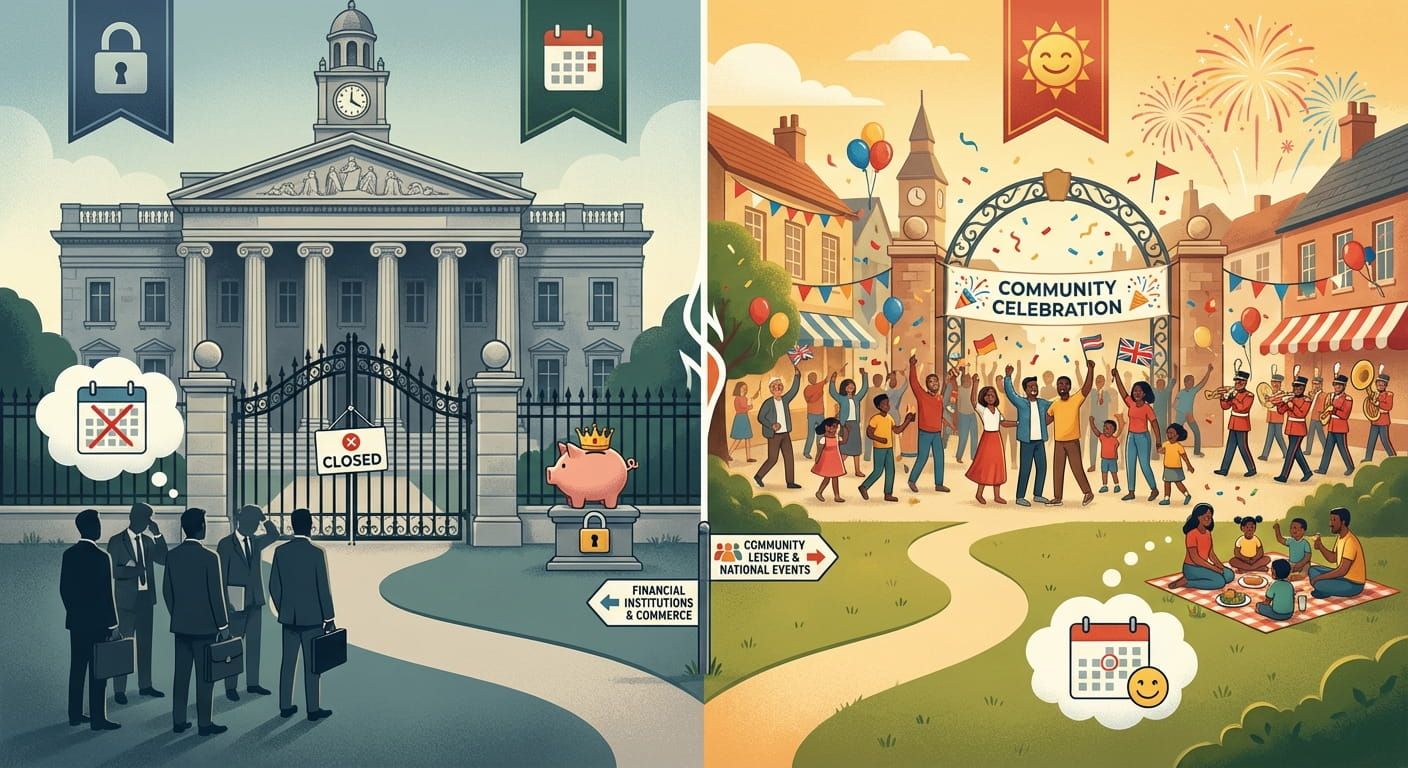
Public holidays influence how people spend their day. Bank holidays influence how money moves between institutions.
A comparison table you can reference anytime
| Topic | Public holiday | Bank holiday |
|---|---|---|
| Core purpose | Official observance for the public | Operational pause or reduced schedule for banking |
| Who defines it | Government, sometimes regional authorities | Law, regulators, settlement operators, bank policy |
| Schools and public offices | Often closed or reduced services | Usually unaffected unless it also matches a public holiday |
| Bank branches | May close if banks follow the public holiday | Closed or limited hours by definition |
| Card purchases | Usually continue | Usually continue, but support and settlement timing can shift |
| Interbank transfers | Depends on banking operations | More likely to settle on the next working day |
| Where confusion happens | People assume everything stops | Apps look normal, but settlement and cut offs change |
How payments behave on these days
Payment behavior depends on the type of payment and the network it uses. A card purchase at a café in Paris, Tokyo, or Sydney can be authorized even on a closure day. Yet the final movement of funds between institutions can be batched later. That is why a merchant might see deposits land a little later, and why certain refunds feel slower during holiday periods.
For bank transfers, the most common change is settlement timing. You may be able to submit the transfer, but it can queue until the next working day. For international transfers, the effect can multiply because at least two countries are involved, and correspondent banks may follow different calendars.
These everyday details are worth remembering:
- Cut off times matter more than the date on your screen.
- International transfers can be delayed if either side has a closure day.
- Customer support response times can slow during banking closure days.
- Standing orders may execute on the next working day depending on bank policy.
A numbered checklist for planning without surprises
- Check whether the day is a public holiday, a bank holiday, or both in your country and region.
- Look up your bank cut off times for transfers, bill payments, and international wires.
- If money must arrive by a certain date, schedule one working day earlier as a buffer.
- For international payments, check both countries, and consider time zones and weekends.
- If you run a business, warn customers about deposit timing during holiday weeks.
- Keep a small cash and card backup plan for travel days.
Why the terms overlap in some places
In several countries, the legal framework treats certain official holidays as days when banks close, which makes the terms feel interchangeable. In other countries, the banking calendar includes special closure days linked to settlement operations, even when the broader public holiday calendar is different.
There is also a cultural effect. People often use banks as a proxy for business activity. If the bank is shut, it feels like the day is official. That is not always accurate, especially in cities where cafés, malls, and public attractions keep running.
Country examples that show the difference clearly
Looking at a few places makes the concept click. Holiday structure is shaped by history, religion, and regional governance. Banking structure is shaped by payment networks, regulators, and market calendars. That is why the two ideas match perfectly in one country and only partially in another.
Singapore
Singapore’s holiday calendar is widely recognized across workplaces and schools, and it is heavily used for planning around travel peaks and family gatherings. Banking services are modern and digital, yet settlement rules and cut off times still matter for certain transfers and international payments. A calendar view that focuses on observances and dates is helpful for planning, Singapore holidays.
United States
In the United States, the public holiday idea exists, but many workplaces make independent choices about closures. Banks often follow a specific schedule that aligns with major federal dates, and market trading calendars can add another layer. Payroll timing, bill pay settlement, and broker operations can shift around those dates. For a country calendar view that supports planning, United States holidays.
Japan
Japan’s observances are well known and often tied to seasonal travel patterns. Even with strong digital payments, banking operations and customer service can still follow closure schedules. This matters for international transfers, and for anyone coordinating payments across time zones. A calendar reference can reduce guesswork, Japan holidays.
United Kingdom
The United Kingdom is a place where the phrase bank holiday is part of everyday speech. People often plan long weekends around it. That said, the way it affects schools, retail, and services can vary by region and sector. Checking a calendar view keeps plans aligned, United Kingdom holidays.
Australia
Australia adds another interesting layer, many holidays can be state based. That regional split affects staffing, deliveries, and travel. Bank operations can follow national and regional schedules, which matters for people managing payroll across states. If you need a date reference for planning, Australia holidays.
Work, school, and public services, what to expect
Public holidays often reshape the rhythm of a city. In Berlin, Madrid, or Rome, you might see museums run special hours and public offices close. In Kuala Lumpur and Bangkok, the pattern can vary by observance type and local custom. In Mexico City and Buenos Aires, the day can feel like a celebration, with different transport demand and staffing patterns.
Bank holidays are less visible on the street. Their effects show up in bank branches, call centers, and settlement timing. If you run a small business in Toronto, Dublin, or Wellington, you may notice deposits arriving later even while customers still shop as usual. If you freelance and invoice clients in different countries, you might see payment delays when only one side is on a closure day.
Holiday timing tips for travel and cross border life
Travel adds layers: weekends, time zones, and multiple country calendars. A transfer from Dubai to London can hit a holiday mismatch. A booking made in Seoul can depend on a cut off time in New York. Even when your own country is open, the other side might be closed.
These travel friendly habits help:
- Schedule critical transfers before you fly, not during travel day.
- Carry a backup payment method in case support is slow.
- Expect slower international settlement around major holiday clusters, especially year end weeks.
- If you must pay on arrival, keep a small cash cushion for the first day.
A closing note for calmer planning days ahead
Public holidays shape how a place lives and celebrates. Bank holidays shape how money systems operate. When you separate those ideas, your planning becomes easier. Work schedules make more sense, payment timing becomes predictable, and travel plans feel less fragile. The next time a date on the calendar looks harmless, take a second glance at the banking calendar too, your future self will thank you.