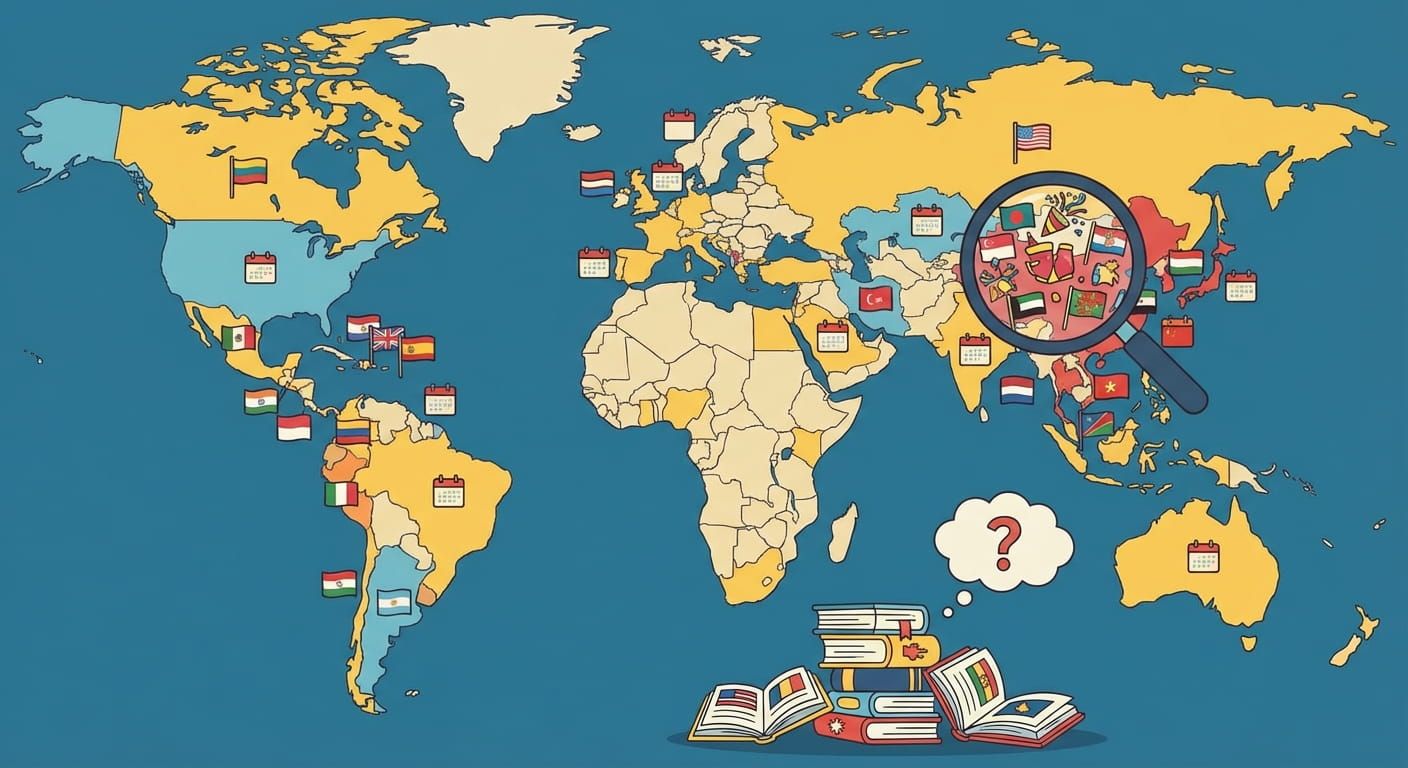
Public holidays can be the best days of the year, until your work schedule lands on one. Then the questions start. Do you have to work. Can you say no. If you do work, do you get extra pay, a day off later, or both. The answers are not universal. They depend on your country, your contract, and how your workplace defines a public holiday.
Quick Read
Employee rights on public holidays usually revolve around three things, whether you get a paid day off, what happens if you work, and how the holiday is observed when it lands on a weekend. Many countries provide premium pay, a substitute day off, or a mix. Eligibility often depends on your work pattern, your employment type, and local rules. Your safest play is to confirm the holiday for your work location, then match it to your contract and payslip codes.
Mini quiz, know your public holiday rights
This is general info, not legal advice. Answer for your situation, then compare with the explanations.
What a public holiday means for employees
A public holiday is a date recognized by a government for national or regional observance. For employees, the label matters because it can change pay rules, time off entitlements, and rostering expectations. It can also affect opening hours and service coverage, which is why healthcare, transport, hospitality, and security often operate differently from office based work.
One more twist, some countries separate public holidays from bank holidays. Bank holidays can be a formal closure day for banks and some institutions, while other employers may treat it as business as usual. That difference shapes what people expect and what employers actually owe. A clear explanation lives in difference between bank and public holidays.
A small definition that saves big arguments
Public holiday rights usually attach to where the work is performed, not where the payroll team sits, and not where your group chat is most active.
The core rights most people care about
Most public holiday disputes fall into a few buckets. The details vary by country, but the questions sound the same in New York, London, Tokyo, Sydney, Paris, and Mumbai.
- Paid day off for eligible employees when the workplace is closed on a public holiday.
- Premium pay when you work on the holiday, often a higher hourly rate.
- Substitute day or time off later if you work the holiday or if the holiday falls on a rest day.
- Rules around rostering such as notice, fairness, and the ability to refuse in specific circumstances.
- Clear payslip coding so you can verify you were paid correctly.
Eligibility, who usually qualifies for holiday pay
Eligibility is where people get tripped up. A paid holiday is often not a free bonus for everyone on the payroll. Many systems tie entitlement to your work pattern and your status.
Common eligibility patterns include the following.
- Normally scheduled that day, if the holiday falls on a day you typically work, you are more likely to qualify for paid time off.
- Average earnings or average hours, part time employees with variable schedules may receive holiday pay based on a look back period.
- Minimum service rules, some agreements require you to have worked a set amount of time before benefits apply.
- Attendance conditions, some workplaces require you to work your scheduled shifts surrounding the holiday unless you have approved leave.
- Industry rules, essential services may have special frameworks to keep coverage while still protecting pay.
A practical document check
In your contract or handbook, scan for phrases such as public holiday pay, holiday premium, substitute day, rostered day off, and time off in lieu. If your workplace uses a collective agreement, it often contains the clearest pay examples.
Working on a public holiday, how compensation usually shows up
When you work on a public holiday, compensation typically comes in one of three shapes. Premium pay, a substitute day, or a combination. Some systems pay a higher rate for hours worked and still provide a separate holiday entitlement. Others choose one pathway only.
Shift workers should look closely at timing. If your shift crosses midnight, the holiday premium may apply only to the hours that fall within the holiday date. In other systems, the shift belongs to the start date. This difference is a frequent cause of payroll surprises.
Observed holidays and weekend rules
Weekend rules cause confusion, especially for global teams. Some countries shift observance to a weekday when the holiday falls on a weekend. Others keep the date fixed but create an observed day for public services. Some do both depending on the holiday.
This matters for employees because it can change which day is paid, which day triggers premium rates, and which date is used for substitution. A common mistake is using a holiday calendar from one country to plan a schedule in another. Your rights can be correct in one place and wrong in another.
Examples across countries, using your linked holiday pages
Here are several country pages from your list that can help you confirm holiday dates and names by location. The employee rights still come from local law and your contract, but accurate dates are the first step. Each link is used once, as requested.
- For teams in New York, Chicago, and Los Angeles, confirm dates on United States public holidays before you assume your workplace treats federal holidays as paid days off.
- For London, Manchester, and Edinburgh coverage plans, check United Kingdom public holidays and note how bank holiday expectations can differ across employers.
- For Tokyo, Osaka, and Sapporo operations, use Japan public holidays and pay attention to industries that run normal schedules with special pay arrangements.
- For Sydney, Melbourne, and Perth, refer to Australia public holidays and remember regional differences can affect who gets the day off.
- For Mumbai, Bengaluru, and Delhi teams, review India public holidays and confirm which holidays are widely observed at your specific site.
- For Paris, Lyon, and Marseille planning, France public holidays helps you confirm dates and avoid mixing them with neighboring country expectations.
A steady way to avoid cross border confusion
Pick the employee work location, confirm the holiday date, then apply the local pay and rostering rules for that location.
Rostering and refusal, what employers can usually require
Many employers can roster work on public holidays, especially in roles that must keep running. Still, the power to require work depends on local law and contract terms. Some countries require notice. Some require a reason. Some allow refusal on reasonable grounds. Some rely heavily on collective agreements that set rotation systems for fairness.
Even when the law allows rostering, the human side matters. If one person is always scheduled for public holidays, resentment builds fast. A rotation policy, written down, reduces drama. It also makes payroll simpler because premium hours become predictable.
Part time, casual, and variable schedules
Non standard schedules create the biggest misunderstandings. A part time employee might qualify for holiday pay if the holiday falls on a day they normally work. Another part time employee might not, simply because their roster is different. Casual work can be treated differently again, sometimes with a higher base rate intended to cover entitlements.
Use this reading friendly checklist to ground yourself.
- Do you have fixed days, or do you accept shifts each week.
- Does your contract mention public holiday compensation inside your hourly rate.
- Is holiday pay calculated from an average earnings period.
- Are there attendance conditions around the holiday dates.
How to verify your pay, without turning it into a fight
You do not need to be confrontational to protect yourself. You just need a clean trail. The best time to check is right after the holiday pay period posts, while payroll can still correct the run easily.
- Save the roster with the date and your shift times.
- Record the hours worked including any breaks that are unpaid.
- Compare payslip codes such as holiday premium and substitute day credit.
- Ask one focused question if something is off, and attach the roster proof.
- Keep your tone simple and stick to facts and numbers.
A phrase that works well with payroll
I want to confirm the public holiday rate applied to these hours, here is the roster and the time worked.
A closing note for your next public holiday shift
Public holiday rights are easiest when you treat them like a simple system. Confirm the holiday for the work location, understand eligibility for your work pattern, and verify what compensation applies if you work. Then keep a tidy record of your roster and payslip codes. This approach works whether you are based in the United States, the United Kingdom, Japan, Australia, India, or France, and it keeps surprises off your paycheck and off your weekend plans.