Landing a call with London, a delivery window in Berlin, and a friend in Athens can feel smooth, right up until the clocks change. Europe is a patchwork of time zones, and the rules around daylight saving can shift what you see on your phone by a full hour. This guide puts everything in one place, with BST explained in plain language, plus practical ways to convert times without stress.
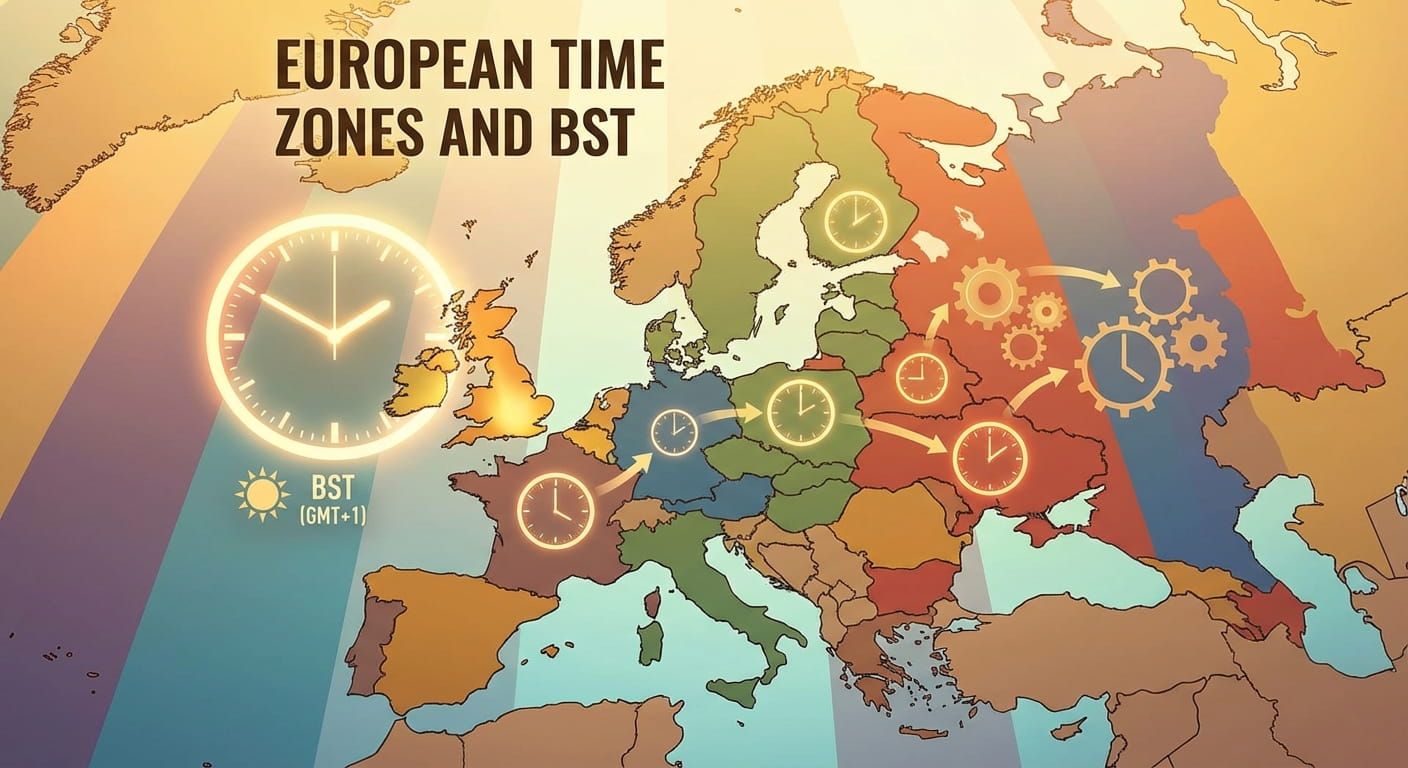
Europe mainly runs on four shared clocks, WET, CET, EET, and MSK, with daylight saving creating summer versions like WEST, CEST, and EEST. BST is the United Kingdom’s summer time, one hour ahead of GMT, matching CEST minus one hour. Most of Europe shifts on the same Sundays in spring and autumn, but not every country follows. Use UTC as a steady reference, then convert to the local zone.
What Europe means by time zones
Time zones are agreements, not lines of fate. Geography sets a rough idea, about one hour per 15 degrees of longitude, but countries choose what fits their lives. That is why Spain and France share the same clock as Germany, even though parts of them sit farther west. It also explains why Iceland stays on GMT all year, while nearby places move for summer time.
If you can name the city, you can name the clock it lives on. Start with the city’s zone, then ask whether the date sits inside summer time.
The core European zones you will see most
Most of Europe clusters around a few big standards. Here is the simple set you will meet in travel, work, school projects, gaming sessions, and sports schedules.
- WET, used by Portugal and parts of Western Europe, pairs with UTC in winter.
- CET, common across central countries like Germany, Italy, Poland, and much of Spain and France by clock choice.
- EET, used by countries like Finland, Greece, Romania, and parts of Eastern Europe.
- MSK, used by Moscow time and nearby areas by policy.
In summer, many places add one hour. That is how WET can become WEST, CET can become CEST, and EET can become EEST. The label changes because the offset changes.
BST in plain terms
BST stands for British Summer Time. It is the United Kingdom’s summer clock. When BST is active, the UK is one hour ahead of GMT. People in London feel it as lighter evenings and later sunsets.
In winter, the UK returns to GMT. During that winter period, noon in London lines up with 12:00 GMT. During the BST period, noon in London lines up with 11:00 GMT plus one hour, meaning 12:00 BST equals 11:00 GMT.
If you want a focused reference for the label itself, BST is documented here: BST.
BST vs GMT vs UTC
GMT is a time standard tied to the prime meridian tradition, and it is still used widely in everyday talk. UTC is the modern atomic standard used for computing, aviation, and global coordination. In daily life, GMT and UTC are usually treated as the same clock time, even though they are defined differently. If your goal is accurate planning, UTC is the safest base, then you convert outward to local zones.
When the UK is on BST, it is UTC plus 1. When the UK is on GMT, it is UTC plus 0. If you want a deeper comparison that stays readable, this page is a good companion: UTC vs GMT standards. For a dedicated reference on the standard itself, UTC is covered here: UTC.
Daylight saving rules across Europe
Most European Union countries change clocks on the same schedule. Many neighboring countries follow the same pattern even when they are not in the EU. The key is that the switch is tied to the last Sunday of certain months.
- Spring change, the last Sunday in March, clocks move forward by one hour in the early morning.
- Autumn change, the last Sunday in October, clocks move back by one hour in the early morning.
- Local exceptions, a few countries do not take part, and some regions may differ based on policy.
- Travel tip, always check the date, not just the month, because the last Sunday shifts each year.
BST follows that same March and October rhythm. Ireland follows a closely linked pattern too, with its own naming conventions, which is why time talk around the Irish Sea can get confusing fast. If you are comparing summer and winter labels around Dublin, Irish time naming is clarified on IST.
Europe at a glance with offsets you can trust
This table uses UTC as the anchor. That keeps it stable even when country naming gets messy. Colors are calm and professional, and the goal is fast scanning.
| Zone label | UTC offset | Typical places | Notes |
|---|---|---|---|
| WET | UTC plus 0 | Portugal, parts of Western Europe by season | Often lines up with UTC in winter |
| WEST | UTC plus 1 | Lisbon by season, parts of Western Europe in summer | Summer label for WET regions |
| GMT | UTC plus 0 | UK in winter, Iceland | UK calls this GMT when BST is not active |
| BST | UTC plus 1 | United Kingdom in summer | One hour ahead of GMT |
| CET | UTC plus 1 | Germany, Italy, Poland, much of Spain and France by clock | Winter label for many central countries |
| CEST | UTC plus 2 | Paris, Berlin, Rome, Madrid in summer | Summer label for CET regions |
| EET | UTC plus 2 | Finland, Greece, Romania, parts of Eastern Europe | Winter label for eastern countries |
| EEST | UTC plus 3 | Helsinki, Athens in summer | Summer label for EET regions |
| MSK | UTC plus 3 | Moscow and surrounding areas | Often stays steady while neighbors may shift |
A simple way to convert times without mistakes
Here is the approach that keeps you safe, even during the week when clocks change.
- Write the time you were given and the city it belongs to.
- Check whether that date is in summer time for that place.
- Convert that local time into UTC using the correct offset.
- Convert from UTC into the target city using that city’s offset for the same date.
- Send back the final time with the city name attached.
This is exactly what a converter tool does behind the scenes, but doing it once by hand helps you spot errors. For day to day use, the time zone converter makes the process calmer, especially if you are lining up more than two cities.
Common pairings people ask about
BST comes up a lot because London is a global meeting hub. These pairings help you sanity check your plan.
- London and Paris, in summer, Paris is usually one hour ahead of London, because London is on BST while Paris is on CEST.
- London and Berlin, same pattern as Paris, Berlin is usually one hour ahead of London in summer.
- London and Madrid, also usually one hour ahead of London in summer.
- London and Athens, often two hours ahead of London in summer, because Athens is commonly on EEST.
- London and Dublin, they move together, but naming conventions can trip people up, always check the label.
Instead of sending only a number, send a time plus city, like “19:30 London” or “20:30 Paris”. People reply faster, and fewer plans slip.
Tools on time.you that fit this topic
If you want a live view of several European cities at once, world clock works well. It is also handy for students coordinating group work across countries.
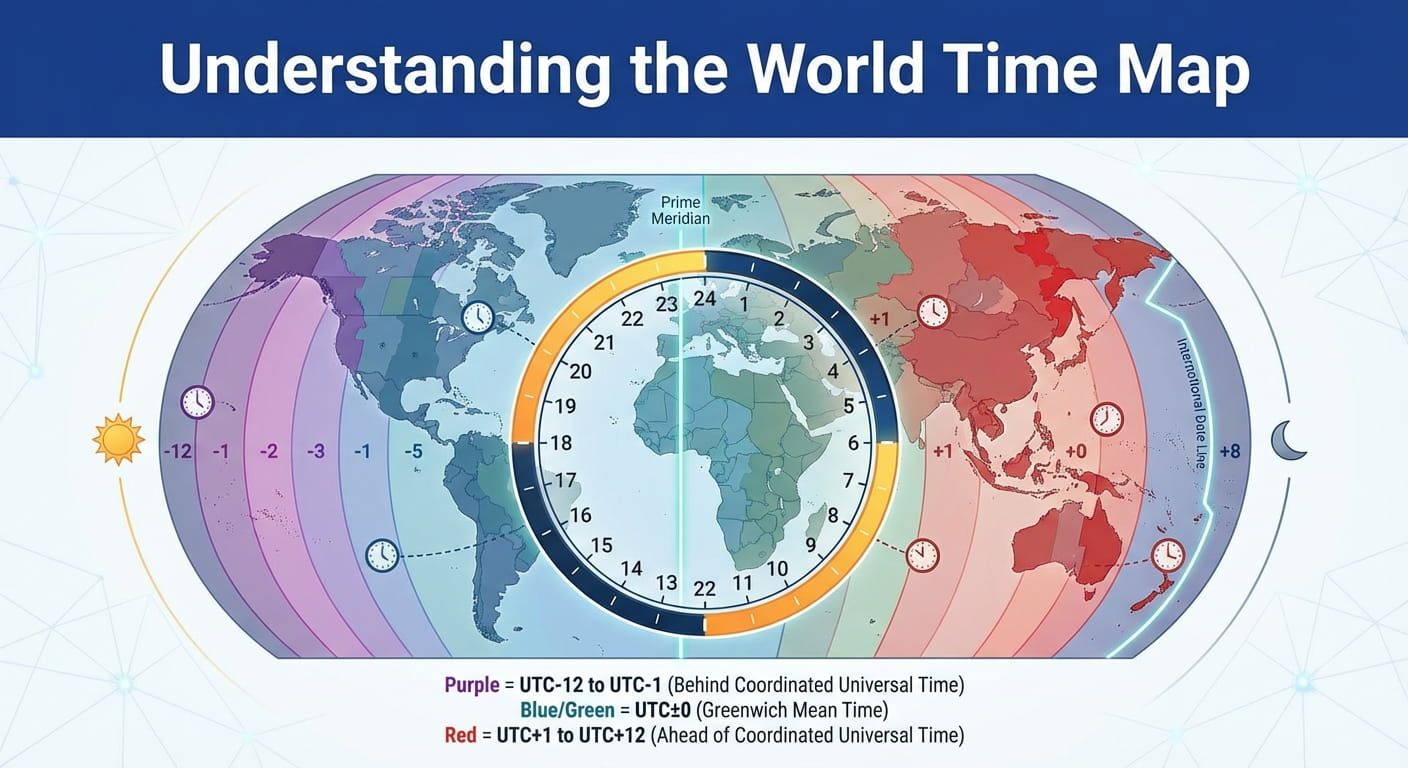
If visuals help you, the time zone map gives a clean way to see where CET gives way to EET, and how WET sits on Europe’s western edge.
If you are scheduling something that repeats, a club meeting, a remote lesson, a family catch up, the event planner is useful because it keeps the cities aligned even when daylight saving arrives.
Abbreviations that cause mix ups
Some abbreviations are reused around the world. That is why a label alone can mislead, and why adding a city name is a smart habit. If you enjoy learning the shorthand, this reference is helpful: world time zone abbreviations list.
BST can also be mistaken for other meanings outside the UK context. In European planning, it almost always means British Summer Time, but a calendar invite from another region may use the same letters differently. City context solves that instantly.
A knowledge check you can tap through
1) When BST is active, what is the UK’s offset from UTC?
2) Paris in summer is usually on which label?
3) Most of Europe changes clocks on which days?
Real life examples with cities you actually use
Examples make this feel less abstract. Here are a few that show the pattern, without getting lost in jargon.
Example one: A call is set for 15:00 in London on a July date. London is on BST then, so that is UTC plus 1. Convert to UTC by subtracting one hour, you get 14:00 UTC. Berlin in July is commonly on CEST, UTC plus 2, so add two hours to UTC, you get 16:00 in Berlin.
Example two: A football stream says 20:00 in Madrid on a January date. Madrid is commonly on CET then, UTC plus 1. Convert to UTC, subtract one hour, you get 19:00 UTC. London in January is on GMT, UTC plus 0, so it stays 19:00 in London.
Example three: A friend in Athens says meet at 18:30 in late August. Athens is commonly on EEST in summer, UTC plus 3. Convert to UTC by subtracting three hours, you get 15:30 UTC. London in late August is on BST, UTC plus 1, so it becomes 16:30 in London.
How to handle the clock change weekends
The trickiest time is the weekend when clocks switch. Plans can slip because people assume their usual offset still applies.
- Write the date in full, not just the day of week.
- Add the city next to the time in every message.
- If the plan crosses the switch weekend, confirm again the day before.
- For flights and trains, trust the ticket’s local time, then convert only for your own reminders.
European zone names you might see on tickets and apps
Apps often show you zone abbreviations, and travel sites sometimes show full names instead. This short set covers many European screens, and it is also a handy checklist for calendar invite settings.
- WET and WEST for parts of Western Europe by season
- CET and CEST across central regions by season
- EET and EEST across eastern regions by season
- BST for the UK in summer
- GMT for the UK in winter and for year round reference talk
- MSK for Moscow time
Military time can also appear in travel and public announcements. If 19:45 looks friendlier than 7:45 pm, this guide can help you read it fast: military time reading.
Small habits that keep plans calm
These habits sound simple, but they save real time and avoid awkward missed calls.
- Attach a city name to every time you share.
- Use UTC when you need a neutral reference for a group spread across Europe.
- During summer months, assume a one hour shift might be active, then verify.
- Keep a two city view open on days packed with meetings.
- For recurring plans, check the week of the March and October switches.
Try sending: “Let’s meet at 18:00 Paris time, that is 17:00 London time.” It reads naturally and stops back and forth messages.
Keeping Europe aligned when you are planning from abroad
If you are outside Europe and planning for European cities, start from UTC. It keeps you grounded. Then convert into the target city. If you are planning across many places, you may also want a converter that supports several regions in one view. This roundup can help you choose a tool style that fits how you think: best international time zone converters.
When the clock names differ but the math stays the same
Sometimes the naming is the confusing part, not the offset. For example, in summer, London on BST is UTC plus 1. At the same time, parts of Europe on CET move to CEST which is UTC plus 2. The math stays consistent even if the labels feel crowded.
That is why using UTC as the bridge is so reliable. UTC does not shift for seasons. Local clocks can, but the bridge stays steady.
Last check before you hit send
European time zones are friendly once you stop treating them like a mystery. Know the big zones, know what BST means, and lean on UTC when your plan spans countries. Add a city to every time, and double check the March and October changeovers. Then London, Paris, Berlin, Madrid, and Athens can all land on the same plan, without anyone guessing.