Step off a plane in Stockholm in June and your watch keeps ticking long after your brain expects night. Fly to Nairobi and the day feels steadier, month after month. Nothing mysterious is happening. Earth is doing the same thing everywhere. Your latitude decides how that motion looks from the ground.
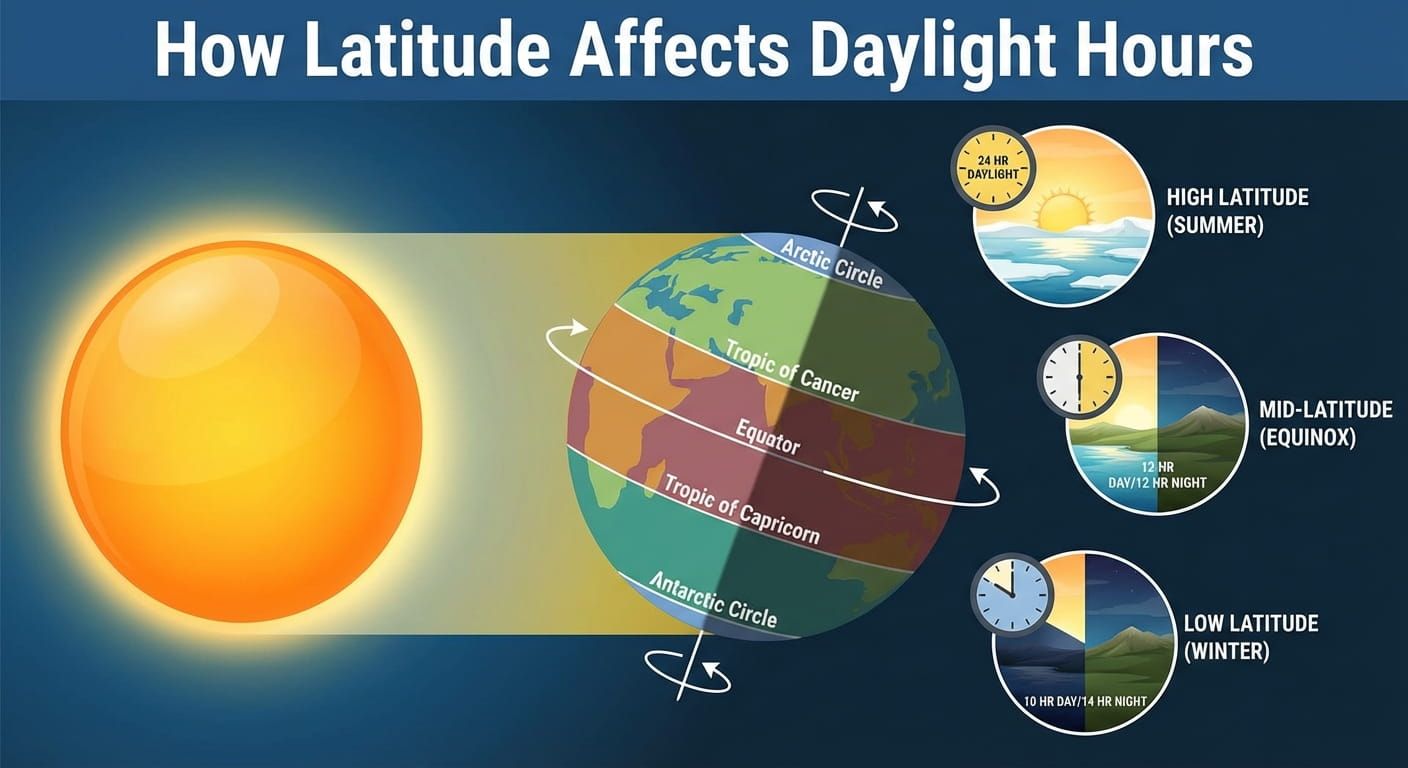
Latitude is the main reason daylight length changes so much around the world. Near the equator, days stay close to twelve hours because the Sun’s path stays steep. Move toward the poles and Earth’s axis tilt stretches summer daylight and compresses winter daylight. Around solstices the effect peaks. Around equinoxes daylight becomes more balanced. Local features can nudge the clock times, yet latitude sets the overall seasonal rhythm.
Quick check, no pressure. Choose one answer per question, then tap Check answers.
What latitude means for your daily clock
Latitude tells you how far north or south you are from the equator. It is measured from 0 degrees at the equator to 90 degrees at either pole. Two cities can share the same time zone yet have very different daylight patterns, because latitude changes how the Sun travels across the sky.
Compare Cairo and Stockholm. Cairo’s daylight shifts across the year, yet it stays within a fairly familiar range. Stockholm swings harder. Compare Jakarta and London. Jakarta stays steadier. London has long summer evenings and earlier winter darkness.
Imagine the Sun drawing a curved track in the sky. Near the equator that track climbs steeply, so the Sun rises and sets in a tighter window. At higher latitudes the track tilts and flattens, which can stretch sunrise and sunset farther apart on the clock.
Earth’s tilt explains the seasonal swing
Earth spins on an axis that is tilted relative to its orbit around the Sun. That tilt is about 23.44 degrees. The key detail is that the axis keeps pointing in nearly the same direction as Earth travels around the Sun. This creates seasons.
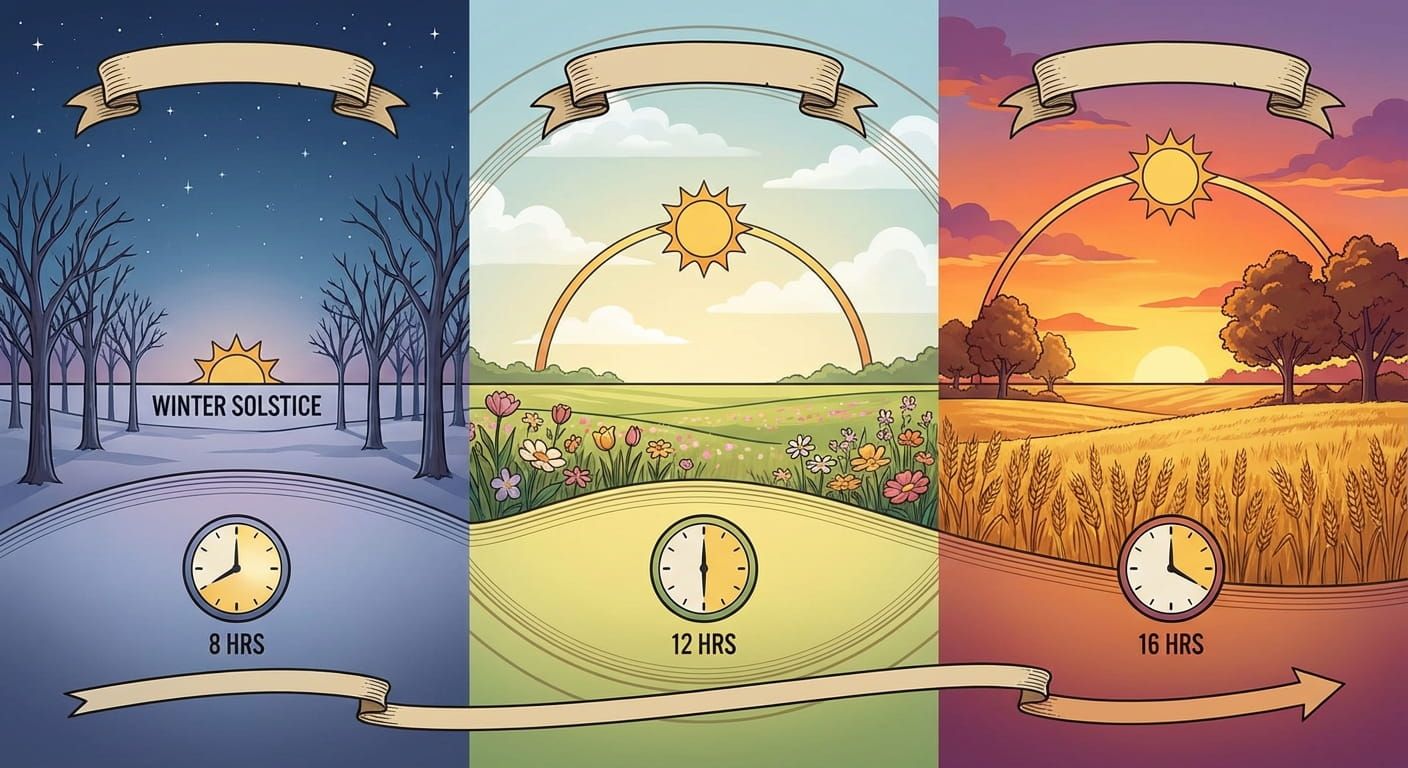
During a hemisphere’s summer, that hemisphere leans toward the Sun. The Sun’s daily arc stays above the horizon longer. During winter, the same hemisphere leans away. The Sun’s arc gets shorter and lower. Daylight shrinks. The farther you are from the equator, the bigger the difference between those arcs.
Why equatorial cities stay steady
Cities near the equator feel consistent. Nairobi, Lagos, Jakarta, and parts of Brazil tend to hover close to twelve hours of daylight through the year. The Sun may shift slightly north or south at midday across the seasons, yet it stays relatively high. Sunrise and sunset do move, but often by minutes rather than hours.
People planning daily routines often care more about exact times than general rules. Time.you is built for that. It shows atomic clock synchronized time and location based solar times, so you can compare dates with confidence. For a broader overview of how these times are calculated and presented, sunrise and sunset guide ties the pieces together in one place.
Why higher latitudes feel dramatic
Move into mid latitudes and you feel the seasons in the length of the day. London, Paris, Berlin, Vienna, Zurich, Toronto, and Vancouver have clear shifts. Summer evenings can stretch late. Winter afternoons can feel compact.
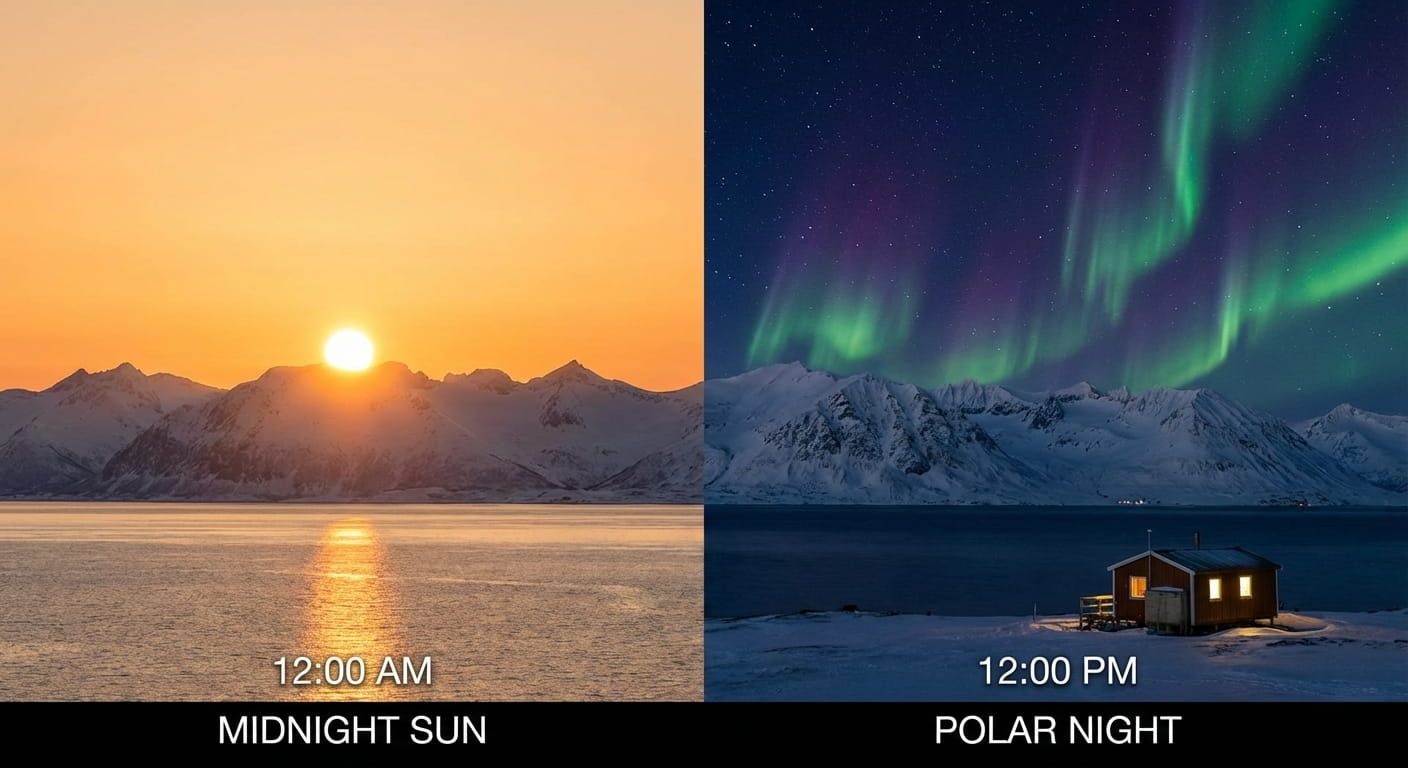
Move higher still and the extremes appear. Reykjavik and parts of northern Norway get very long summer daylight and very limited winter daylight. In far northern zones, the Sun can stay above the horizon for an entire day near the summer solstice. In winter, the Sun may not rise for a stretch.
Solstices and equinoxes set the rhythm
Two types of dates anchor the daylight calendar. Solstices mark the longest and shortest daylight days in each hemisphere. Equinoxes sit near the middle point, when day and night are closer in length in many places.
Cities like Chicago and New York City tend to show a smooth curve across the year, building toward a summer peak and dipping toward a winter low. Stockholm’s curve is steeper. Nairobi’s curve is gentle. Southern Hemisphere cities such as Sydney, Johannesburg, and Buenos Aires follow the same shape, with the peaks and dips flipped by half a year.
Daylight bands that match what you feel
You can get a strong intuition by thinking in latitude bands. Exact daylight depends on date and location, yet the pattern stays reliable.
What sunrise and sunset calculations really represent
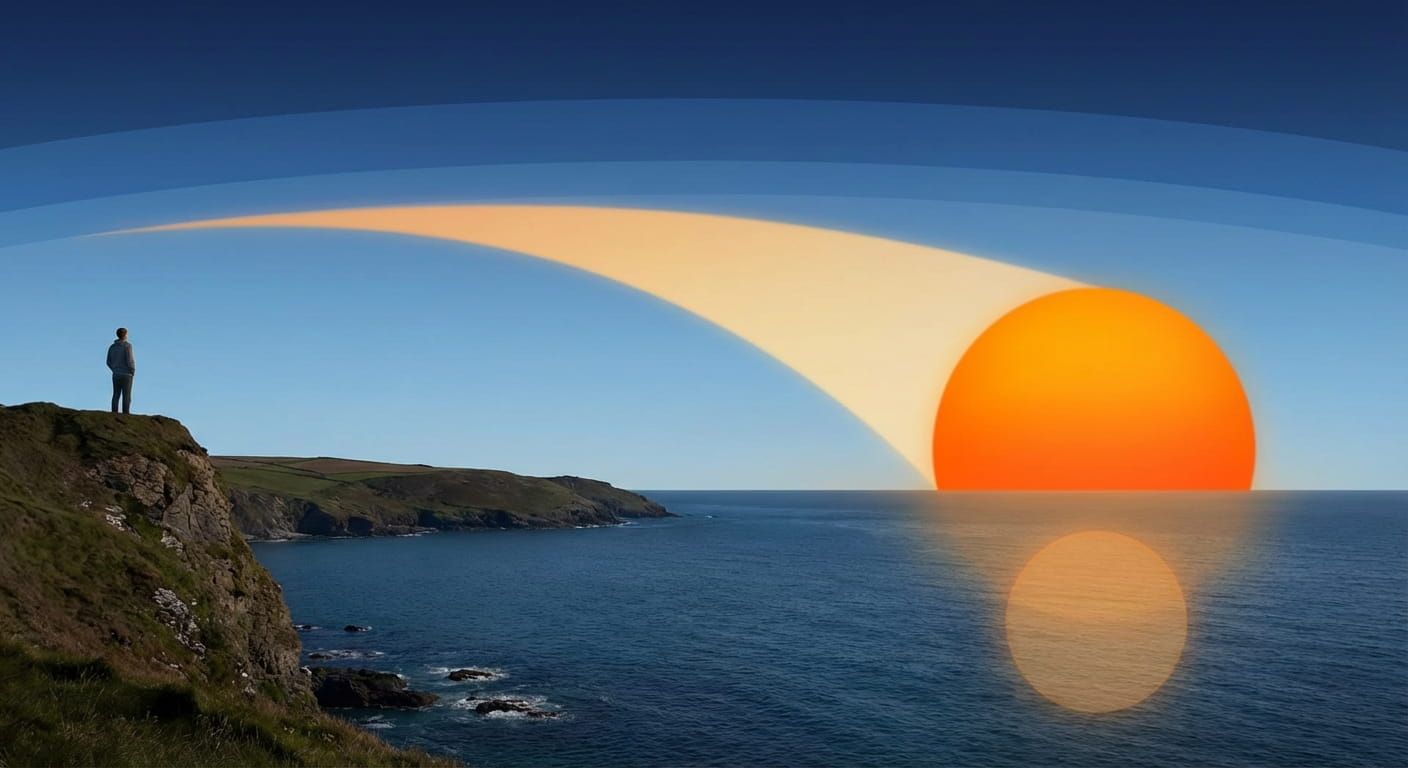
Sunrise and sunset are not measured from the Sun’s center. Most published times use a standard definition that accounts for the Sun’s apparent radius and typical atmospheric refraction. The air bends light slightly, which can make the Sun appear higher than it would in a vacuum.
This matters more at higher latitudes, where the Sun can skim near the horizon for longer. It is one reason why daylight can be a little longer than a simple half day assumption, especially around equinox dates.
Twilight adds usable light beyond daylight
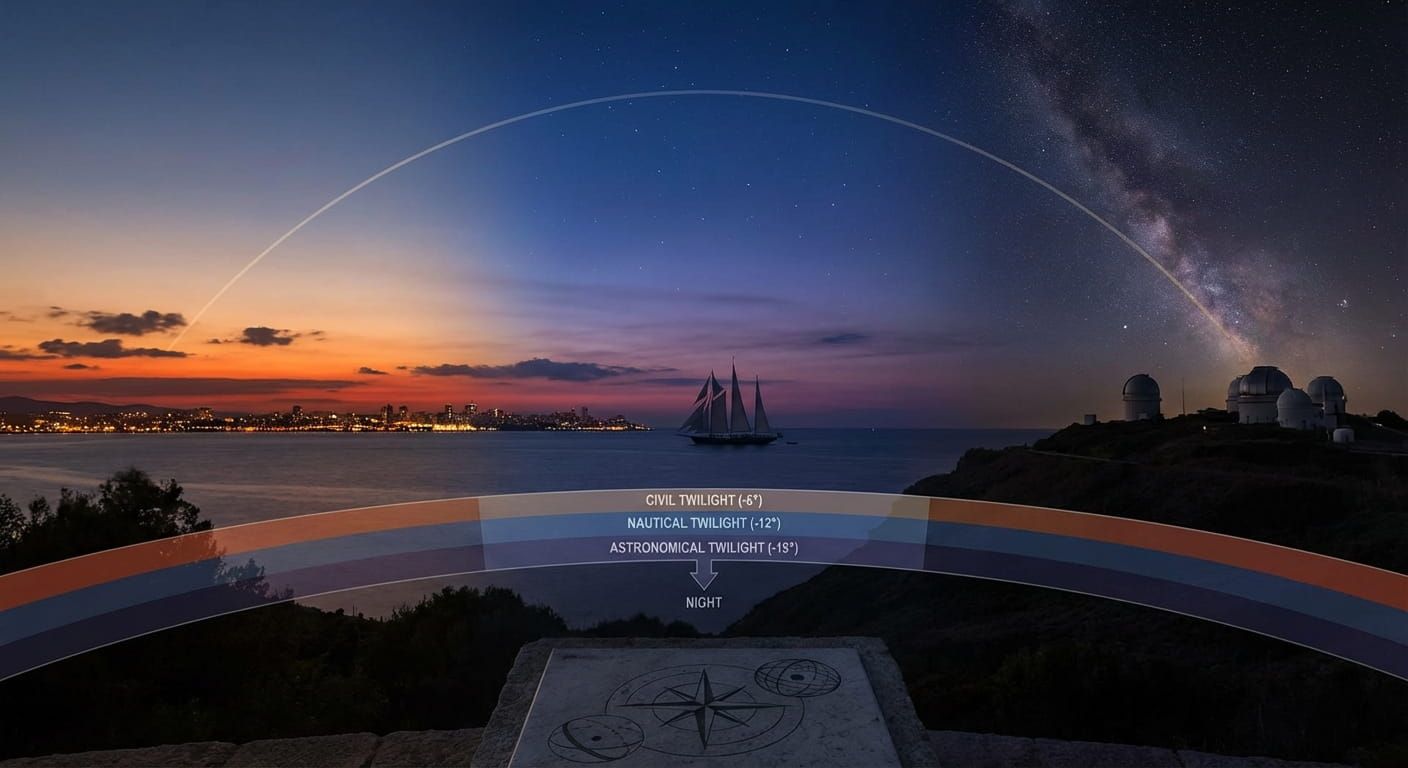
Many people care about light, not just sunrise and sunset. Twilight is the transition period when the Sun is below the horizon but the sky is still lit. Its length depends on how steeply the Sun drops below the horizon, which depends strongly on latitude and season.
At higher latitudes, twilight can stretch out because the Sun moves at a shallow angle relative to the horizon. At lower latitudes, twilight can feel shorter because the Sun drops more steeply. This is where civil, nautical, and astronomical twilight become useful concepts in real life. The details are laid out clearly in this civil, nautical, and astronomical twilight guide.
Solar noon explains why the clock can feel off
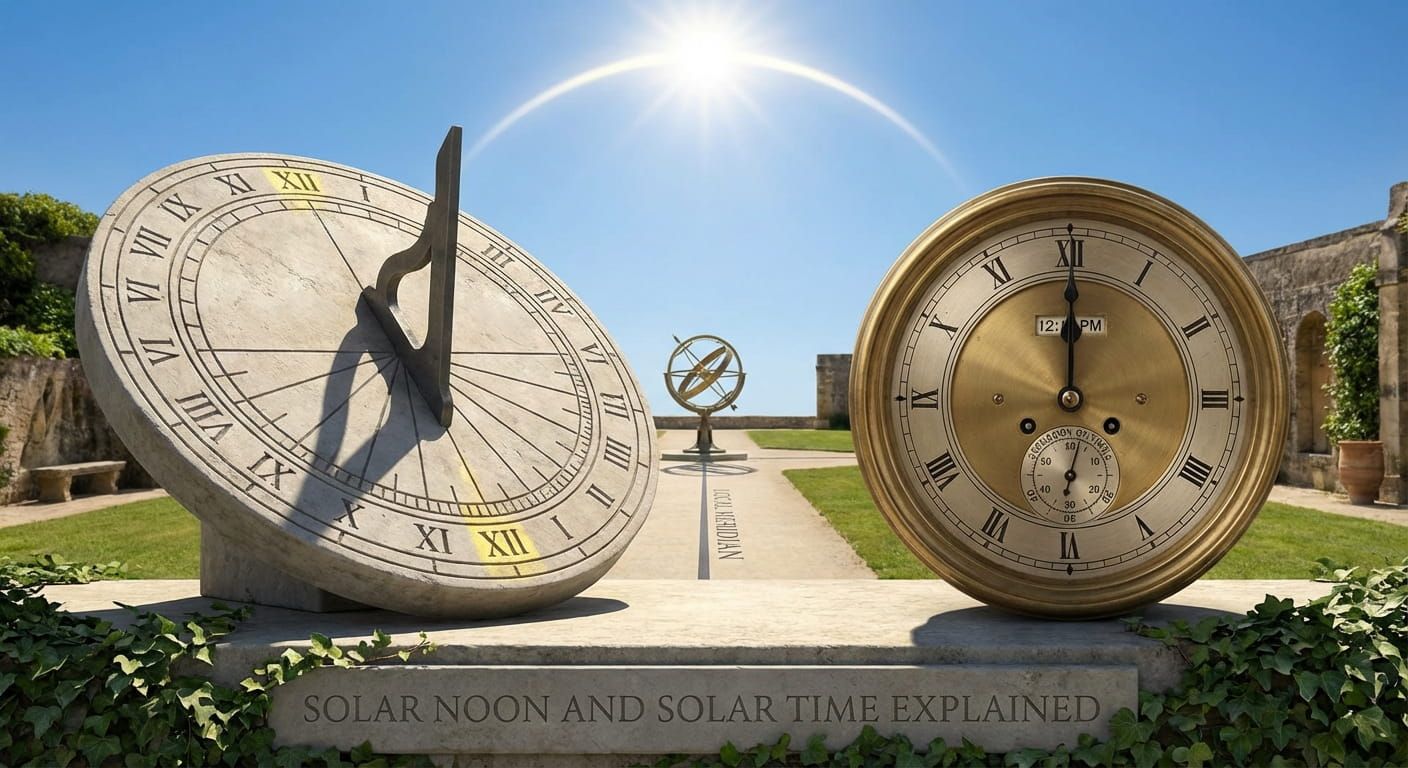
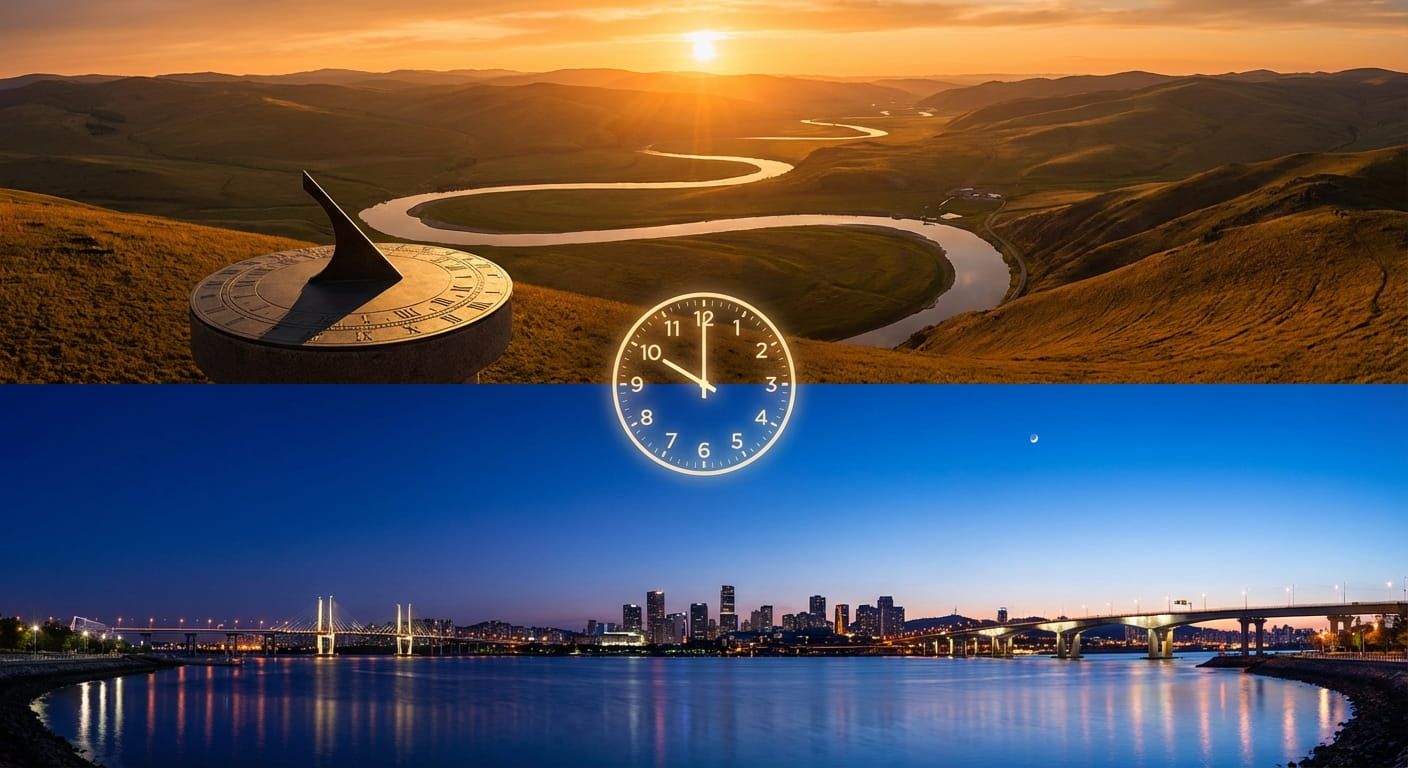
Latitude shapes the length of daylight. Longitude and time zones shape where daylight lands on your watch. Solar noon is the moment the Sun reaches its highest point for your location. That moment is not always at 12:00 local clock time.
This explains why two cities at similar latitude can have different looking schedules. Madrid and Berlin are both in Europe, yet their time zone and longitude context can shift the feel of mornings and evenings. For a grounded explanation of what solar noon means and how it connects to daily planning, solar noon and solar time is a helpful companion read.
Golden hour and blue hour shift with latitude
Soft light periods depend on how the Sun moves near the horizon. At higher latitudes in summer, the Sun can hang low for longer, stretching the gentle light window. At equatorial latitudes, the Sun climbs faster, which often shortens that window.
City photographers notice this quickly. Barcelona can give you warm evening light that lingers, while Bangkok can move from bright to dark faster on some dates. If you plan shoots by the minute, golden hour and blue hour timing helps you match the moment to the location.
A reading friendly list of common daylight myths
- Myth: day and night are always twelve hours each. Reality: refraction and definitions make daylight slightly longer than a simple split.
- Myth: the hottest days are the days with the most daylight. Reality: temperature lags because land and water store heat.
- Myth: time zones follow longitude lines exactly. Reality: time zones are also political, so solar noon can drift away from 12:00.
- Myth: sunrise and sunset shift the same amount everywhere. Reality: latitude changes the size of the seasonal swing.
- Myth: polar night means constant pitch black. Reality: twilight and moonlight can still bring some glow, depending on conditions.
How to use latitude to plan a trip or a routine
Latitude becomes practical when you need to plan a morning start, an outdoor event, or a flight arrival. A tourist walking in Amsterdam in winter wants to know how early darkness arrives. A runner in Los Angeles may care more about heat and a stable morning light pattern. A photographer in Tokyo might want a tidy evening schedule for city lights.
- Check the date first. Solstice weeks behave very differently from equinox weeks at higher latitudes.
- Match the plan to the light you need. A hike needs daylight, a skyline shoot may need twilight, a stargazing trip needs darkness.
- Consider the city’s time zone context. Two cities can share a latitude but feel different on the clock due to solar noon shifts.
- Use consistent sources for timing. For precise daily numbers, compare sunrise and sunset times from the same tool rather than mixing sources.
- Recheck if you change location. Moving from Rome to Stockholm changes more than temperature, it changes your light budget.
Country and city pages make comparisons easier
Sometimes you want a fast reality check for a specific place. If you are comparing a winter week in Japan with a summer week in Sweden, it helps to look at location pages built for browsing. Japan’s timing patterns are easy to scan on the Japan sunrise times section, while Nordic comparisons can be framed by looking at Norway’s seasonal differences via the Norway sunset times section.
For a city level feel, compare London with Reykjavik, or Toronto with Vancouver. Compare Dubai with Cairo, or Mexico City with Los Angeles. The latitude shift shows up in the length of the day, while the clock feel is shaped by longitude and time zone choices.
A quick set of examples across the world
Here are a few city snapshots that help the concept land. Each one is a different latitude story.
Nairobi and Lagos tend to keep daylight fairly steady. You can plan year round routines with fewer surprises. Twilight exists, yet the seasonal swing is modest compared with higher latitudes.
Paris, Berlin, Vienna, and Zurich show a clear seasonal curve. Summer evenings stay alive longer. Winter sunsets arrive earlier and can affect commutes, outdoor dining, and after school plans.
Stockholm and Reykjavik can feel like they live on different clocks across the year. Summer can bring very late light. Winter can compress daylight into a short band in the middle of the day.
Sydney, Johannesburg, and Buenos Aires follow the same physics as London or Chicago, yet the seasonal peaks land on different months. A June trip can mean shorter days there, while northern cities are enjoying long daylight.
How to read the pattern without doing math
A simple habit works well. Ask two questions.
- How far is the place from the equator? Farther usually means larger seasonal daylight change.
- What part of the year is it? Solstice season amplifies the swing, equinox season softens it.
That is enough to predict whether your evenings will feel long or short. For the exact daily times, checking a consistent source matters more than guessing. Many readers use Time.you for that because it keeps time accurate and presents location based sunrise and sunset details in a clean way.
When local geography shifts what you notice
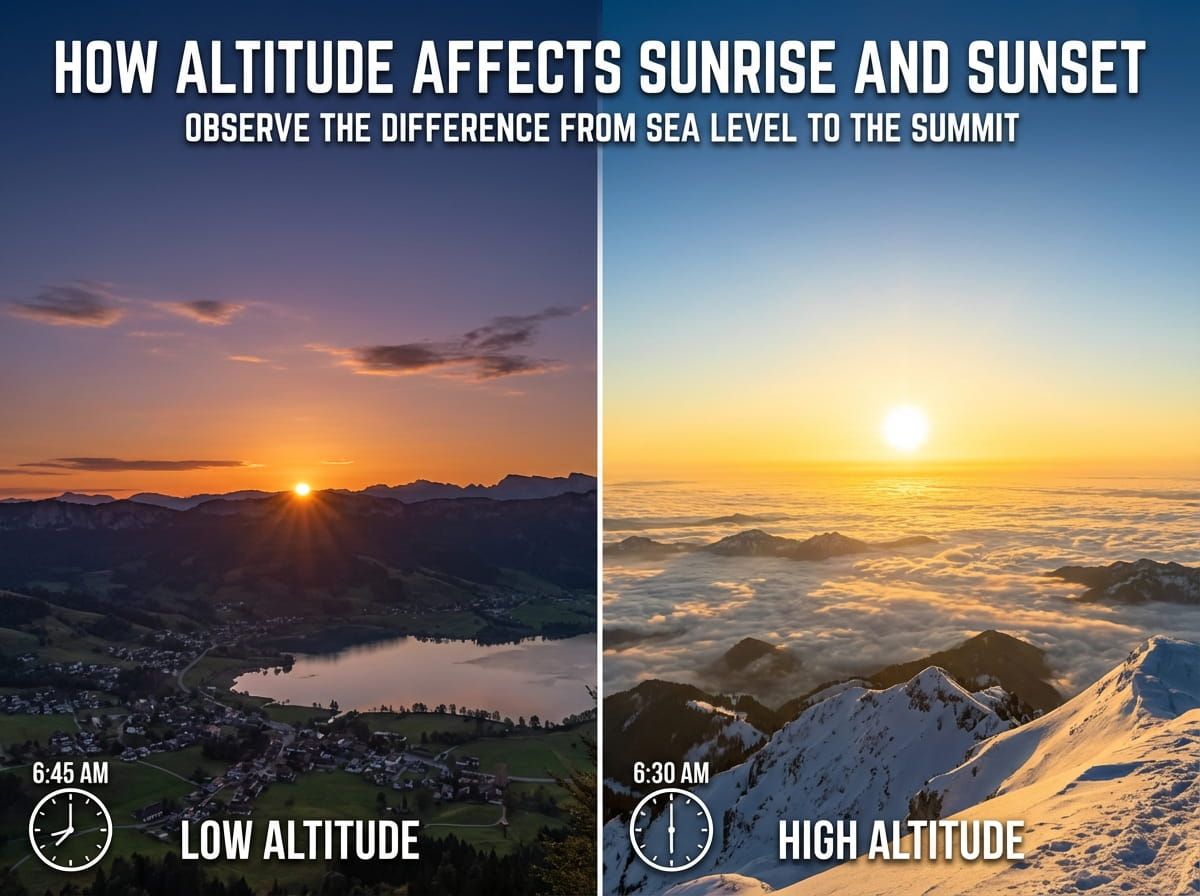
Latitude sets the big structure, yet local details can change what you personally experience. Mountains can delay sunrise for a valley. Tall buildings can hide the horizon in dense urban cores. Coastal haze can soften twilight.
This is why two people in the same city can argue about whether sunrise felt early. One saw the horizon, one did not. The published sunrise and sunset time remains the same, but the view changes.
Latitude explains the seasonal range, your surroundings explain what your eyes notice on a given day.
A closing thought for your next sunrise check
Daylight is not just a number. It shapes commutes, meal times, outdoor sports, photo plans, and even how travel days feel. Once you know your latitude story, the rest becomes easier to read. The Sun’s path is predictable. Your location decides the scale of the change.