The first time you meet a night that never gets dark, your brain keeps checking the sky as if it missed something. Then you realise nothing is missing, you are standing inside a real rhythm of Earth, where sunlight can circle for days, and darkness can settle in for weeks.
Midnight sun and polar night happen because Earth is tilted. Near the poles, that tilt can keep the Sun above the horizon all day in summer, or keep it below the horizon all day in winter. The effect grows as you move closer to the Arctic or Antarctic Circles. Sunrise and sunset still matter, but you often track twilight, solar noon, and daylight length instead of a normal day night cycle.
Engagement check, how well do you read the sky
What midnight sun and polar night actually mean
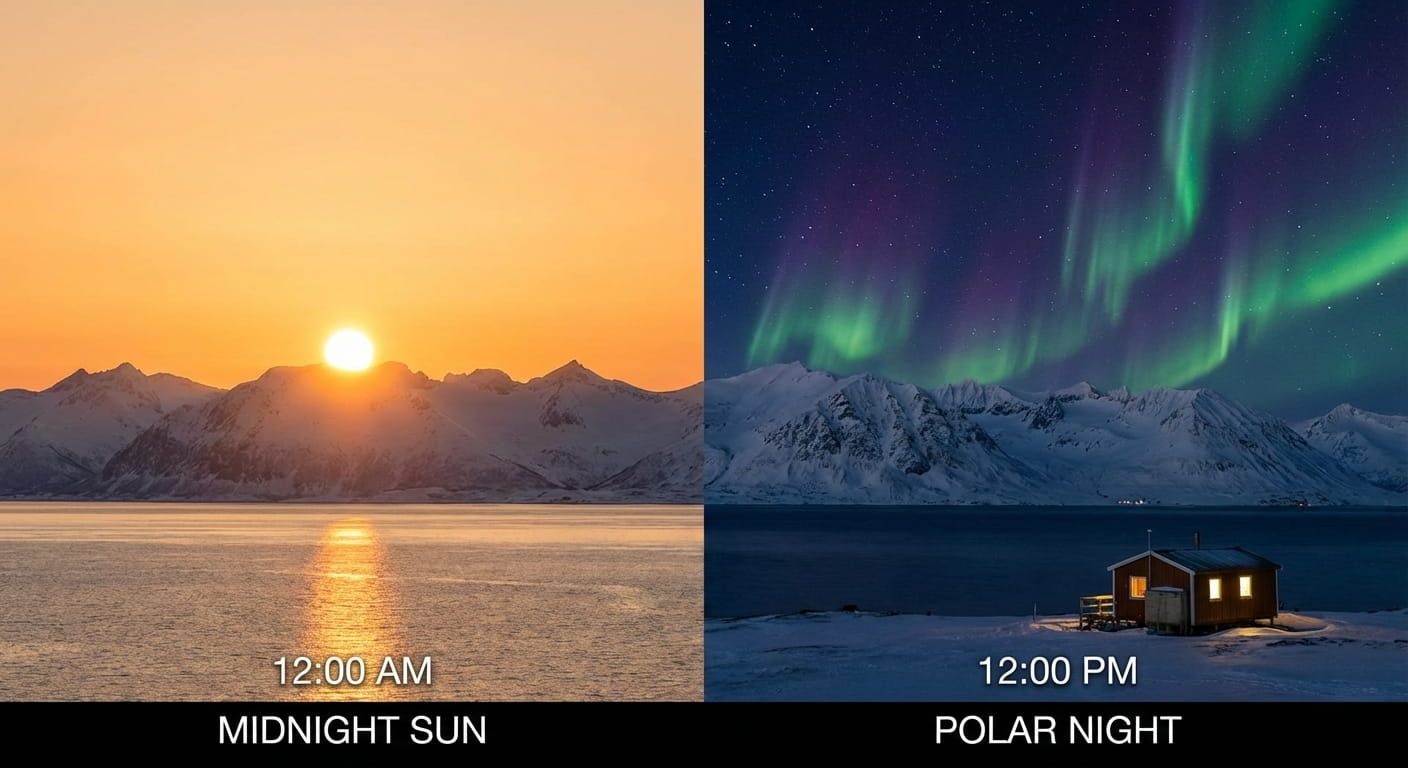
Midnight sun is the period when the Sun stays above the horizon for a full day, including local midnight. It can last from a single day to many weeks, depending on how far north or south you are.
Polar night is the opposite. The Sun stays below the horizon for a full day. Yet that does not always mean total darkness. You can still get long twilight, a glowing band near the horizon, and snow or clouds can reflect surprising light.
If you want to see how this looks in real sunrise and sunset times, you can jump straight into sunrise times and compare locations by date. The difference between Oslo and Singapore is easy to spot once you watch the times change week by week.
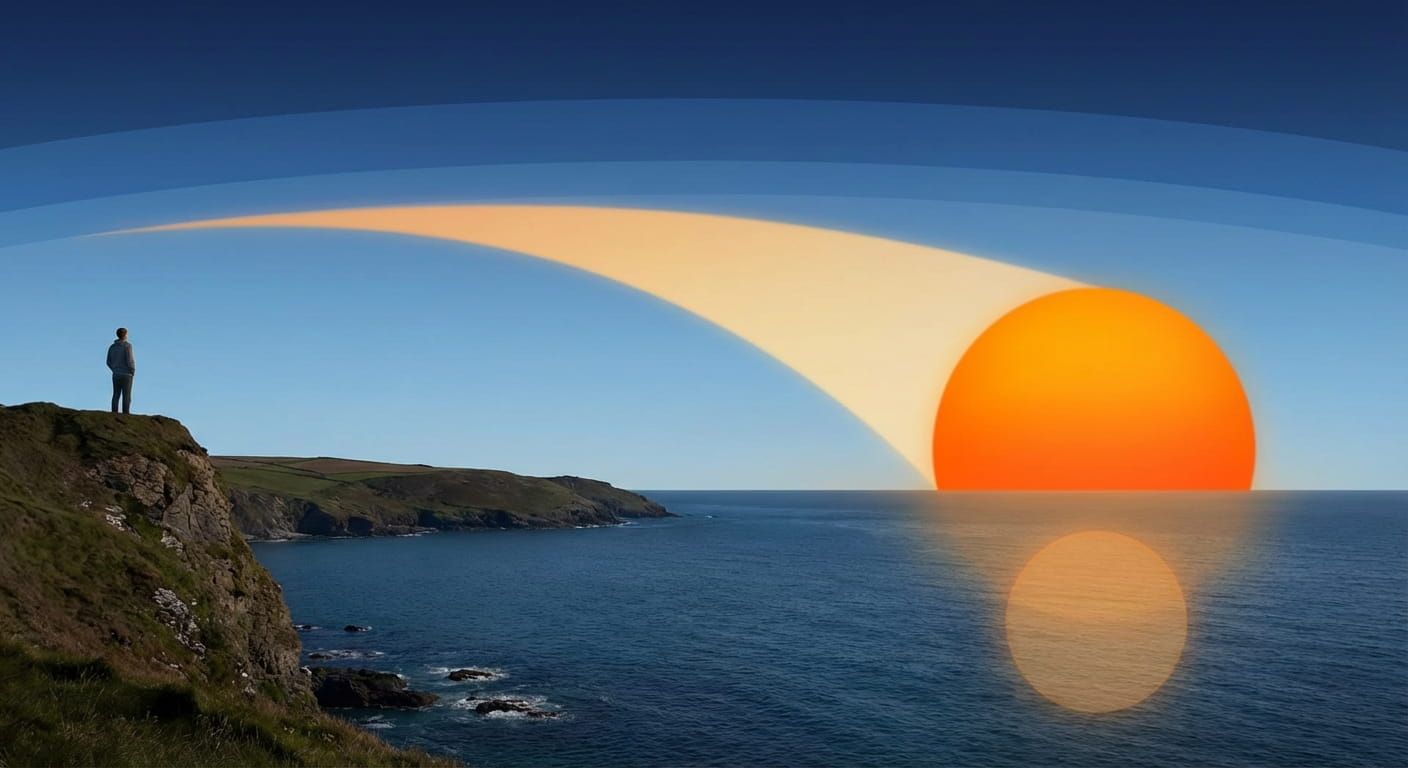
Think of the horizon as a line the Sun must cross for sunrise and sunset. Near the poles, the Sun can skim above that line all day in summer, or skim below it all day in winter.
Why Earth’s tilt creates extreme daylight
Earth spins once per day, and it orbits the Sun once per year. The key detail is that Earth’s spin axis is tilted relative to its orbit. That tilt stays pointed in nearly the same direction as Earth moves around the Sun.
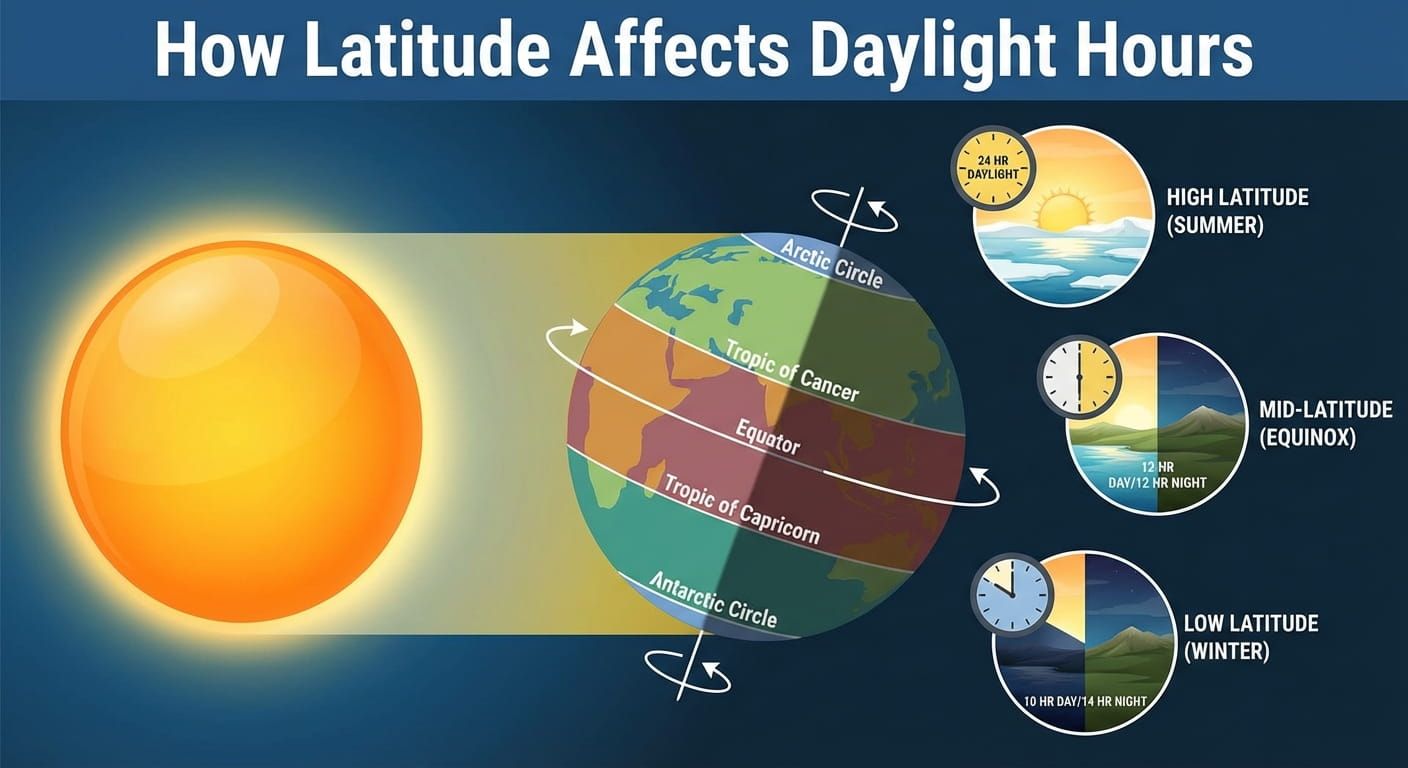
During one half of the year, the Northern Hemisphere tilts toward the Sun. The Sun’s daily path appears higher in the sky there, days get longer, and nights get shorter. During the other half, the Northern Hemisphere tilts away, the Sun’s path stays low, and daylight shrinks.
Near the equator, the Sun rises and sets in a steady rhythm. Near the poles, the Sun’s path can circle around the sky without dipping below the horizon, or it can circle below it.
Latitude, the dial that controls daylight length
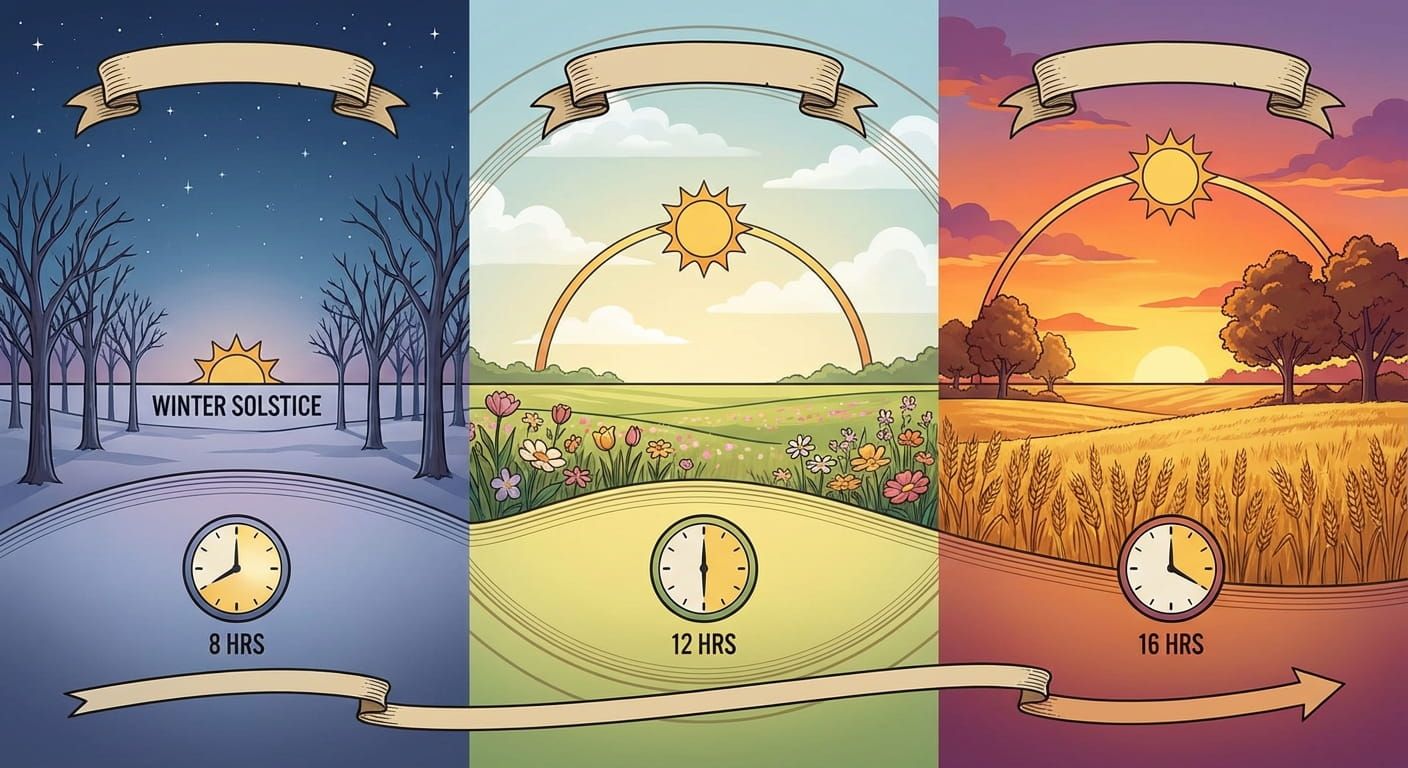
Latitude is the strongest predictor of how dramatic the midnight sun and polar night feel. A city like Singapore sits near the equator, so day length stays close to twelve hours across the year. A city like Reykjavík shifts much more across seasons. A place like Svalbard can swing to the edge of what most people imagine a day can be.
To connect latitude with what your clock shows, it helps to look at daylight length charts and how they change month by month. The guide on latitude and daylight hours can give you a clean way to compare regions, especially if you are planning travel, photography, or outdoor work.
Where it happens, a tour from the Arctic to Antarctica
Midnight sun occurs in areas north of the Arctic Circle and south of the Antarctic Circle. Polar night occurs in those same areas during their respective winters.
Here are examples that help you picture it, using places you might recognise from flight routes and weather reports:
- Norway, especially northern towns, where summer nights can stay bright for long stretches.
- Sweden and Finland, where the far north sees very long summer days, and winter days that feel compressed.
- Iceland, where nights can stay light in summer, even if the Sun dips close to the horizon.
- Russia, with vast high latitude regions where the seasonal swing is strong.
- Greenland, where latitude and ice together make light behave in dramatic ways.
- Antarctica, where research stations can see continuous daylight in summer and prolonged darkness in winter.
If you prefer a country view with day by day timing, browsing Norway sunrise times can make the seasonal change feel real fast, because you can compare the same date across different Norwegian cities.
Twilight becomes the main event near the poles
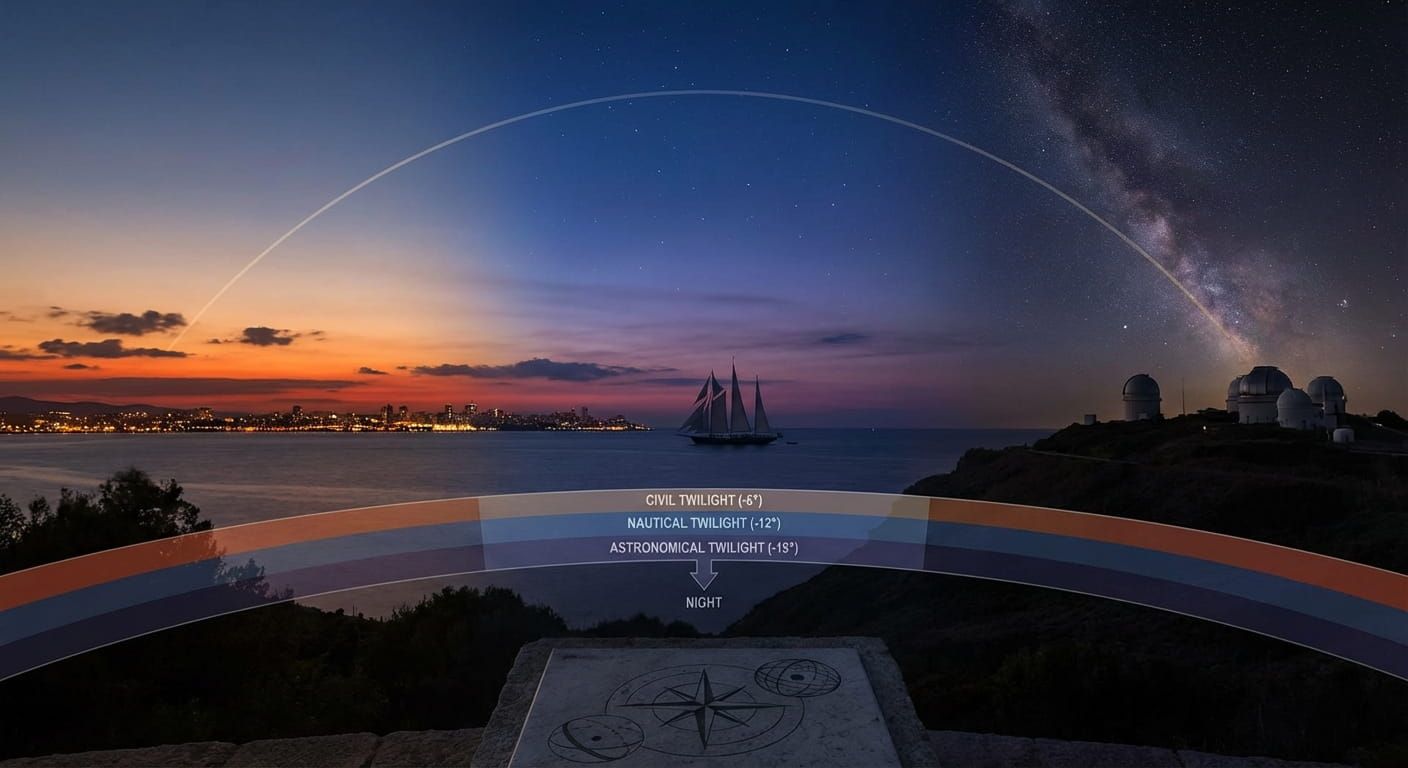
In mid latitudes, sunrise and sunset define the day. In polar regions, twilight often tells you more about how the day feels. Twilight is the period when the Sun is below the horizon but the sky still glows because sunlight scatters through the atmosphere.
There are three common twilight bands. Civil twilight is bright enough that many outdoor tasks still feel workable. Nautical twilight is dimmer, where the horizon can still be visible at sea in good conditions. Astronomical twilight is the deepest band before true night.
If you want to track these bands with precision, the breakdown in civil, nautical, and astronomical twilight is the most helpful companion to this topic, because polar night often includes long twilight rather than full darkness all day.
Solar noon, a steadier reference than sunrise during extremes
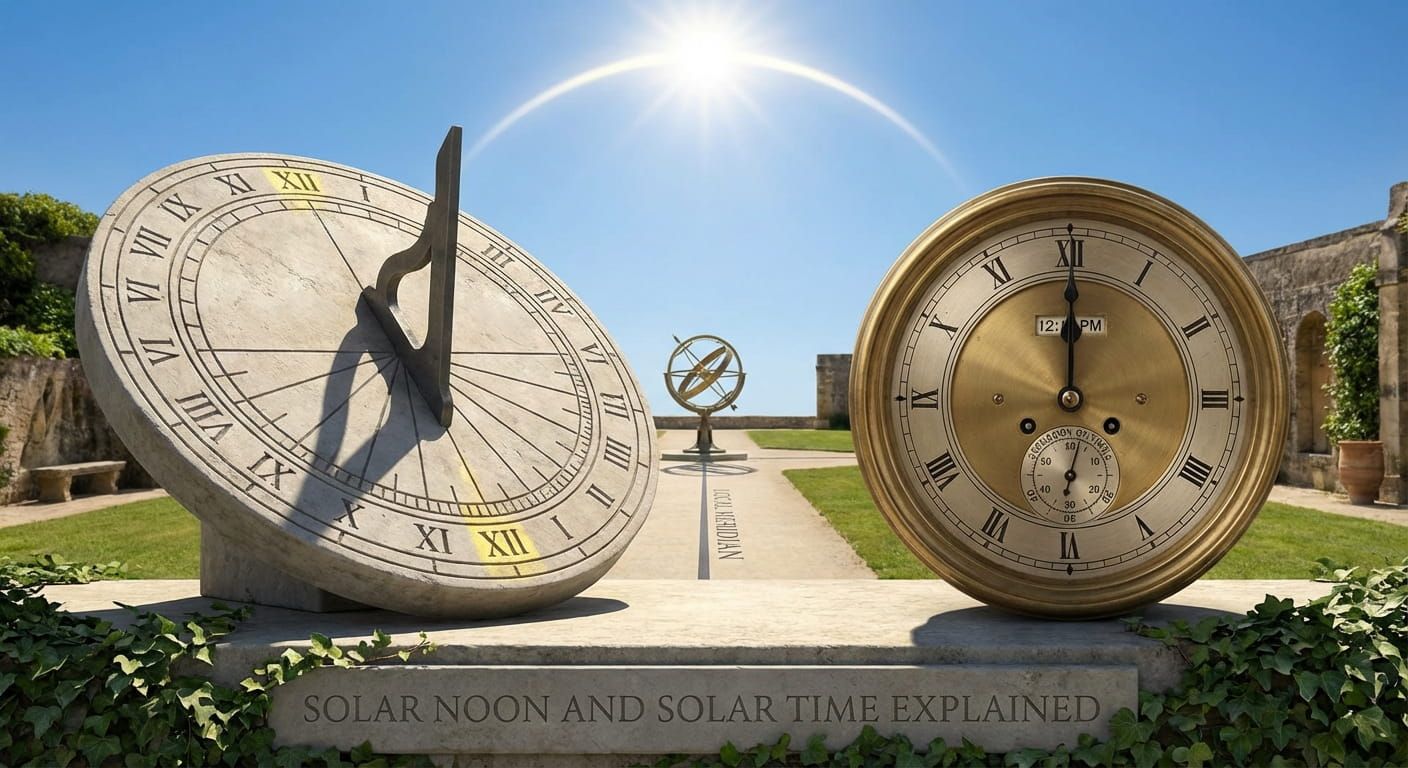
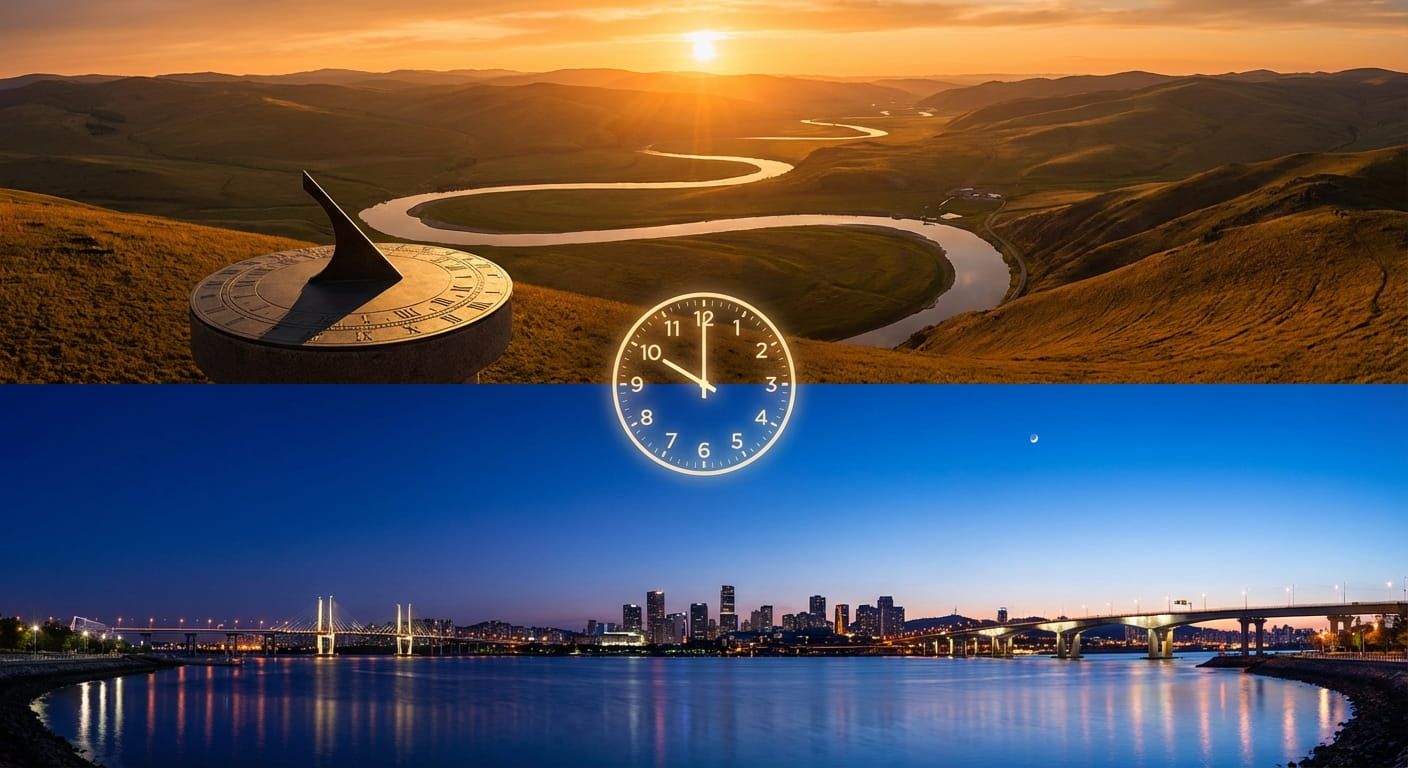
When the Sun refuses to rise or refuses to set, you still have a daily peak where the Sun is highest in the sky for that location. That moment is solar noon. It is not always at 12:00 on your clock, because time zones and daylight saving can shift clock time away from the Sun.
In places with midnight sun, solar noon can become the anchor for routines. It is also a useful point for photographers who want the highest Sun angle of the day, or for anyone trying to understand shadows when the light feels endless.
If you like the technical side, solar noon and solar time helps explain why your watch and the sky can disagree, especially in wide countries like Canada, Russia, and the United States.
Solstices, equinoxes, and the turning points you can feel
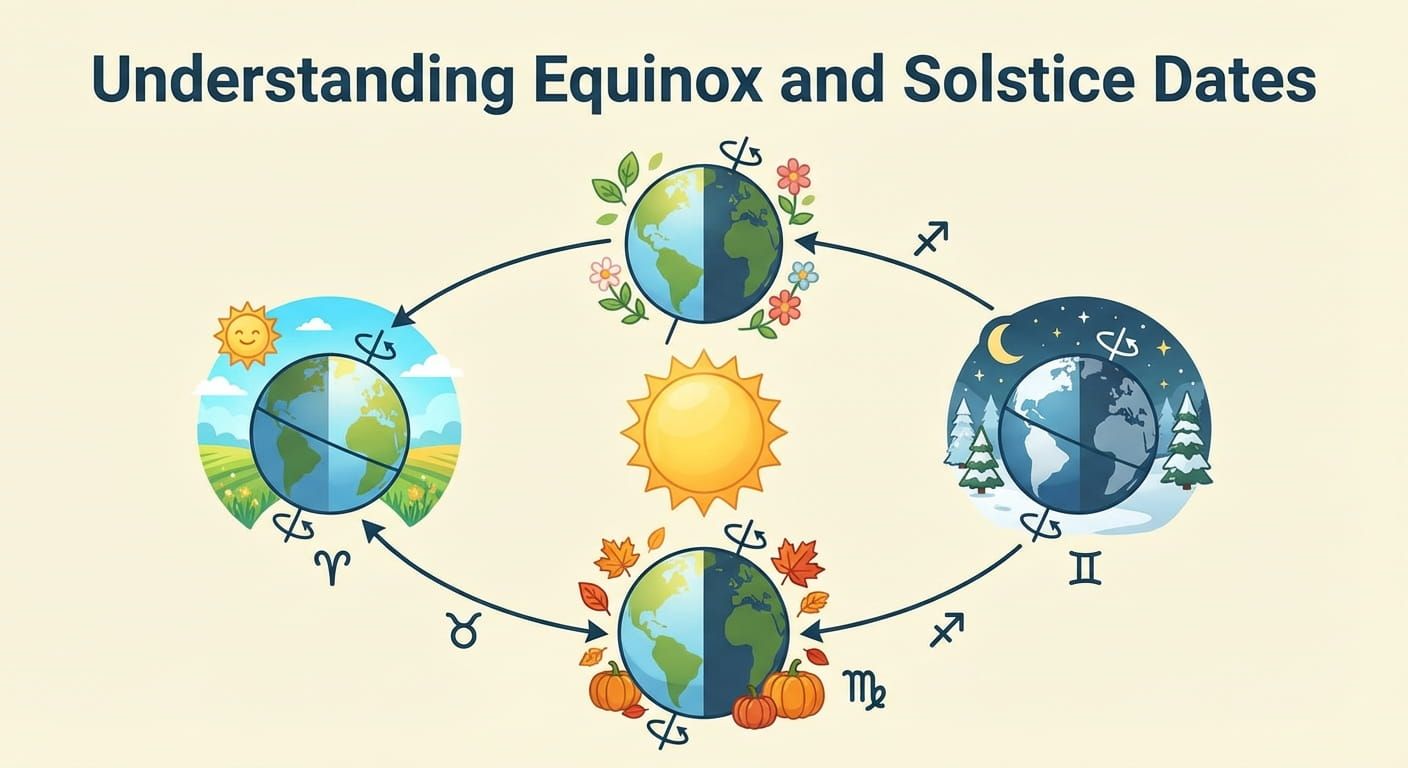
The solstices and equinoxes are the seasonal signposts behind the midnight sun and polar night cycle.
At the June solstice, the Northern Hemisphere is tilted most toward the Sun. That is when the Arctic sees its longest continuous daylight. At the December solstice, the Northern Hemisphere tilts most away. That is when polar night reaches its deepest stretch in the Arctic.
Equinoxes are the transitions where day and night are closer in length across much of the planet. Near the poles, equinox periods can feel like the moment the world flips from mostly day to mostly night, or the other way around, because the Sun’s path shifts quickly relative to the horizon.
If you are planning trips or school projects, it helps to have the calendar dates handy from equinox and solstice dates.
How to read a sunrise and sunset page when the Sun does not behave
Near the poles, a sunrise and sunset table can show unusual results. You might see no sunrise or no sunset on a date. You might see a note that the Sun is above the horizon all day, or below the horizon all day.
Here is a simple way to interpret what you see, especially if you are jumping between locations like Reykjavík, Tromsø, Helsinki, and Murmansk:
- Check the latitude or region first. Higher latitude means a bigger seasonal swing.
- Look for daylight length. It can be more informative than the event times.
- Use twilight bands as your brightness clue. Twilight can keep the day feeling alive even without sunrise.
- Anchor your schedule to solar noon. It gives you a stable daily peak.
- Compare the same date across two places. Oslo versus Stockholm, or Finland versus Iceland, makes patterns obvious.
- Remember the opposite season in the Southern Hemisphere. Antarctica flips the calendar compared with Europe.
For a quick comparison of end of day timing, you can also check sunset times and watch how the evening stretches out in summer as you move north through countries like Sweden and Norway.
Sky events you will see
This table helps you translate terms into what you will actually notice outside. The colours are calm on purpose, they are meant to read well on screens at night.
What your body feels, sleep, mood, and time sense
Human biology likes a clear day and night cue. Midnight sun can confuse that cue. Polar night can do the same in the other direction. People often report that time feels slippery in both cases.
- During midnight sun, you may feel awake longer than usual because brightness pushes your brain toward daytime mode.
- During polar night, you may feel sleepy earlier, or feel sluggish, because the outside world looks like a long evening.
- Indoor light matters, strong morning light helps your body keep a stable rhythm.
- Consistent meal timing helps, food schedules can act like a daily anchor when the sky does not.
Pick one fixed wake time and protect it for a week. Add bright light soon after waking. Keep bedtime flexible, but keep wake time steady. This works surprisingly well in both Tromsø and Antarctica station life.
Photography notes, golden light in unusual places
In high latitudes, golden light can last longer because the Sun stays low for extended periods. That can create long soft shadows and a warm tone that seems to go on forever.
Even outside the poles, people chase this timing for portraits, cityscapes, and travel shots. The timing guide for golden hour and blue hour timing is handy because twilight behaviour is part of the same story, just less extreme in places like France, Italy, Japan, and Greece.
Common misunderstandings that trip people up
These mix ups show up a lot in classrooms and travel planning chats. Clearing them early saves confusion later.
- Polar night equals total darkness. Not always. Twilight can stretch, and snow can reflect enough light to read signs outdoors.
- Midnight sun means the Sun is overhead. Not at all. It often sits low, circling near the horizon.
- Time zones explain everything. Time zones shape clock time, but latitude and season shape the Sun’s path.
- The Arctic and Antarctica behave the same on the same date. They are flipped by season. June is summer north, winter south.
Planning travel and daily life around these extremes
If you are heading to places like Norway, Sweden, Finland, Iceland, Greenland, or even to research zones in Antarctica, planning is less about the exact sunrise moment and more about managing light and time.
- Bring an eye mask. Bright rooms can keep you awake in June and July.
- Use a consistent schedule. Your body likes repetition more than it likes the sky.
- Pick activity windows. Treat midday as your outdoor block in winter, even if it still feels dim.
- Track twilight. It tells you when the horizon will glow, which is often the most beautiful part.
Time.you is built for this kind of planning, because it is an atomic clock synchronized service. That matters when you are coordinating across cities, countries, and time zones, and you want your timing to match the real world as closely as possible.
The sky’s rhythm, once you see it, you never unsee it
Midnight sun and polar night can feel like magic, but they are also a clean demonstration of geometry. Earth tilts, Earth spins, and your latitude decides how that tilt shows up in your daily life.
If you take one habit from this article, make it this: track daylight length and twilight along with sunrise and sunset. It gives you a fuller picture, whether you are comparing Singapore with Iceland, planning a trip across Norway, or following seasons at the edge of Antarctica.