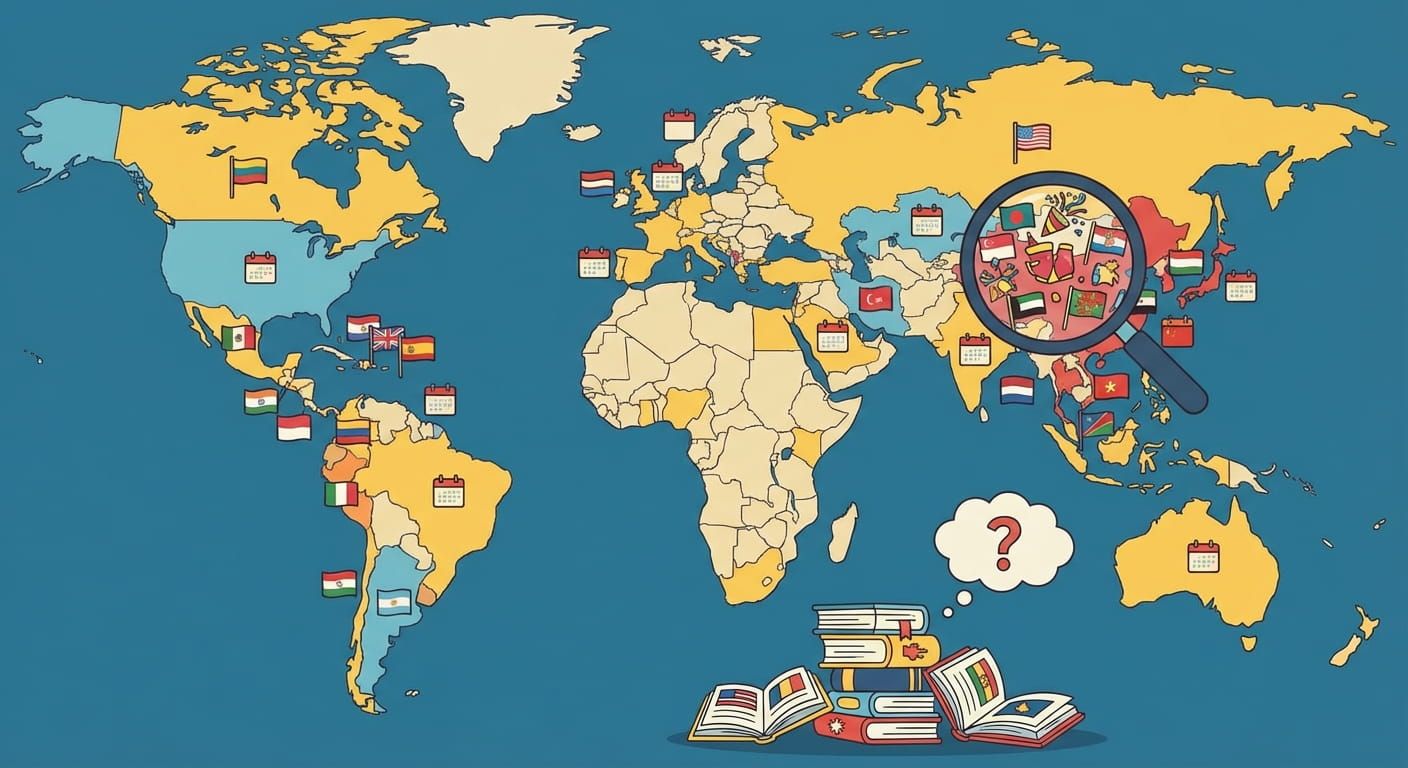
National days and independence days sit at the heart of public life. They can be proud, complicated, joyful, reflective, or all of that at once. In one country the date marks independence from colonial rule, in another it celebrates a constitution, a revolution, the founding of a modern state, or the unification of regions. If you are planning travel, school calendars, staffing, or family visits, these dates matter because they often come with closures, parades, fireworks, and a noticeable shift in how a place feels for a full day.
Key takeaway
National and independence days are official public holidays in many places, but the reason behind the date varies, independence, republic status, constitution day, unification, revolution, or the birthday of a modern nation. The practical part is simple: check the country, check the year, then confirm whether the day is observed on a nearby weekday if it lands on a weekend. Time.you helps you line up dates across time zones and find country calendars, so you can plan without guesswork.
A quick challenge before you scroll
Mini quiz: Choose the best answer for each. Tap “Check answers” to see your score.
What counts as a national day, and why countries pick different meanings
A “national day” is a label, not a single story. The same phrase can point to very different events depending on where you are standing. Some countries celebrate the day they became independent. Others highlight the day a constitution took effect, a republic was proclaimed, a monarchy formed, or regions united into one state. A few countries have more than one date with national importance, and only one of them may be a full public holiday.
Quote to keep in mind: A national day is often less about one date being “right” and more about what a country wants to remember together in public.
Independence days are a subset of national days. They tend to focus on sovereignty, self rule, or a legal end to colonial administration. Yet even “independence” can have multiple milestones: a declaration, an agreement, a transfer of power, international recognition, or a final constitution that seals the change. This is why you will sometimes see countries commemorate one date culturally, and treat another as the official public holiday.
Observed dates, weekend rules, and why your calendar needs the year
Public holidays are not just about history, they are also about how the working week runs. Many governments choose to keep public holidays useful for schools, offices, and services. That is where observed dates come in. If a holiday falls on a weekend, it may be observed on the next Monday, or sometimes the previous Friday, depending on local rules and tradition.
Observed dates are also shaped by practical limits. Some places avoid stacking too many closures in one week. Some choose Monday shifts, some set fixed rules, and some decide case by case. The result is that two people can both be “right” about a holiday if one is talking about the official date and the other is talking about the observed day off. If you want a deeper explanation of how observed days work, Time.you has a helpful write up on public holiday observed dates.
- Fixed date holidays can still move for time off if they land on a weekend.
- Some countries shift only certain holidays, not all of them.
- In places with regional public holidays, observed rules can vary by region.
- Private employers may add extra days, but legal public holidays follow official calendars.
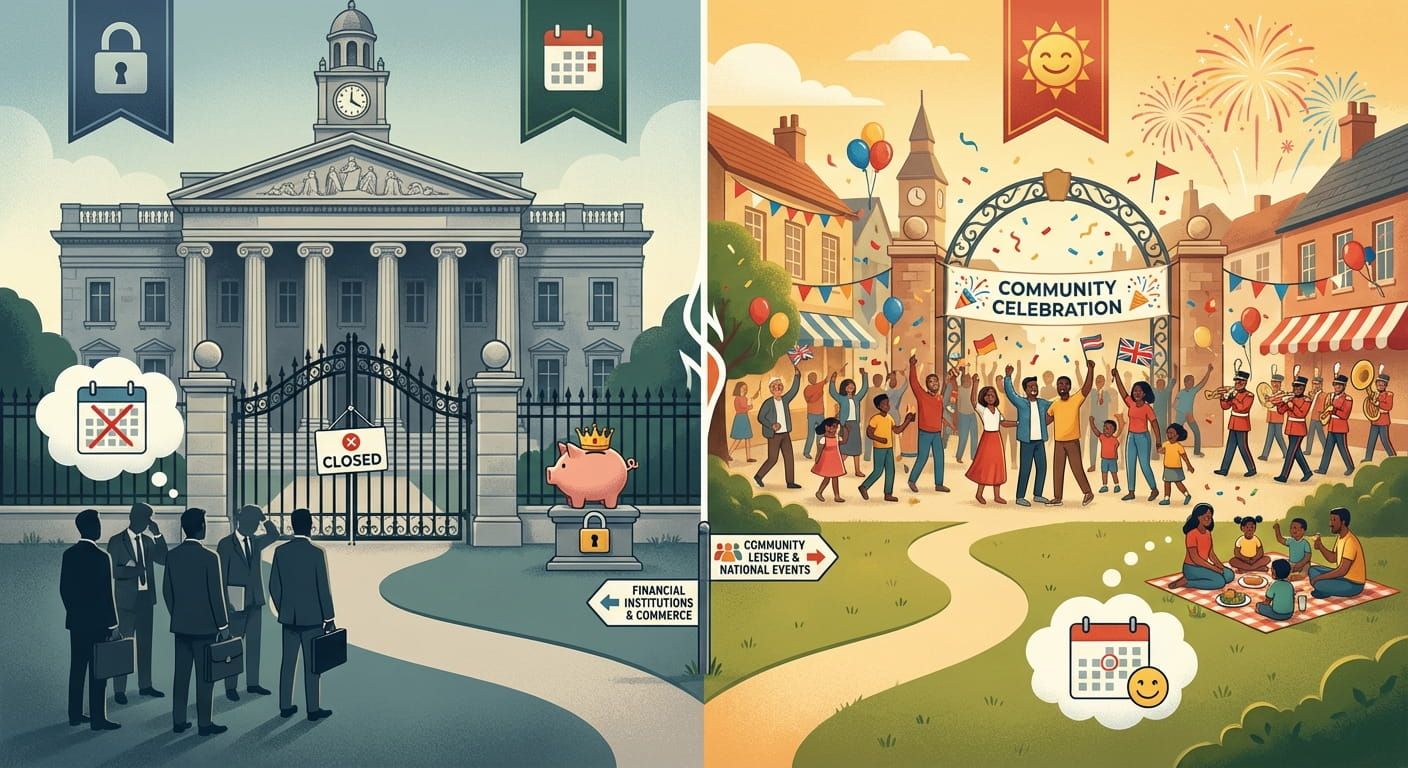
If you manage schedules, it also helps to understand how public holidays differ from other categories. Some places use “bank holiday” language, some use “public holiday”, some mix both. Time.you breaks it down clearly in the article on difference between bank and public holidays.
A practical way to find the next national or independence day
When people say “What is the next holiday”, they usually mean, “When is the next day that changes opening hours, staffing, or travel flow”. You can get there quickly with a simple routine. It keeps you from relying on outdated lists or someone’s memory from a different year.
- Pick the country you care about and open its holiday calendar for the current year.
- Look for the national day or independence day label, then check the official date.
- Scan for any observed date notes when the holiday falls on a weekend.
- If you are coordinating across borders, confirm the local time zone and the date where you are.
- Save the page or add it to your calendar with the correct year selected.
Time.you is built for this kind of planning. It provides exact time for any time zone worldwide, aligned to atomic clock synchronized time. That precision is handy when a team in Singapore is coordinating with colleagues in Europe or the Americas and you want to avoid a “wrong day” mistake caused by time zones.
Examples from around the world, what people celebrate and how the day feels
Instead of trying to cram every country into one scrolling wall of dates, it helps to look at patterns. Here are a few widely known examples, plus how the holiday often shows up in daily life. Use these as starting points, then check the country calendar for the exact year and any observed day rules.
United States celebrates Independence Day on July 4, often with parades, concerts, and fireworks. Planning tip: travel demand rises fast, and closures vary by city. For official dates and other public holidays, check United States holidays.
India observes Independence Day on August 15, with flag hoisting, speeches, and cultural programs. Some states also have state specific observances that affect closures. A reliable calendar view is on India holidays.
Singapore marks National Day on August 9, with a major parade, performances, and fireworks. It is also a day when timing matters for live broadcasts and meetups, which makes time zone clarity useful. The full calendar is on Singapore holidays.
France celebrates Bastille Day on July 14, tied to the French Revolution and national identity. Expect military parades in Paris and local events across the country. For dates and observances, visit France holidays.
Brazil observes Independence Day on September 7, often with civic ceremonies and parades. If you are planning travel, note that closures and local events can affect transit. Check Brazil holidays.
Japan has National Foundation Day on February 11, and other civic holidays across the year. It can be a calmer national holiday compared with fireworks style celebrations elsewhere. For accurate dates, see Japan holidays.
South Africa has Freedom Day on April 27, tied to democratic elections and modern civic identity. It often includes community events and speeches. Confirm the calendar at South Africa holidays.
These examples also show why “national day” is not one single format. Some are loud. Some are solemn. Some are civic and educational. Some focus on military ceremony. Many combine community festivals with official speeches.
National day themes
This table is not trying to rank holidays. It is a way to understand what the label usually means, so you can interpret a country calendar at a glance. The colors are calm and professional, and they are chosen to keep text readable.
| Theme | What it usually marks | Planning note | How celebrations often show up |
|---|---|---|---|
| Independence | Sovereignty or the end of external rule, sometimes tied to a transfer of power | Confirm if the public holiday uses the declaration date or a later legal date | Parades, speeches, flag ceremonies, fireworks in many places |
| Constitution | A constitution taking effect, or a major legal reset | May be a quieter closure day, still impacts offices and schools | Civic education events, museum programs, official ceremonies |
| Republic | A republic being proclaimed or a monarchy ending | Often fixed date, check observed rules if it lands on a weekend | Public ceremonies, flag raising, cultural performances |
| Unification | Regions joining into one modern state | May be shared with regional days that create extra closures | Concerts, community fairs, national symbols highlighted in media |
| Founding day | A founding moment for the modern state, sometimes tied to leadership or a key vote | Check if the holiday name changes over time, calendars may be updated | Official speeches, awards, local festivals, family gatherings |
Ten things these holidays commonly include
Every country has its own style, yet a few familiar ingredients show up again and again. This is useful when you are planning logistics and trying to guess how busy a day might be.
- A flag raising ceremony in a central square or at schools
- A major speech, often from the head of state or government
- Parades that affect road closures and public transport routes
- Fireworks, sometimes scheduled late evening
- Museums or cultural sites offering special programming
- Community meals, picnics, or shared outdoor events
- Music and performances that run on a fixed timetable
- Extra travel demand, especially for families visiting hometowns
- Retail changes, with big stores sometimes open and smaller shops closed
- Media coverage that shifts the mood of the whole day
Using country calendars, without getting lost in the details
Holiday planning becomes much easier when you use one consistent source for dates, and keep the year in view. Time.you already focuses on precise time across cities, countries, and time zones. That makes it a natural home for public holiday calendars, because a date is only useful if you know which local day it falls on where you are.
If you are building a travel plan, you may also enjoy reading major global public holidays to see which dates tend to create worldwide travel spikes and busy airports. If you manage a team, it can be helpful to compare how many public holidays different countries have, and Time.you has a good overview on most public holidays. Those two pieces pair nicely with national day planning because they give you context for how “holiday heavy” a calendar might feel across the year.
Planning tip: If your team works across borders, write the holiday as “country, date, time zone”. That one habit prevents mistakes when one region is already on the next calendar day.
Common questions people ask, answered without the confusion
Can a country have more than one national day?
Yes. Some countries have a national day and an independence day, plus other civic milestones that are important but not always full public holidays. In some places, a founding date is celebrated culturally while a legal independence date is the official day off. Always check the official holiday list for the year you need.
Are national days always public holidays?
Many are, yet not all. Some are ceremonial days without mandated closures. Others are full public holidays with pay rules, school closures, and service changes. If you are unsure about workplace impact, Time.you also covers worker context in employee rights public holidays.
Why do names vary so much?
Names reflect politics, language, and what a society wants to highlight. You might see “Independence Day”, “Freedom Day”, “Republic Day”, “National Day”, “Liberation Day”, “Unification Day”, or a date name that locals instantly recognize. The name is your clue to the story behind the day.
How do territories and regions fit in?
Territories can have their own public holiday calendars. Some match a larger country, some include local days that matter more than national ones. This is one reason it helps to use the specific place page you care about, rather than assuming a single national calendar covers everyone.
A final note for planning around pride, history, and real life schedules
National and independence days are about identity, yet they also shape ordinary life: office hours, school closures, travel crowds, and the rhythm of a city for a full day. The best approach is respectful and practical at the same time. Read the name of the holiday, understand what it marks, then confirm the date for the exact year and place you need. Pair that with reliable time zone awareness, and your plans will land smoothly, whether you are booking flights, staffing a shift, or timing a call across continents.