Latitude quietly shapes your day. It decides how high the Sun climbs, how long it hangs around, and how fast daylight changes across the seasons. Two places can share the same clock time format and still feel worlds apart at noon, simply because they sit at different latitudes.
Key takeaway
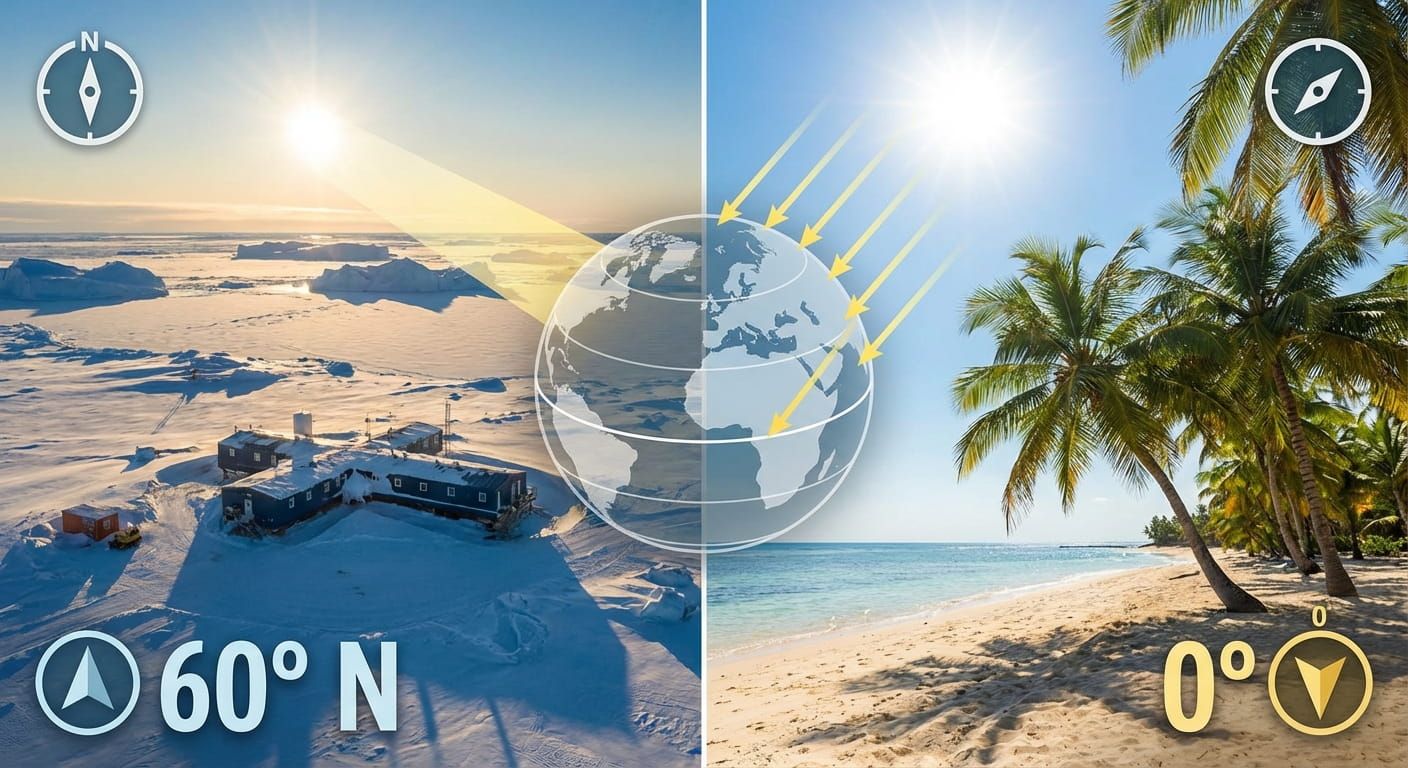
Latitude controls sunlight by setting the Sun’s daily path across your sky. Near the equator, daylight stays close to 12 hours year round, and the Sun can get very high overhead. Move toward higher latitudes, and the Sun stays lower, shadows stretch, and day length swings widely with the seasons. Past the Arctic and Antarctic Circles, sunlight can disappear for days or return as midnight Sun. Local time helps you schedule, while latitude explains what the daylight will feel like.
Light and Latitude quiz
Try this mini challenge. It checks whether your sunlight instincts match geography.
1) Which place is most likely to have nearly the same day length in every month?
2) At higher latitudes in winter, what happens to the noon Sun?
3) The midnight Sun is most closely linked to which latitude zone?
What latitude really means for sunlight
Latitude is your distance north or south of Earth’s equator, measured in degrees from 0 to 90. It does not tell you the clock time in your area, but it does tell you how the Sun behaves in your sky. That behavior affects brightness, warmth, the feel of mornings, and how long evenings last.
People often mix up three different ideas: the time on the clock, the Sun’s position, and the length of daylight. Time.you is built for the first job, giving atomic clock synchronized time across the world, including major cities, countries, and time zones. The other two pieces come from geography, and latitude is a big driver.
Why the Sun’s angle changes as you move north or south
Earth is a sphere, and sunlight arrives in almost parallel rays. At the equator, those rays hit more directly. As you move toward higher latitudes, the same sunlight spreads over a larger surface area. The Sun also appears lower in the sky for much of the year. The result is softer light, longer shadows, and often cooler average temperatures.
Think of noon. Noon is when the Sun is at its daily highest point. That point is called solar noon. Solar noon is not always 12:00 on your watch. Time zones, daylight saving rules in some countries, and your position within a time zone can shift the clock reading. Even if the clock says the same thing in two places, the noon Sun can look very different because their latitudes are different.
Light note: A lower Sun angle can make a day feel dim even if the day is long. A higher Sun angle can make a shorter day feel intense and bright.
Earth’s tilt is the reason seasons change
Latitude alone would matter less if Earth had no tilt. Earth’s axis is tilted relative to its orbit around the Sun. Over the year, this tilt changes which hemisphere leans toward the Sun. That shift changes day length and the noon Sun angle, especially away from the equator.
This is why countries like Kenya and Indonesia tend to have steadier daylight, while countries like Canada, Finland, and Russia swing from long summer days to short winter ones. In the Southern Hemisphere, places like Argentina, Chile, South Africa, and Australia flip the pattern. Their summer comes when the north has winter.
Day length patterns by latitude band
Latitude bands help you predict what daylight will do without memorizing every city. Here is a practical map in words.
What changes inside a single day
Latitude also shapes the pace of light changes from sunrise to sunset. Near the equator, twilight can feel fast. The Sun rises and drops with less lingering. In higher latitudes, twilight can stretch. A late afternoon can feel long, with a slow fade and soft colors.
That is why a summer evening in the United Kingdom can feel spacious, even after dinner. It is also why winter afternoons in the same country can feel compressed. The Sun stays low, and it does not have much time above the horizon.
Solar noon is a moving target
People say noon as if it is a fixed moment. The Sun has other plans. Solar noon happens when the Sun crosses your local meridian. That moment depends on longitude. It can also shift with daylight saving rules in countries that use them.
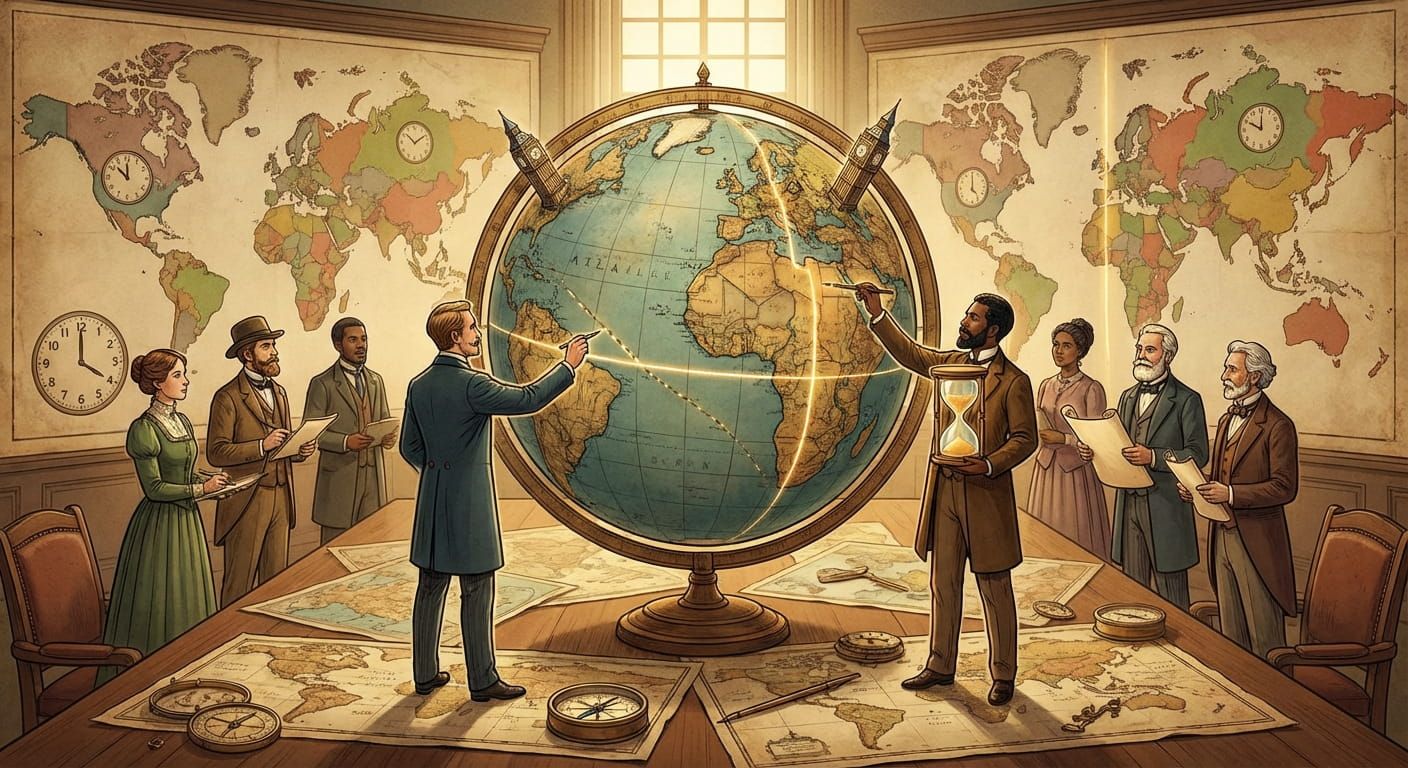
When you compare cities, it helps to separate the clock from the sky. Time.you gives the clock answer. Latitude and longitude describe the sky answer. If you want a deeper sense of how location data ties into local experience, the guide on geographic coordinates and local reference points helps connect the dots between numbers on a map and the life you live under the Sun.
How latitude shapes sunrise and sunset through the year
Here is the seasonal story in plain terms.
- Near the equator, sunrise and sunset times shift a little across the year, yet the total daylight stays close to steady.
- In mid latitudes, the Sun rises earlier in summer and later in winter, and the total daylight changes a lot more.
- Near the poles, the pattern can break into extremes, with continuous daylight in one part of the year and continuous darkness in another.
Those points explain why Singapore tends to feel consistent, while Canada feels dramatic. They also explain why Chile and Argentina can have bright summer evenings when the north is dealing with early winter sunsets.
Examples that make the pattern feel real
Pick a few places you know from the world map.
- Singapore sits close to the equator, day length is steady, midday light can be intense.
- India spans a wide range of latitudes, so daylight patterns vary between the south and the far north.
- Japan sits in the mid latitudes, seasons show up clearly in sunrise and sunset times.
- United Kingdom sees long summer evenings and shorter winter days.
- Finland pushes farther north, summer daylight can stretch very late, winter light can feel brief.
- Australia flips the seasons compared with Europe, summer daylight peaks during the northern winter months.
- Chile runs from mid latitudes toward high southern latitudes, daylight changes can be strong as you move south.
Those are the headline effects. Local geography still matters. Mountains, haze, coastal weather, and altitude can change how bright a day feels. Still, latitude sets the baseline.
Why twilight gets strange at higher latitudes
Twilight is the soft light when the Sun is below the horizon, yet still lighting the sky. At higher latitudes, the Sun’s path crosses the horizon at a shallower angle. That makes twilight longer. In places far north, twilight can blend into the next day around midsummer, leaving a sky that never fully darkens.
This is one reason travelers in Norway, Sweden, or Iceland sometimes feel their body clock wobble. The light signals are different. It is also why time checks become more important. People glance at an accurate clock time because the sky is no longer a reliable hint.
Latitude and local schedules
Daylight changes move real life. School start times, commuting, prayer times in some communities, outdoor work shifts, and meal routines all adapt to light. That adaptation looks different in different places.
In countries near the equator, people can keep similar routines through the year. In higher latitudes, routines often shift seasonally, even if people do not notice it directly. Dinner might happen earlier in winter. Outdoor activities might shift toward the middle of the day. These choices are not only cultural, they are light aware.
Quote to keep: The clock tells you what time it is, latitude hints at what that time will look like outside your window.
Common misunderstandings that cause time and sunlight confusion
Many people expect sunlight to match the clock in a simple way. A few easy clarifications help.
Sunlight depends on latitude, the season, and your position within a time zone. Sunrise can be early in one country and later in another even if both label their time similarly. If you ever compare far apart places, it also helps to remember the International Date Line. A location can be a new calendar day even when the Sun position feels familiar. Remote territories make this extra interesting, and the overview of international date line and remote territories gives helpful mental anchors.
How to use latitude when comparing cities on time.you
Time.you pages are great for comparing the exact current time across the world. Pair that with latitude thinking and you can predict daylight feel. Here is a simple approach that works for students, travelers, and anyone planning a call.
- Check the local clock time for each place.
- Notice the latitude band. Equator like Singapore, mid latitudes like Japan, high latitudes like Finland.
- Adjust your expectation. Higher latitude in winter means darker mornings and earlier sunsets.
- If the call involves outdoor plans, aim closer to midday for higher latitudes in colder months.
If you like to ground this with one example, open the country page for Singapore and compare it with a higher latitude country you know. The clock difference is clear. The sunlight difference is the extra layer that makes it click.
Regional daylight patterns and what they imply
Once you start noticing latitude, you begin to spot patterns across whole regions. Northern Europe tends to have big seasonal changes. Much of Southeast Asia stays steady. North America stretches across many bands, so daylight can be mild in one part and extreme in another.
Time.you’s location hub approach fits this perfectly. Location pages can show the time, and articles can explain why the sky behaves the way it does. If you want a broader scan of how daylight changes from region to region, the guide on regional daylight patterns pairs well with what you have read here.
Sunlight, health, and daily comfort
Light affects mood, sleep, and energy. People in high latitudes often notice winter fatigue or sleep changes. This is not about toughness, it is biology. Light tells your brain when to be alert and when to wind down.
If you live in a place with strong seasonal changes, small habits can help. Morning light exposure can matter. Being outside around midday can help in darker months. In bright months, blackout curtains can make sleep easier. None of this replaces medical advice, but it matches what many people report when they move between latitudes.
Sun cycles, geography, and the bigger picture
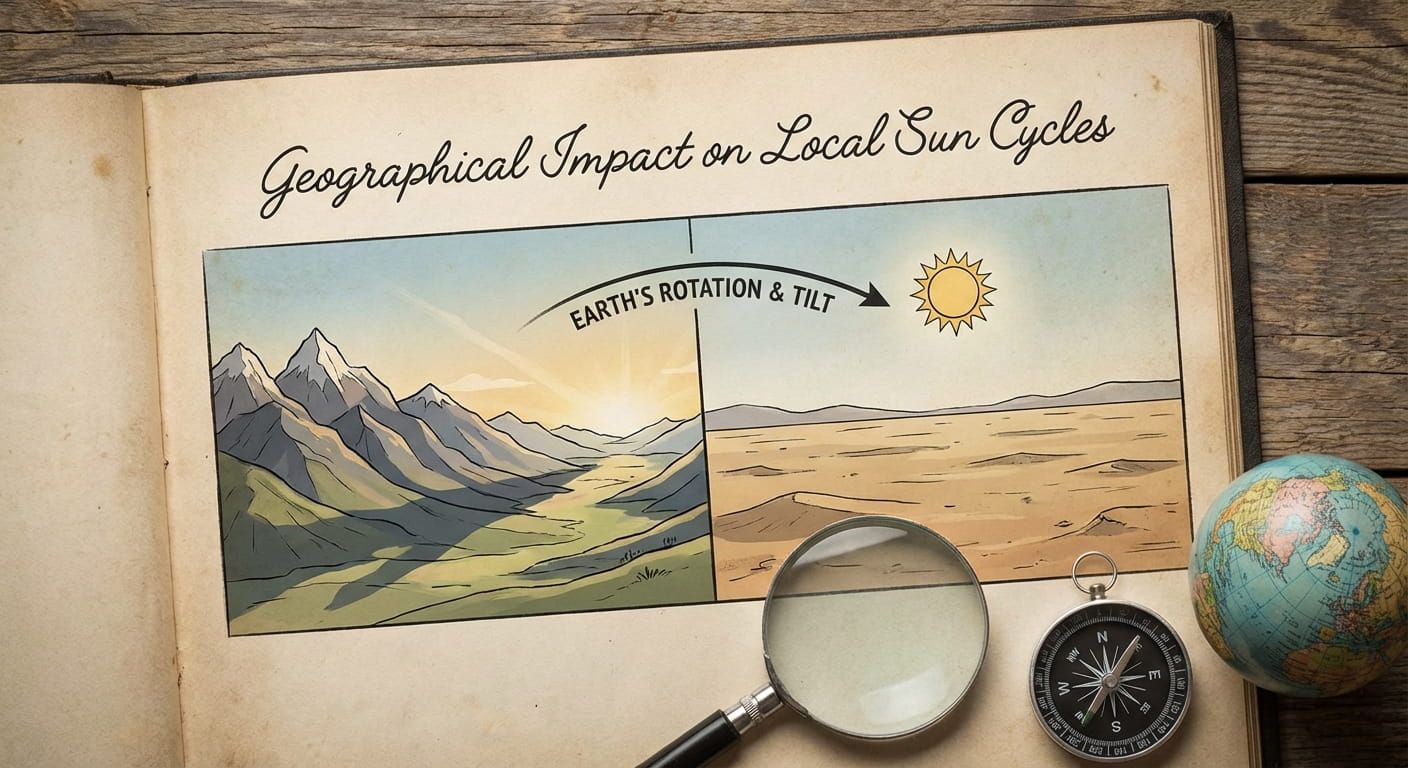
Latitude is not the only location factor. Longitude changes solar noon timing. Altitude can sharpen sunlight intensity. Coastlines and prevailing winds can change cloudiness. Still, latitude is the backbone. It sets the ceiling for how high the Sun can get and how far day length can swing.
If you want to go deeper into how geography shapes the daily Sun rhythm, the article about geographical impact on local sun cycles adds extra texture without losing the practical feel.
Takeaways you can use today
Here are a few habits that turn this into something you can apply right away, without math.
- If a place is closer to the equator, expect steadier daylight and faster twilight changes.
- If a place is far north or far south, expect strong seasonal shifts and longer twilight in warm months.
- If you are planning a call with Canada, Finland, or the United Kingdom in winter, assume darker mornings than you may expect.
- If you are planning a call with Australia, Chile, or Argentina, remember their seasons run opposite to Europe and North America.
Where the Sun meets the clock
Latitude is the quiet partner to local time. Your clock can be exact to the second, yet the sky can still surprise you unless you consider where you are on the globe. Once you do, daylight patterns stop feeling random. They become readable. You start to sense why Singapore feels steady, why Finland feels dramatic, and why Australia flips the seasonal script. With time.you handling precise time, latitude gives you the sunlight context that makes every location page feel more alive.