Some days feel endless, others vanish before dinner, and it is not your imagination. Day length changes through the year, and the pattern is one of the cleanest ways to feel Earth moving in space.
Summary
Day length changes because Earth is tilted, and that tilt aims different parts of the planet toward the Sun as we orbit. Near the equator, the change is small and steady. Farther north or south, the swing grows dramatic, with very long summer days and very short winter days. Sunrise and sunset times shift daily, and the fastest change happens near the equinoxes. Local terrain, altitude, and twilight definitions also shape what you experience.
Mini quiz to test your daylight instincts
Pick an answer, then check your score. This stays on the page and does not send anything anywhere.
What day length really means in daily life
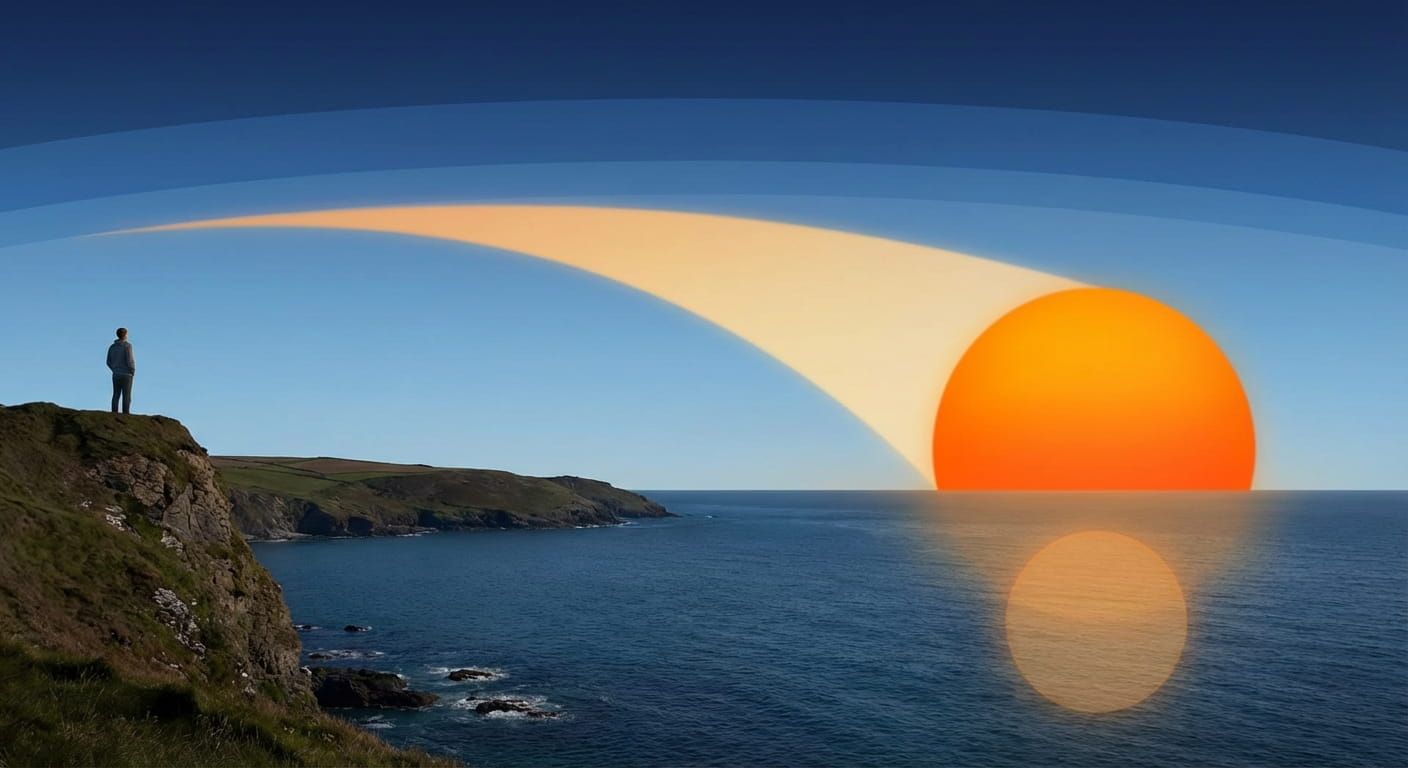
Day length is the time between sunrise and sunset, but the experience of daylight is a bit richer than that. The sky brightens before sunrise and stays bright after sunset because sunlight scatters in the atmosphere. That is why a winter afternoon can feel short even if the official day length is not tiny, and why summer evenings can feel as if they stretch on forever. If you want the clean official numbers for your location, the easiest habit is to check sunrise and sunset for your place on the same site every day for a week, then for a month, and watch the drift.
A helpful way to think about it
Sunrise is a moment, sunset is a moment, and the arc between them is the official day. Your eyes, your schedule, and the atmosphere add extra minutes at both ends. That is why two people can talk about the same season and still describe it differently.
The simple reason days grow and shrink through the year
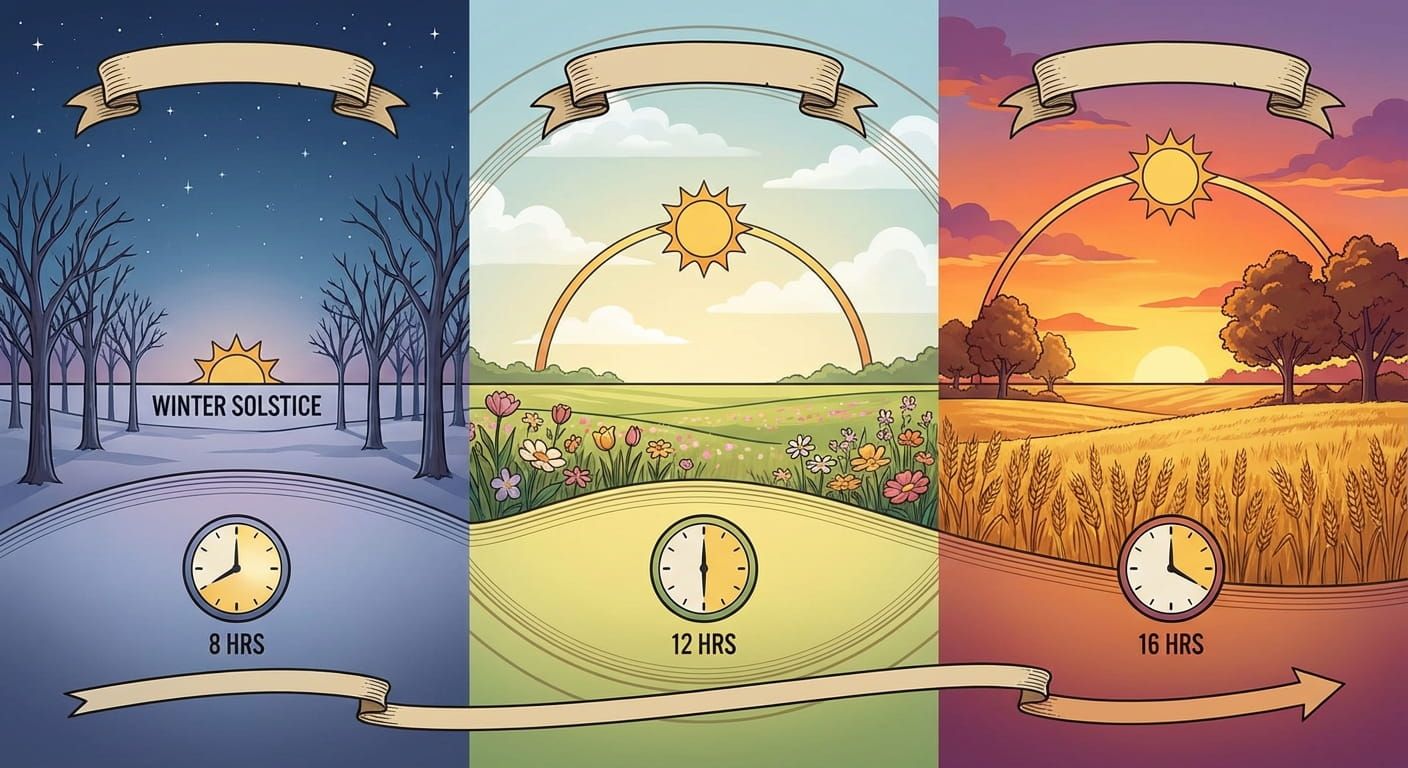
Earth spins once about every 24 hours, and Earth also travels around the Sun once each year. The key detail is the tilt. Earth’s rotation axis is tilted relative to its path around the Sun. Because of that, the Sun’s apparent path across the sky changes through the seasons. In summer for the northern hemisphere, the Sun climbs higher and stays above the horizon longer. In winter, the Sun stays lower and the arc is shorter, so daylight shrinks.
This is not caused by Earth being closer or farther from the Sun in a way that matters for day length. Distance affects sunlight intensity a bit, but the daylight clock is controlled by geometry: the angle of the Sun’s path and how long that path stays above your horizon.
Latitude is the dial that sets how dramatic the change feels
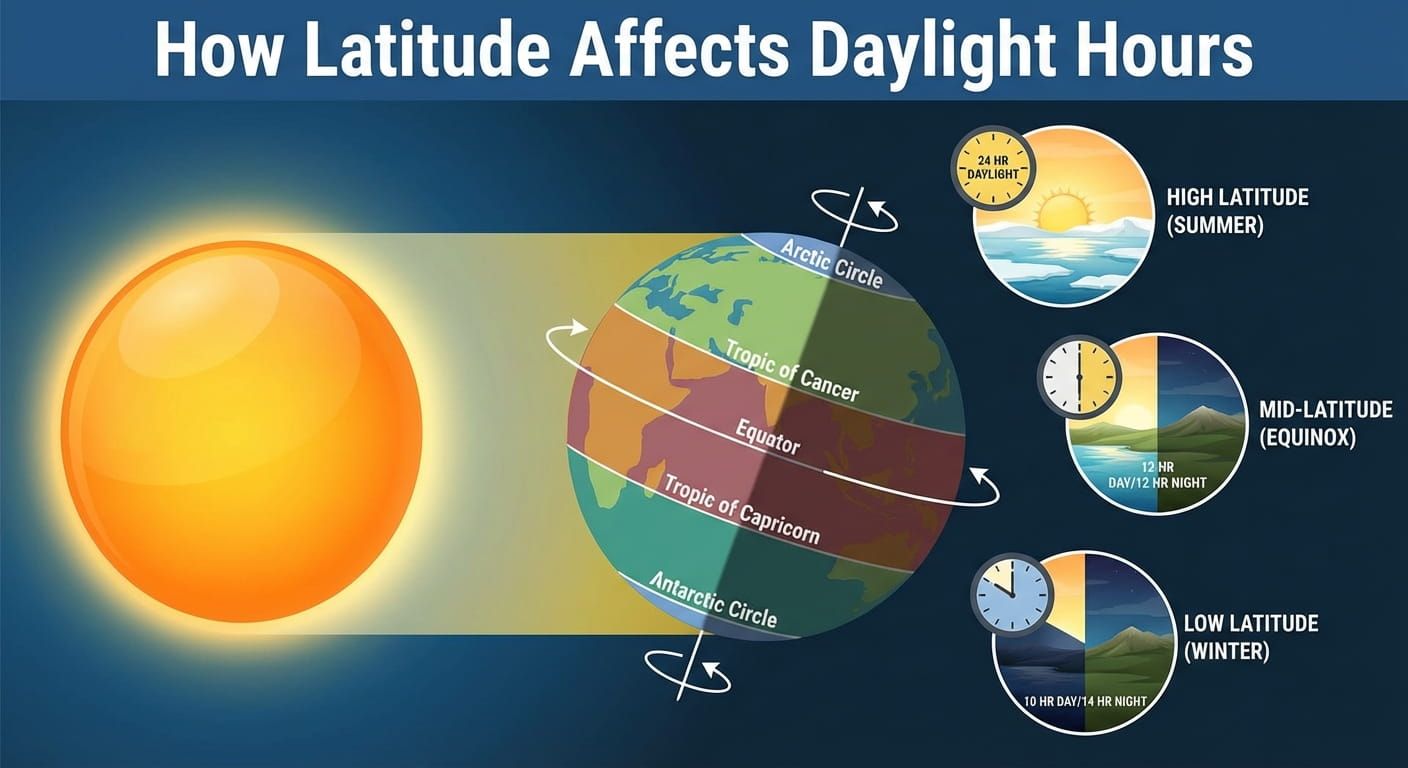
Latitude is the biggest predictor of seasonal change in day length. Close to the equator, day length stays near 12 hours year round, with gentle shifts. Farther north or south, the swing grows larger. This is why Singapore feels steady, while places like Oslo feel like two different worlds, one in June and one in December.
If you want a deeper walk through the latitude link, the explanation on latitude and daylight hours connects the geometry to what you see on a daily sunrise and sunset chart.
Equinoxes and solstices are the turning points you can actually notice
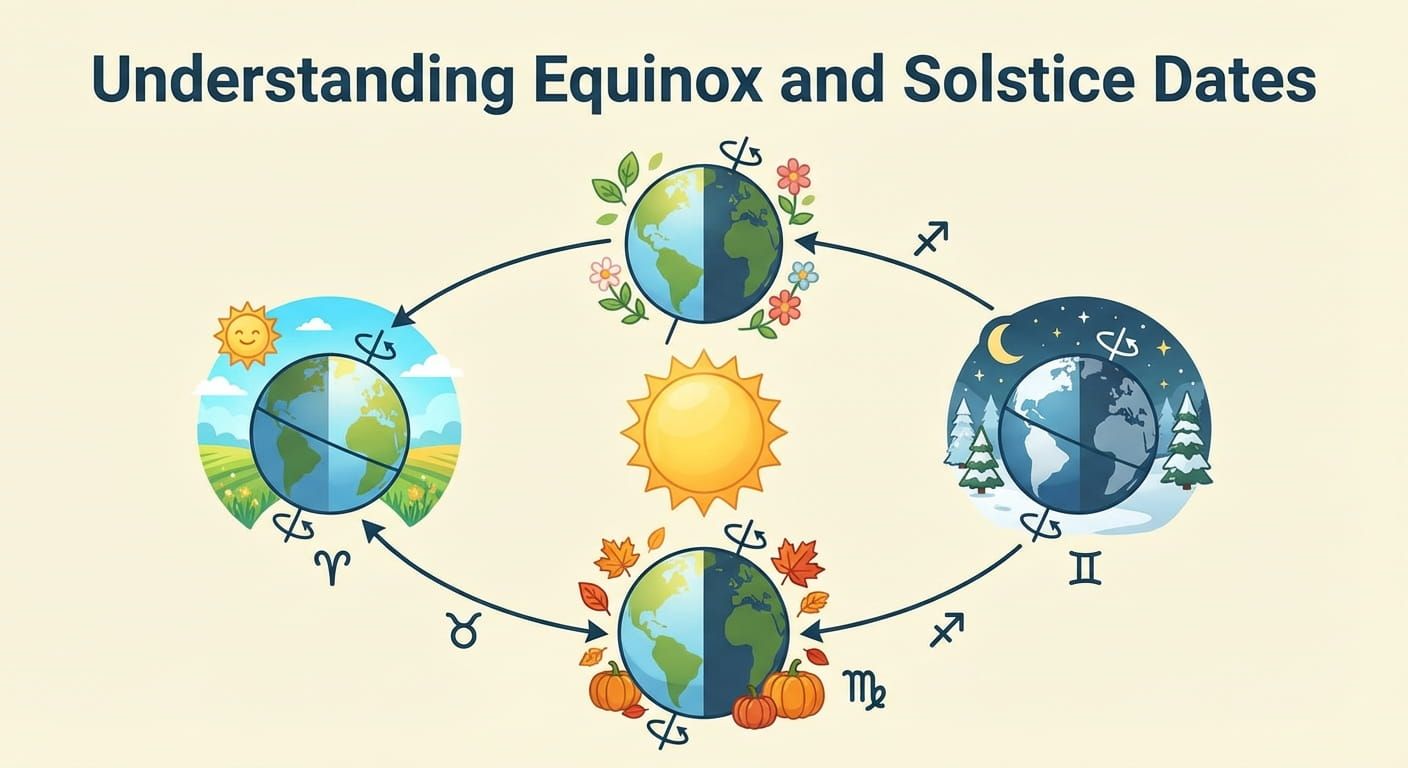
The year has four widely discussed markers. Two equinoxes and two solstices. Around an equinox, day and night are close to equal in length for many places. Around a solstice, day length reaches a peak or a minimum. The interesting twist is speed. Near the solstices, day length changes slowly. Near the equinoxes, day length changes faster, and that is often when people notice the shift week to week.
If you like tracking exact dates, the calendar view on equinox and solstice dates helps you anchor the season to a real day on the timeline.
Sunrise and sunset move at different rates across the season
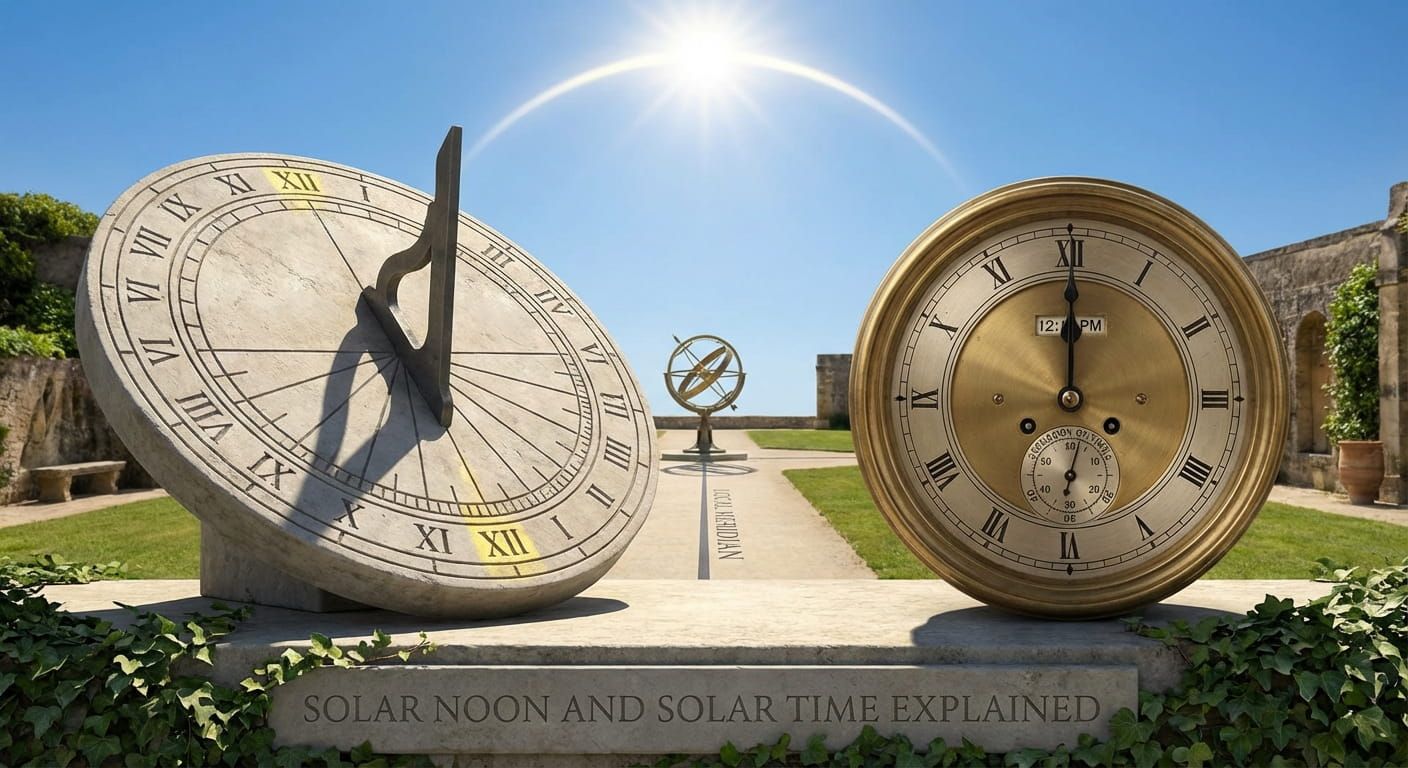
One common surprise is that the latest sunset is not always on the same day as the longest day, and the earliest sunrise is not always on the same day as the shortest day. The reason is that clock time and solar time do not line up perfectly every day of the year. Earth’s orbit is slightly elliptical, and the axis tilt also affects how solar noon shifts compared with your clock.
This is where solar noon becomes a useful reference point. If you want to see that idea with local examples, the guide on solar noon and solar time can make the sunrise and sunset changes feel less mysterious.
City snapshots that make the pattern feel real
Take Singapore. The difference between a June day and a December day is modest. Sunrise and sunset drift by minutes, not hours. It is steady enough that many people only notice the seasonal change in weather rather than in daylight. You can check the local schedule directly on sunrise in Singapore and see how smooth the curve looks.
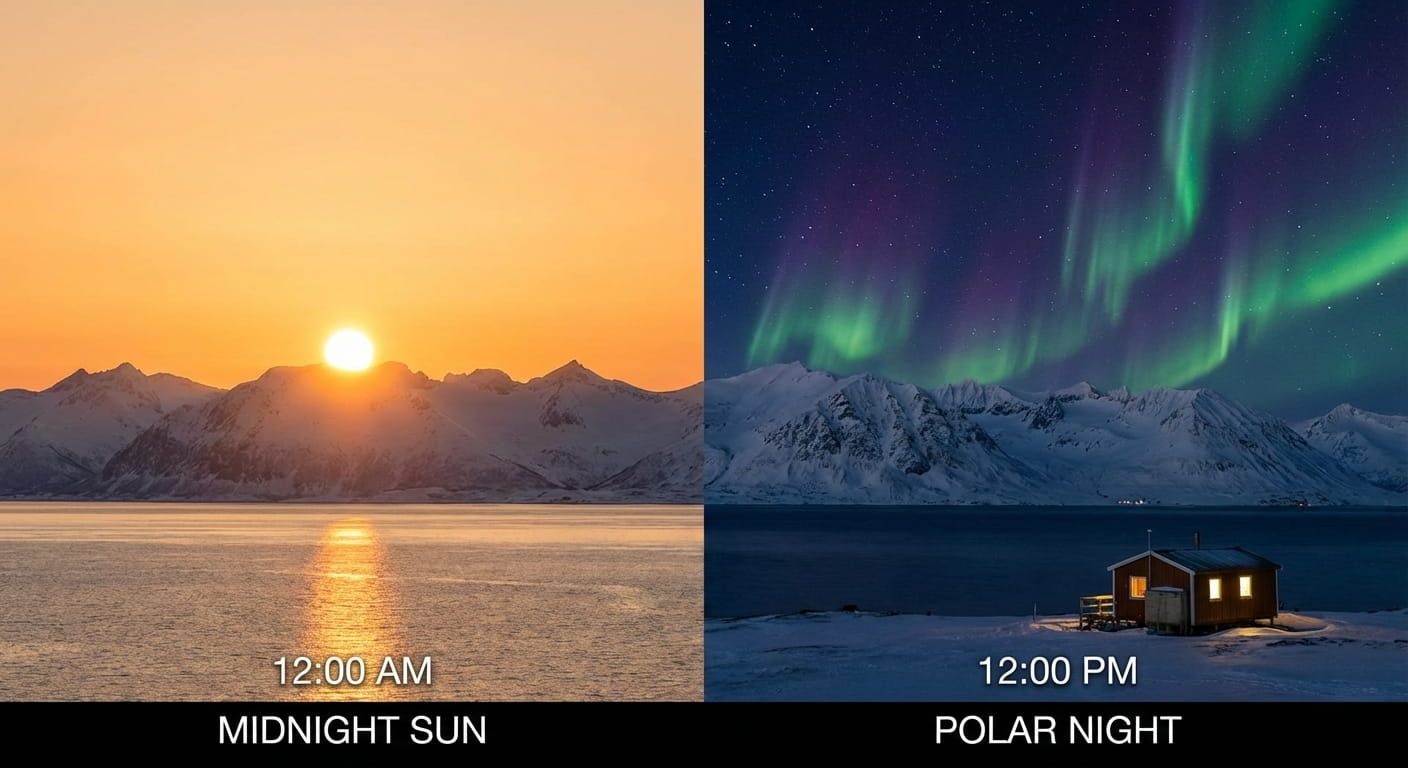
Now jump to Reykjavík in Iceland. The summer brings extremely long daylight, and the winter brings very short daylight. Some weeks feel like the Sun barely appears, then later in the year it can feel as if the sky refuses to get dark. That kind of swing is part of living at high latitude, and it connects naturally to the idea of the midnight sun and polar night, explained on midnight sun and polar night.
Nairobi is another useful mental anchor. It sits close to the equator, so the day length stays near 12 hours through the year. If you have friends in Nairobi and friends in Stockholm, compare sunset times in June and December and the season effect becomes obvious in minutes.
Sydney and Buenos Aires help show the hemisphere flip. Their longest days happen when northern places have their shortest days. The Sun is doing the same seasonal rhythm, but your location decides which part of the rhythm you call summer.
Twilight can add a surprising amount of usable light
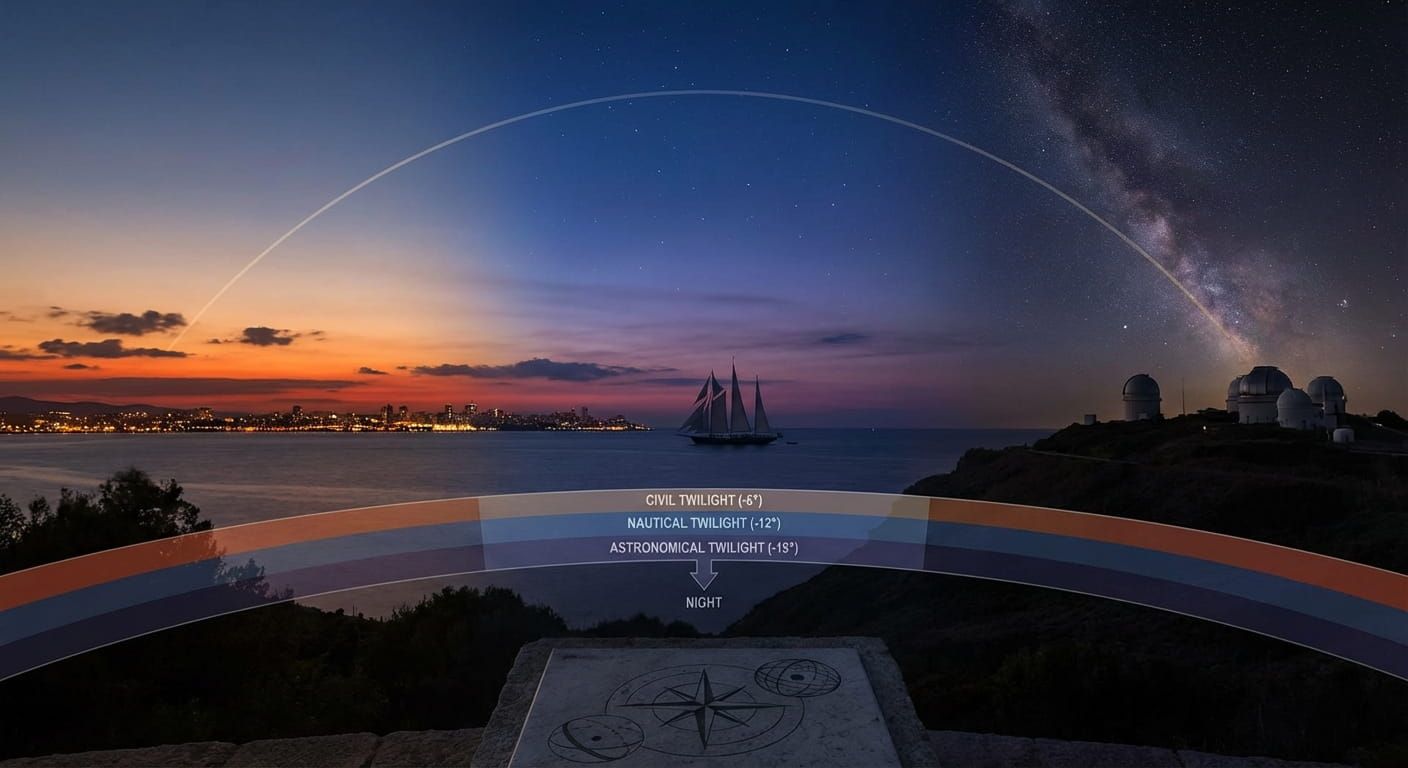
Many plans depend on practical light, not the official sunrise and sunset moments. Twilight covers the interval when the Sun is below the horizon but the sky is still lit. There are three common twilight definitions, and each one matters for different activities. If you enjoy night skies, the darker threshold matters. If you run or commute, the brighter threshold matters.
The detailed breakdown on civil, nautical, and astronomical twilight is worth a read if you have ever wondered why the sky looks bright even when the Sun is technically gone.
Mountains, coastlines, and altitude can shift what you observe
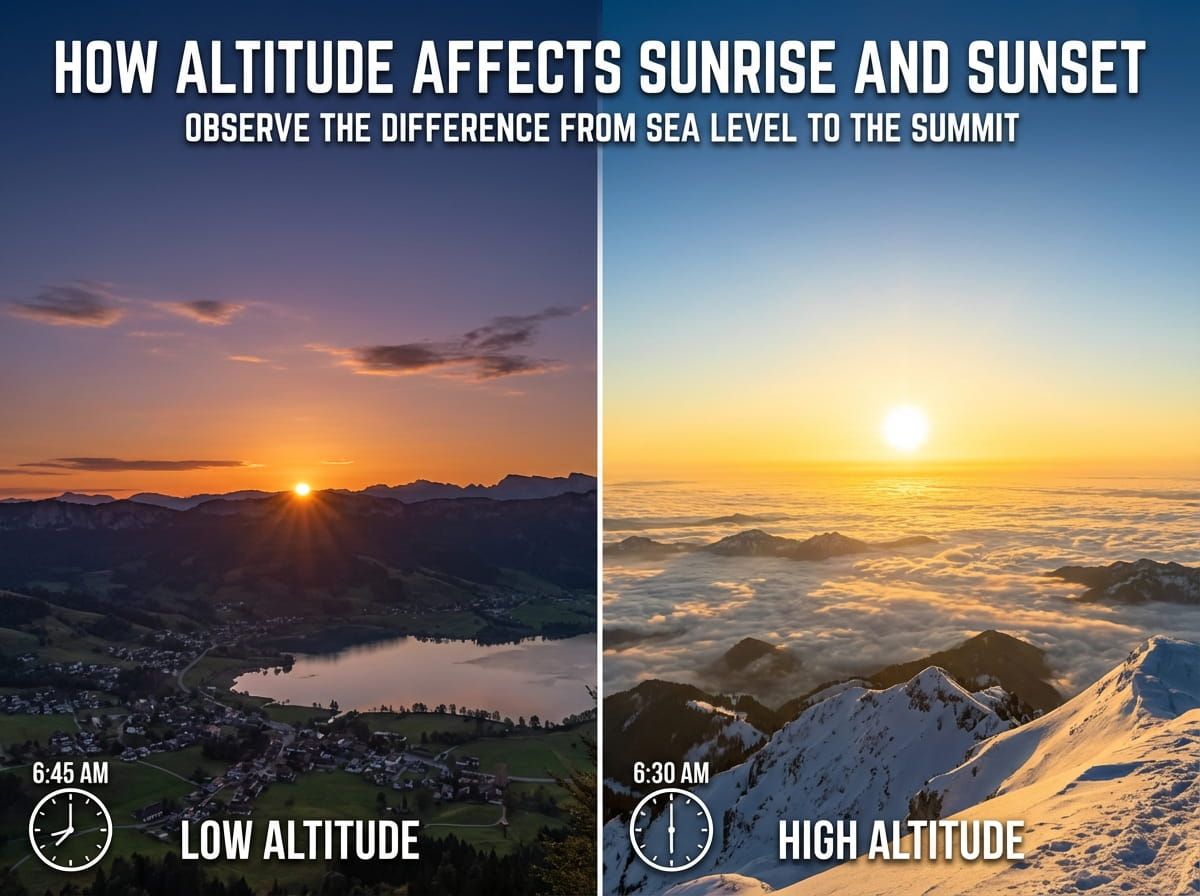
Two places at the same latitude can feel different because the horizon is different. A mountain ridge can block the first light of sunrise, making your morning feel later. A flat ocean horizon can make sunrise feel earlier and more dramatic. Altitude also matters because the higher you are, the farther your horizon reaches, which can slightly change the times you see and the way twilight behaves.
If you live in a hilly area or you travel to high ground, the explanation on altitude and sunrise, sunset connects those everyday observations to the underlying geometry.
Seasonal daylight at a glance
The table below gives a practical sense of how the seasonal swing grows with latitude. Values are rounded, and real times vary by exact longitude, terrain, and local definitions. Use it as a mental model, then use local tools for exact minutes.
| Location type | Example places | Typical daylight near June solstice | Typical daylight near December solstice | What it feels like |
|---|---|---|---|---|
| Near equator | Singapore, Nairobi, Quito | About 12 hours | About 12 hours | Steady year round rhythm |
| Mid latitudes | London, Tokyo, New York City | Longer days | Shorter days | Noticeable seasonal shift |
| High latitudes | Oslo, Stockholm, Reykjavík | Very long days | Very short days | Big impact on routines |
| Polar circle and beyond | Northern Norway, parts of Greenland, Antarctica | Sun may not set | Sun may not rise | Extreme light seasons |
How to read your own day length pattern in three steps
- Pick a reference point. Use solar noon or local midday as your anchor. It keeps your comparisons stable as sunrise and sunset slide.
- Track weekly, not daily. Daily change can feel tiny in some seasons. A week shows the shift clearly.
- Compare two seasons. Put a June week next to a December week. Your brain learns the swing fast with a side by side view.
Small details that change the experience of daylight
A few details can reshape how long a day feels, even when the official number stays the same:
- Cloud cover and humidity can dim daylight, making a long day feel shorter.
- Urban skylines can block the low Sun in winter, shortening the usable light window.
- Twilight depth changes with season and latitude, adding extra usable light in some places.
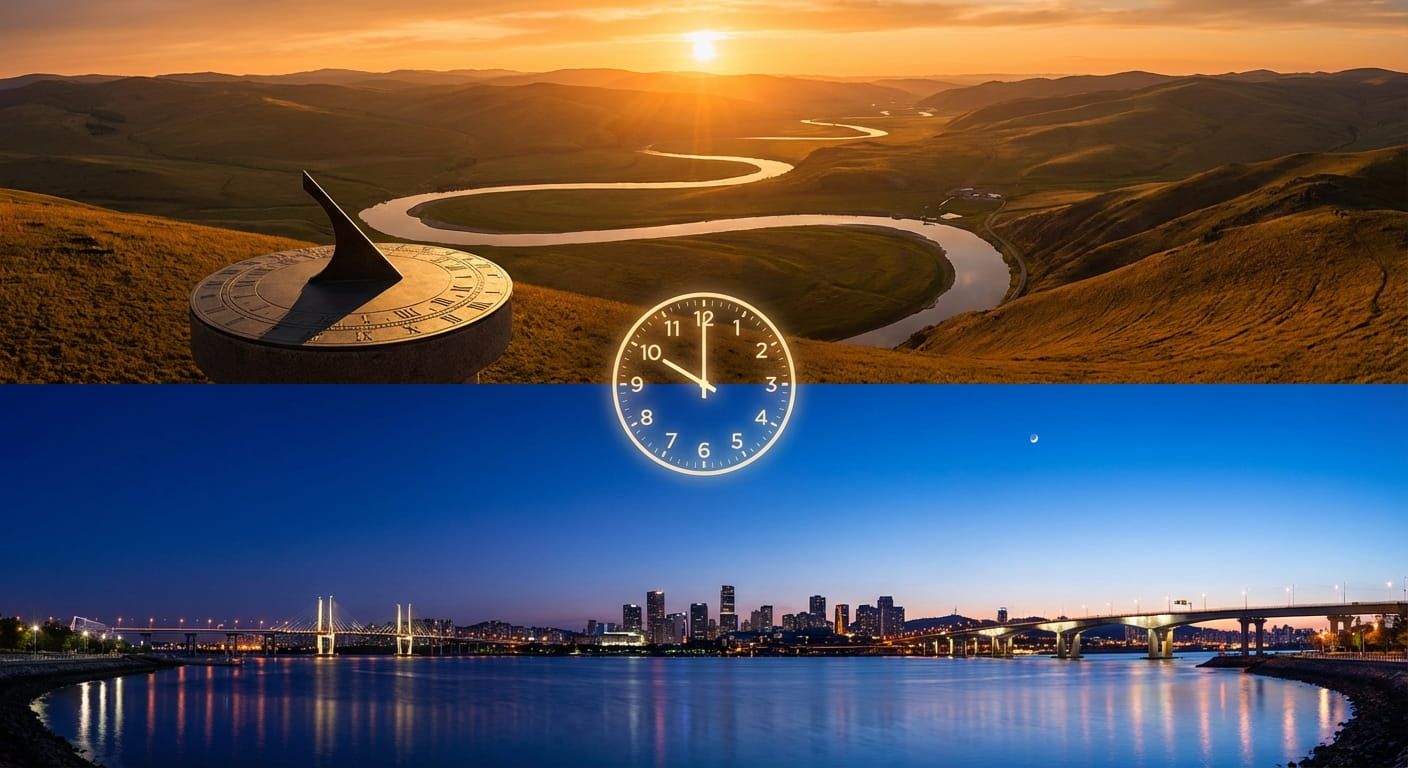
- Time zones can place solar noon far from 12:00 on the clock, shifting your sense of morning and evening.
Planning with daylight, from school runs to photos
Day length is not just trivia. It changes how you schedule life. Morning commuters care about the first usable light. Evening runners care about when it gets dark. Travelers care about how much sightseeing fits before sunset. Photographers care about soft light windows.
If photography is part of your plan, the timing guide for golden hour and blue hour helps you connect the season to that warm late day glow and the calm twilight tones that follow.
For simple lookups, it helps to keep a direct sunrise tool bookmarked for travel planning. Many people use sunrise times as the first check, then move to local details like twilight or solar noon when they need more precision.
Patterns you can watch across the calendar
This section is built for quick scanning without losing the story. These are the recurring patterns that show up in many places:
- Near the equinoxes, day length changes faster week to week.
- Near the solstices, sunrise and sunset still move, but the day length curve flattens.
- In winter at mid latitudes, the Sun stays low, shadows stretch, and daylight can feel thin.
- In summer at higher latitudes, twilight can blend into night, and darkness arrives late.
- Across hemispheres, the same pattern flips by season, June for north, December for south.
A note for travelers
Flying from Singapore to London changes your sense of day length more than your watch can explain. Your body expects one rhythm, the Sun offers another. Give yourself a day to adapt, then use sunrise and sunset times to plan meals, walks, and sleep.
Seeing seasonal daylight through real examples
Try this simple comparison exercise with cities many people know. In London, winter sunsets arrive early and summer evenings stretch long. In Tokyo, the seasonal swing is clear but not extreme. In Oslo, the summer shift can feel huge, with long bright nights. In Nairobi, the year stays steady, and sunset tends to hover in a familiar evening window. In Sydney, the timing flips compared with London, so the long days come during the northern winter months.
These differences do not mean one place is better. They simply shape habits. Some people thrive on bright late evenings. Some prefer earlier sunsets and calmer nights. Understanding the pattern helps you plan, not fight the Sun.
Common questions people ask about day length
Does day length change every single day?
Yes, but the daily change can be tiny near the solstices and more noticeable near the equinoxes.
Why do my sunrise and sunset times feel off compared with another town nearby?
Longitude shifts solar time, and local terrain can block the horizon. Two towns can share a clock and still see different Sun moments.
Is twilight part of day length?
Officially, no. Practically, yes. Twilight often decides when it feels bright enough to do things outside.
A simple habit that makes the seasons feel less random
Pick one day each month and check sunrise and sunset for your usual place. Write down the day length and a note about how it felt, commute, mood, sleep, outdoor time. Within a year, you will have your own personal daylight map. That map becomes valuable when you plan trips, schedule outdoor events, or try to improve sleep consistency.
Time.you is built for this kind of tracking, with atomic clock synchronized time for cities, countries, and time zones worldwide. When you pair accurate time with local Sun events, the season stops being a vague feeling and becomes a clear pattern you can plan around.
Where the light goes next
The Sun will keep sliding along its seasonal path, minute by minute, even when you are not watching. Once you notice how day length changes, you start spotting it everywhere: the angle of shadows, the timing of dinner, the color of twilight. Use the pattern to make better plans, then let the seasons do what they do best, change gently, and keep time without a clock.