The week feels simple until you try to pin down its very first day. Some calendars begin on Sunday. Others begin on Monday. Both choices can be correct, depending on where you live, what standards you follow, and what you are trying to count.
Key takeaway
There is no single global rule. In many places, Sunday is treated as the first day of the week for traditional and calendar layout reasons, especially in the United States. In much of Europe and in ISO 8601, Monday is the first day, and week numbers are built around that. For planning and date math, use Monday as day 1 if you rely on ISO week numbers. For everyday wall calendars, follow your local norm.
A small knowledge check before you scroll
Answer these and tap Check. Your score updates instantly.
1) In ISO 8601, which day is the first day of the week?
2) Which system is most commonly tied to week numbers used in business reporting across many countries?
3) A year can have week 53 in ISO week numbering when:
Why different calendars begin on different days
People often assume there must be one right answer. The reality is that “first day of the week” is a convention. Conventions come from history, religion, work patterns, and later, standards bodies trying to make dates consistent across borders.
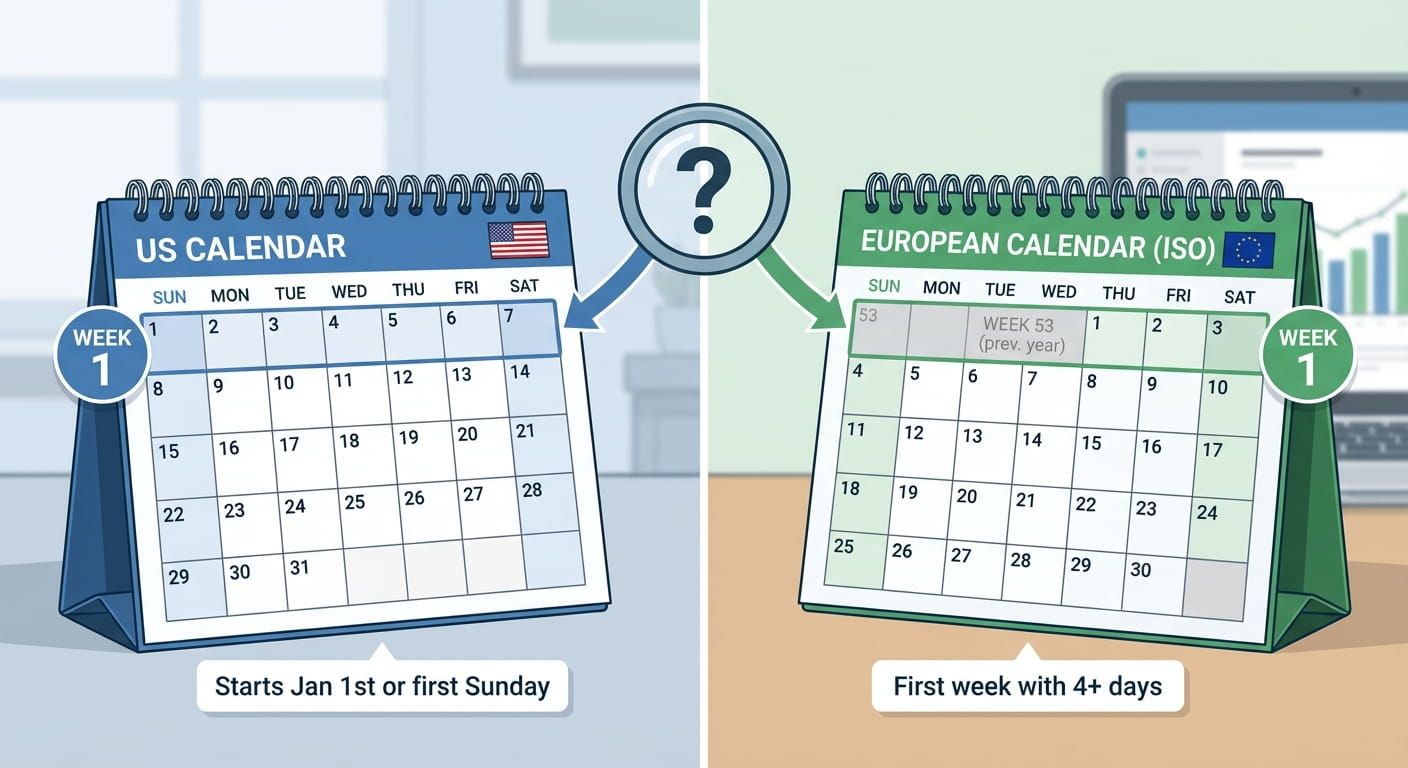
Sunday first shows up in many traditional calendars. It pairs neatly with a weekend view in cultures where Sunday is a rest day. Monday first is strongly linked to modern work weeks and to international standards used in computing and logistics.
Calendar tip: Pick the week start that matches the questions you ask. Planning shifts and school weeks often feel cleaner with Monday first. Religious observance and many US calendar layouts often feel natural with Sunday first.
Sunday as day one in the United States and beyond
In the United States, many printed calendars and digital views default to Sunday first. That matches familiar layouts, where the weekend frames the week. It also aligns with a long tradition of treating Sunday as a special day in community life.
If you use US focused planning tools, it helps to check your settings. A simple shift from Sunday first to Monday first can change how a week looks, even though the dates are identical. If you are comparing dates with someone in Canada, this can get confusing fast, especially when a month view is your only reference. A country calendar view can help you align expectations, and Canada's calendar often sits right at that crossroads of shared tools and mixed habits.
For a US specific calendar view, a country page can keep everyone on the same page, including United States' calendar where Sunday first remains a common display choice.
Monday as day one in ISO 8601 and much of Europe
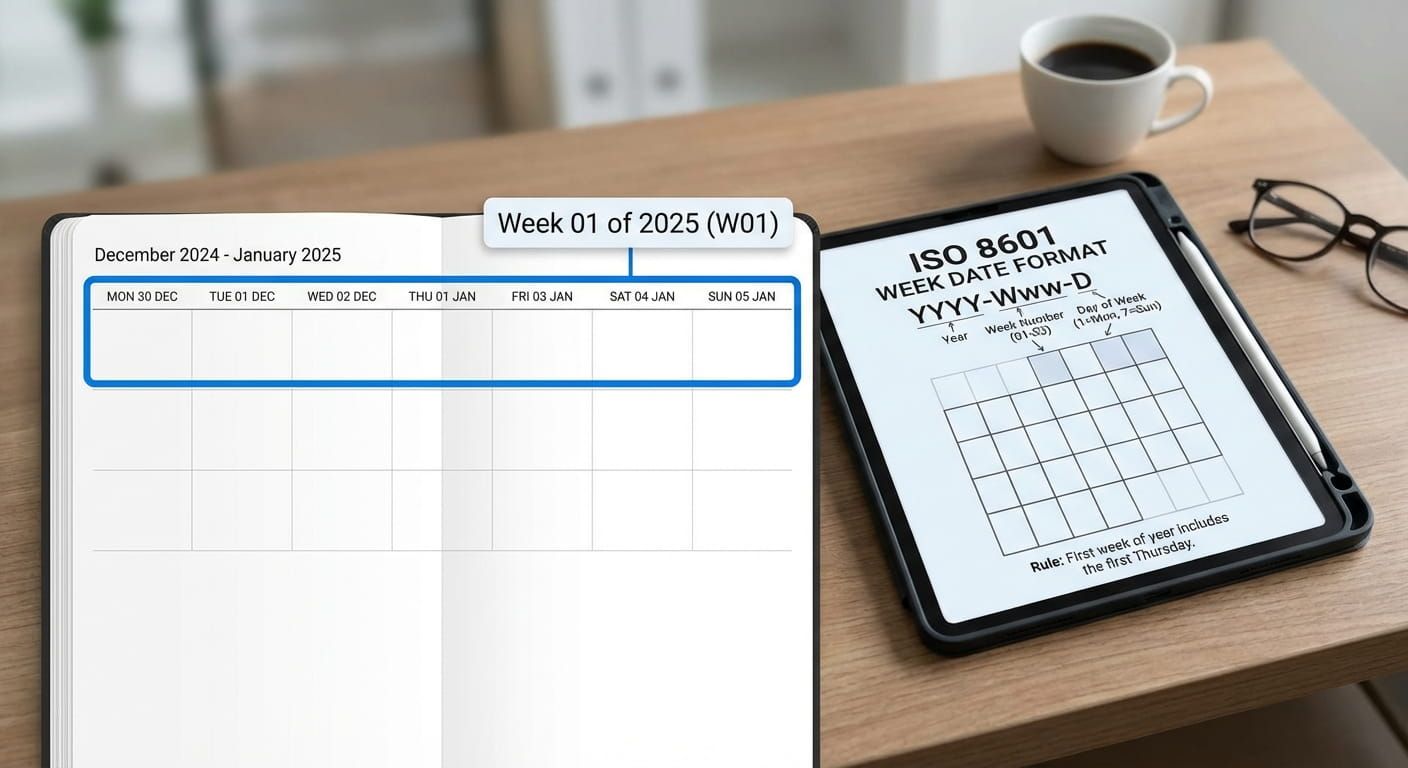
Many European countries and global business teams treat Monday as the first day. That choice pairs with the typical work week and with international standards. ISO 8601 is the big name here. It sets Monday as day 1 and defines how week numbers work across years.
If you work with reports, shipping schedules, school timetables, or software releases, ISO week rules can save your sanity. The details matter. Week 1 is not simply the first week that contains January 1. Instead, week 1 is the week that contains the first Thursday of the year, which is another way of saying the week that contains January 4.
That is why late December dates can sometimes belong to week 1 of the next year, and early January dates can sometimes belong to the final week number of the previous year.
If you want a deeper explanation of the standard, ISO 8601 week date standard walks through the logic in plain language.
Week numbers make the argument feel real
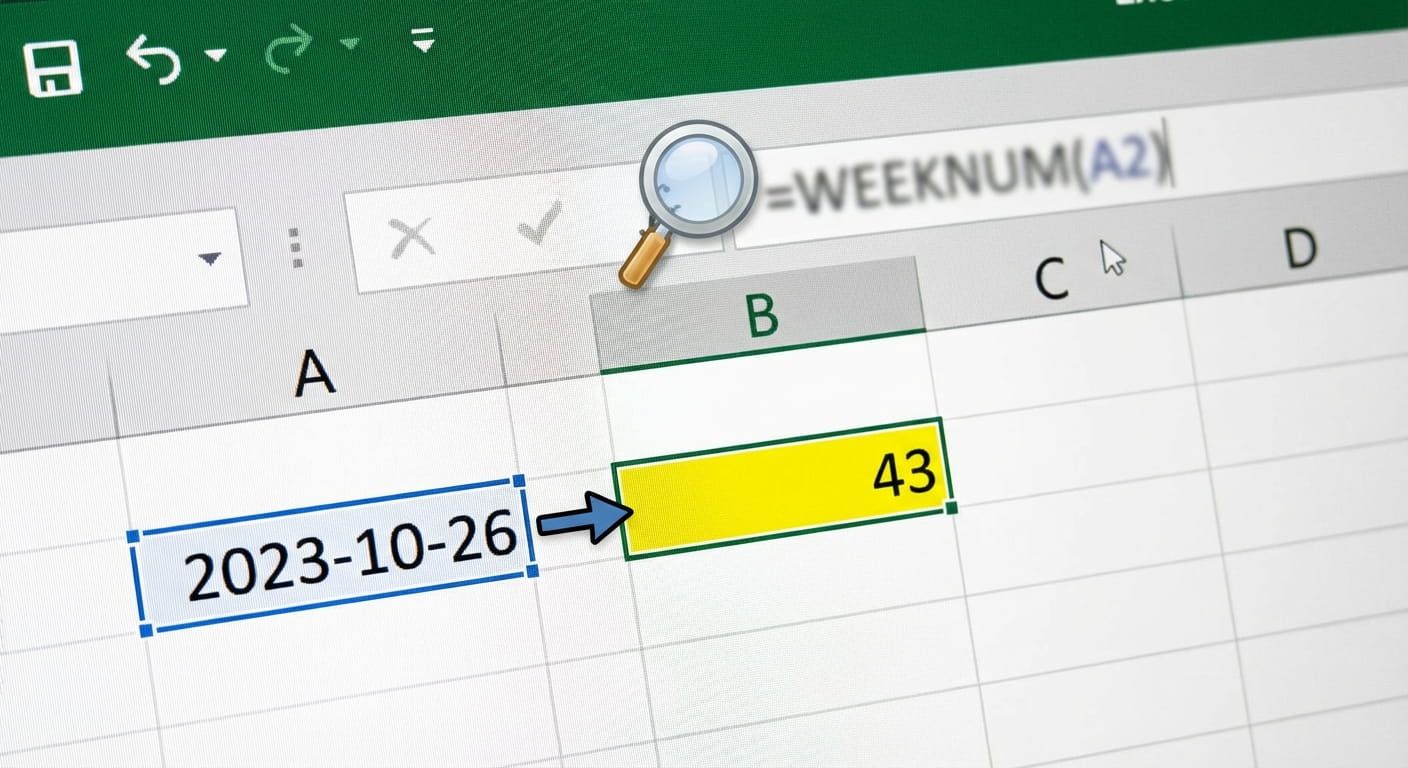
Week numbers turn a simple preference into a practical problem. Teams may say “ship it in week 14” or “review in week 39”. That only works if everyone uses the same definition.
ISO week numbers are designed to be consistent across years. That consistency is why many companies rely on them. If your workflow uses week numbers, start by checking a reference week number view, then stick to it across tools.
Time.you has a dedicated week number view that many people keep bookmarked, week number, especially during year end when confusion peaks.
A clear comparison you can scan in seconds
The table below summarizes common patterns. It is not a law of nature. It is a guide to what many people expect in daily life and in standards based work.
| Region or context | Typical week start | Why it is common | Best use case |
|---|---|---|---|
| United States | Sunday | Traditional calendar layouts and common defaults | Family planning, school calendars, month view browsing |
| France, Germany, Italy, Spain, United Kingdom | Monday | Work week alignment and regional norms | Work planning, school schedules, shared team calendars |
| ISO 8601 week numbers | Monday | Standardized numbering across years | Reporting, logistics, software releases, international teams |
| Personal habit and family routines | Varies | Weekend shape and religious or cultural patterns | Home planning, reminders, meal prep, chores |
How ISO week numbering actually decides week 1
ISO week numbering can feel odd until you see the rule. It is built around the idea that week 1 should be the first week with most of its days in the new year. The practical shortcut is easy to remember: week 1 is the week that contains January 4.
- Weeks begin on Monday.
- Week 1 is the week that contains January 4.
- Week numbers run from 1 to 52, and sometimes 53.
- The week year can differ from the calendar year near the edges of December and January.
If you want to convert a specific date into its ISO week date, a converter can remove guesswork, iso 8601 converter makes that step painless.
Where leap years fit into this question
Leap years add one extra day to February, which changes which weekday certain dates land on. That can shift the layout of future calendars and can affect which years end up having week 53 under ISO rules.
Leap years do not change the definition of “first day of the week”. They change the pattern of weekdays across the year. That is why week number checks become extra valuable in leap years and in the year right after a leap year.
If you are comparing years side by side, a compact year view can help, and compact 2026 is a good example of how weekday patterns line up across months.
Date math and days between can trip you up
This debate shows up in date math more often than you might expect. Imagine two people counting “weeks until an event”. One person treats Sunday as the start. Another treats Monday as the start. They may label the same stretch of days as different week counts, even though the number of days between two dates never changes.
For date math, think in days first. Then group days into weeks based on the standard your project uses. If your work uses week numbers, use an ISO based week calculator to keep labels consistent, and week number calculator can help you check the week number for any date without mental gymnastics.
A simple set of rules for choosing the right week start
Here is a practical set of guidelines that works for most people. It is short, and it saves arguments.
- If you use ISO week numbers, set Monday as the first day everywhere you can.
- If you share calendars with a US based family or school, Sunday first can match their default view.
- If you manage international work, pick Monday first and state it in writing.
- If you publish schedules, include dates, not only “week 12”.
- If you are unsure, check a trusted reference before sending a meeting invite.
How this looks in real countries people work with
Week start habits become obvious when you compare calendar layouts across countries. A Monday first view is common in many European contexts. You can see it reflected in France's calendar, Germany's calendar, Italy's calendar, and Spain's calendar.
Work that crosses into the Asia Pacific region can involve different weekends and different defaults. It is still common to see Monday first in many tools used for business. Country calendar views can help you align, including Japan's calendar and South Korea's calendar.
Australia can show up in team planning across time zones, and a country view for Australia's calendar can be handy when you are mapping deadlines across cities.
In the Americas, Brazil often appears in regional planning, and Brazil's calendar is worth checking if your team spans multiple countries.
India is another common hub for global work, and India's calendar is a helpful reference when you want to confirm how a month lays out on specific weekdays.
For the UK, where ISO week usage is widespread in business contexts, a country view for United Kingdom's calendar can support shared planning.
A friendly list of common mixups
These are the moments where people tend to talk past each other. Catch them early and you avoid calendar chaos.
- Someone says “next week” on a Sunday night, and another person hears “tomorrow”.
- A month view starts on Sunday in one app and Monday in another, making the same date look shifted.
- A report references week numbers without stating whether it follows ISO rules.
- Late December dates are filed under week 1 of the next year in ISO systems.
- Early January dates are filed under the final week number of the prior year in ISO systems.
Small habit that helps: When you send a schedule, include the date range in plain dates, for example “Mar 9 to Mar 15”, then add the week number only if your team uses it.
Matching calendar settings across apps and teams
Most calendar apps let you choose the first day of the week. Set it once, then check it again after big updates or device changes. If you share screenshots of a month view, week start settings matter even more, because the grid position shifts and the eye trusts the grid.
If you want a central place to browse calendar layouts and date tools, calendar is a solid starting point. It is also a nice reminder that the same dates can be presented in different ways without being wrong.
Time.you focuses on exact time across the world, with atomic clock synchronized precision for major cities, countries, and time zones. That same mindset of precision applies nicely to calendars. A consistent week start rule keeps your planning clean, especially when teams span time zones and workdays.
The moment the answer becomes simple
If you are asking about local tradition, Sunday or Monday depends on your culture and the calendar you grew up with. If you are asking about week numbers and international consistency, Monday is the answer because ISO 8601 sets it that way. Pick the standard that matches your purpose, then stick to it across tools, documents, and conversations. That is how a small calendar setting stops becoming a repeated source of confusion.