Public holiday dates feel steady until you try to plan a trip, payroll, school terms, or a family reunion months ahead. Then the calendar pulls a small trick, the holiday you expected on a Monday lands on a Thursday, or it gets “observed” on a different day. This is not random. It is the result of rules, calendars, astronomy, and local laws working together.
Public holiday dates change because many holidays follow calendars that are not fixed to the Gregorian date, or they depend on weekdays, moons, or seasonal events. Countries also shift days to protect rest time, match work patterns, or create long weekends, and some holidays move when they fall on weekends. Add regional differences, last minute government announcements, and rule changes over time, and the same holiday name can land on different dates each year.
Pick your answers, then tap “check answers” to see your score.
Three big systems that make dates move
Most shifting holiday dates come from three systems:
- Rule based weekdays, a holiday set to “the first Monday” or “the last Friday.”
- Non Gregorian calendars, lunar or lunisolar calendars that drift against the Gregorian year.
- Observance rules, moving the day off work when the holiday lands on a weekend.
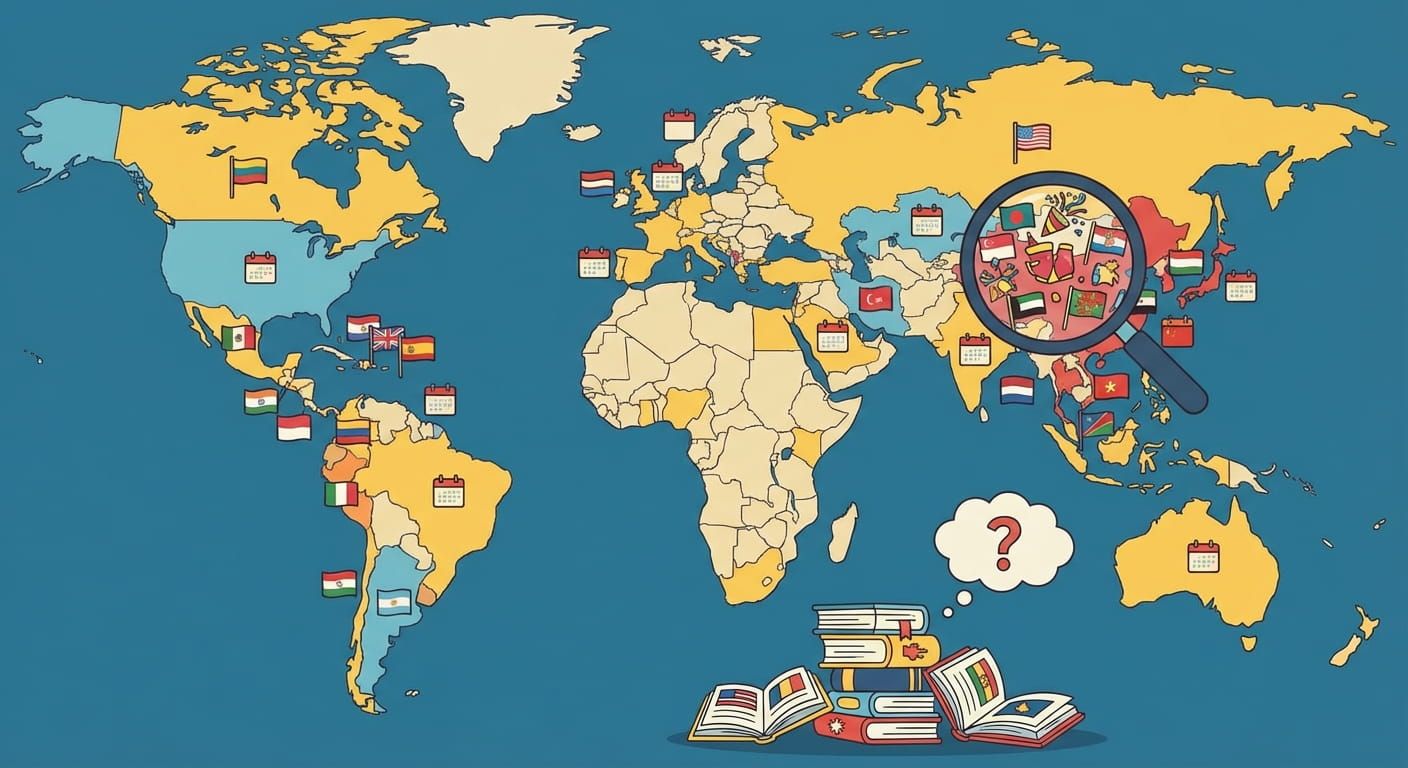
Many countries blend all three. Singapore, Malaysia, the United Kingdom, Australia, and the United States each have a mix of fixed date holidays and moving ones, plus special rules about what happens when the date lands on a Saturday or Sunday.
Weekday based holidays: the calendar built for long weekends
Weekday based holidays are designed for predictable time off. Instead of “always 14 July” or “always 1 January,” the rule pins the holiday to a pattern like “third Monday of January.” That means the holiday changes date every year, but it stays on the same weekday.
You see this approach often in the United States and Canada, where some holidays follow Monday rules to create consistent weekends. Australia and the United Kingdom also use weekday patterns for certain observances, depending on the region.
If a holiday is “the last Monday in May,” it can land on 25 May in one year and 31 May in another. The weekday stays stable, the date moves.
Lunar and lunisolar holidays: why the moon keeps shifting your plans
Lunar calendars track months by moon cycles. A lunar month is about 29.5 days, so a lunar year is about 354 days, around 11 days shorter than the Gregorian year. That gap is the main reason holidays tied to lunar calendars slide earlier each Gregorian year.
Countries and communities that observe Islamic holidays often see this shift clearly. Saudi Arabia and many Gulf countries, along with Muslim communities worldwide, observe holidays tied to the Islamic calendar. Since the Islamic calendar is lunar, dates move across seasons over time.
Lunisolar calendars, used for several East and Southeast Asian holidays, follow the moon for months but add leap months to stay aligned with seasons. That extra adjustment changes the mapping to the Gregorian calendar each year. China, Vietnam, Korea, and Singapore all reflect this effect in holidays tied to the lunar new year period.
One more wrinkle: some holidays rely on actual moon sightings rather than a purely calculated calendar. That can change the observed date by a day between countries, or even between regions.
Astronomy based holidays: equinoxes, solstices, and computed dates
Some observances depend on seasonal markers or calculations that are anchored to astronomy. These are not “random” either, they follow defined rules, but the resulting dates can vary year to year.
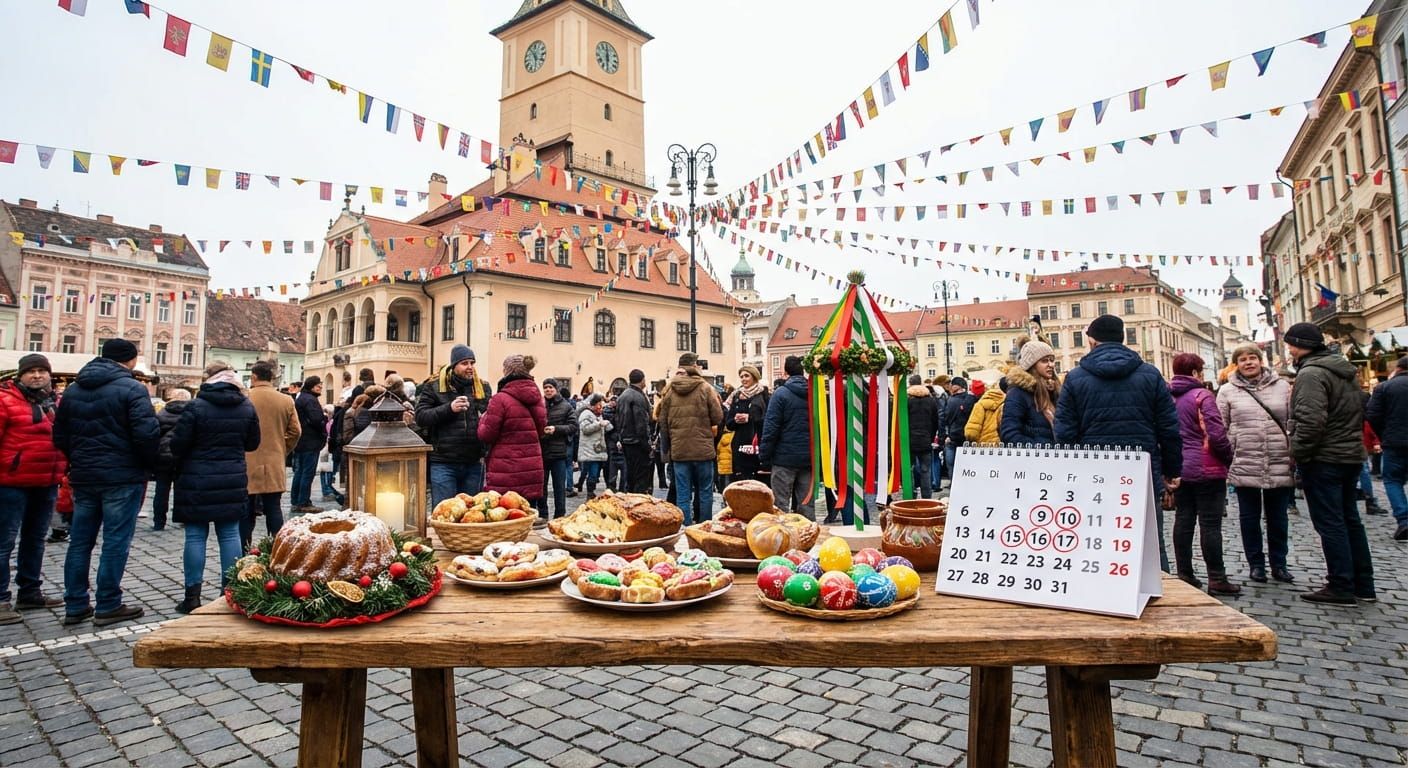
A well known example is Easter, which is computed using a rule that involves the spring equinox and the full moon. Because of that, Easter moves within a range of dates on the Gregorian calendar. Once Easter moves, holidays connected to it often move too. This ripple can affect public holidays in parts of Europe, including France and Germany, and in other places where these holidays are public.
Observed days: when the day off shifts even if the holiday name stays
Observed days are about protecting rest time. If a holiday lands on a weekend, many countries shift the day off to a weekday. The holiday date might still be recorded as its traditional date, yet the day off work is moved.
In the United States, a fixed date holiday that lands on Saturday may be observed on Friday, and one that lands on Sunday may be observed on Monday. Rules vary by employer and level of government, but the general idea is consistent: keep the practical day off on a weekday.
Singapore has its own clear approach, if a public holiday falls on a Sunday, the following Monday becomes a public holiday. That is one reason a holiday can feel like it “changed,” even though the named holiday did not move in the calendar.
If you want a deeper explanation focused on shifting day off rules and what “observed” means in different places, public holiday observed dates lays it out in plain language.
Regional differences: one country, many calendars
Some places have national holidays plus regional holidays. That can make date behavior look messy from the outside.
- In Australia, states and territories may mark different days for the same theme, and some are weekday based.
- In the United Kingdom, bank holidays vary across England and Wales, Scotland, and Northern Ireland.
- In India, national holidays exist alongside state holidays and optional holidays, creating a large and shifting calendar.
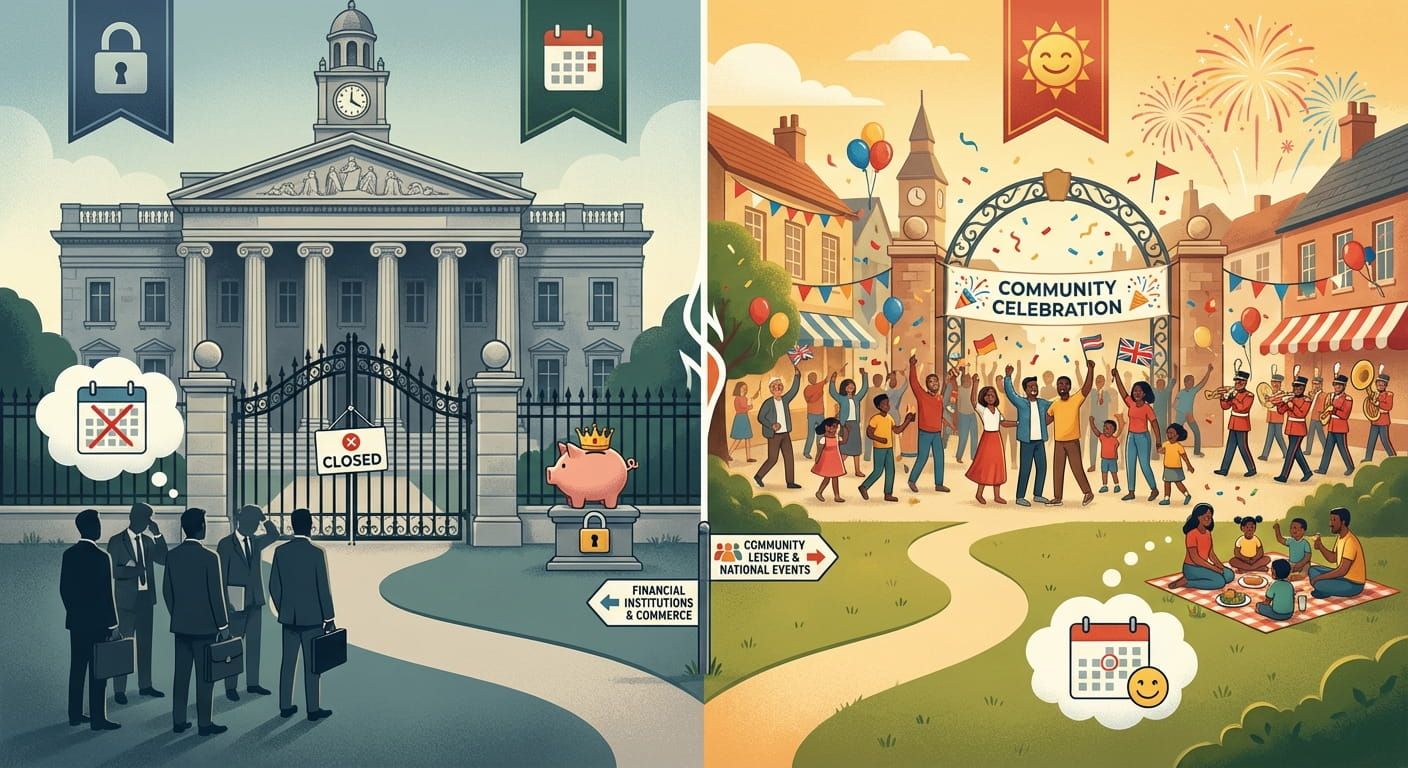
This is also where people mix up “public holiday” and “bank holiday.” The terms overlap in everyday speech, but the legal meaning can vary by place. A clear explanation helps set expectations for business hours, pay rules, and closures. Difference between bank and public holidays is useful when you are comparing countries.
Government changes and one off declarations
Holiday calendars can change because rules change. Governments sometimes add a new holiday, remove one, shift it, or rename it. A country might move a holiday to create a long weekend, reduce disruption to exams, or align with a new law.
One off holidays also happen. These can be national mourning days, election days, major celebrations, or special public holidays tied to a royal event, a major sporting win, or a historic anniversary. The key point is this: your holiday list for “this year” is not only history, it is also policy.
A holiday calendar is a set of rules, not just a list of dates. Once you know which rule a holiday uses, its “moving” behavior starts to feel predictable.
How leap years and time zones sneak into holiday timing
Leap years do not usually move a public holiday date directly. A fixed date holiday remains on the same date. Still, leap years matter in two ways.
- Weekday alignment changes, adding 29 February shifts the weekday pattern for later dates in the year compared with a non leap year.
- International coordination gets harder, especially when holidays are observed across time zones and you are planning calls or travel.
This is where Time.you’s focus helps. Time.you provides exact time across cities, countries, and time zones using atomic clock synchronized time, which is handy when you are juggling holiday closures across New York, London, Tokyo, Sydney, and Singapore.
Examples across countries: what “moving” looks like in real life
Seeing the same forces in different places makes them easier to remember.
- Japan mixes fixed date holidays with weekday rules, and some observances connect to seasonal moments and social customs. Checking Japan holidays is a practical way to confirm the official dates for the year you care about.
- United States uses many Monday based holidays and also has observed day shifting for fixed date holidays. For planning, United States holidays keeps the upcoming schedule in one place.
- Singapore includes major festivals tied to the lunar calendar, plus clear observed day rules when a holiday falls on Sunday. Singapore holidays is especially helpful around periods like Chinese New Year, Hari Raya, and Deepavali where timing can move year to year.
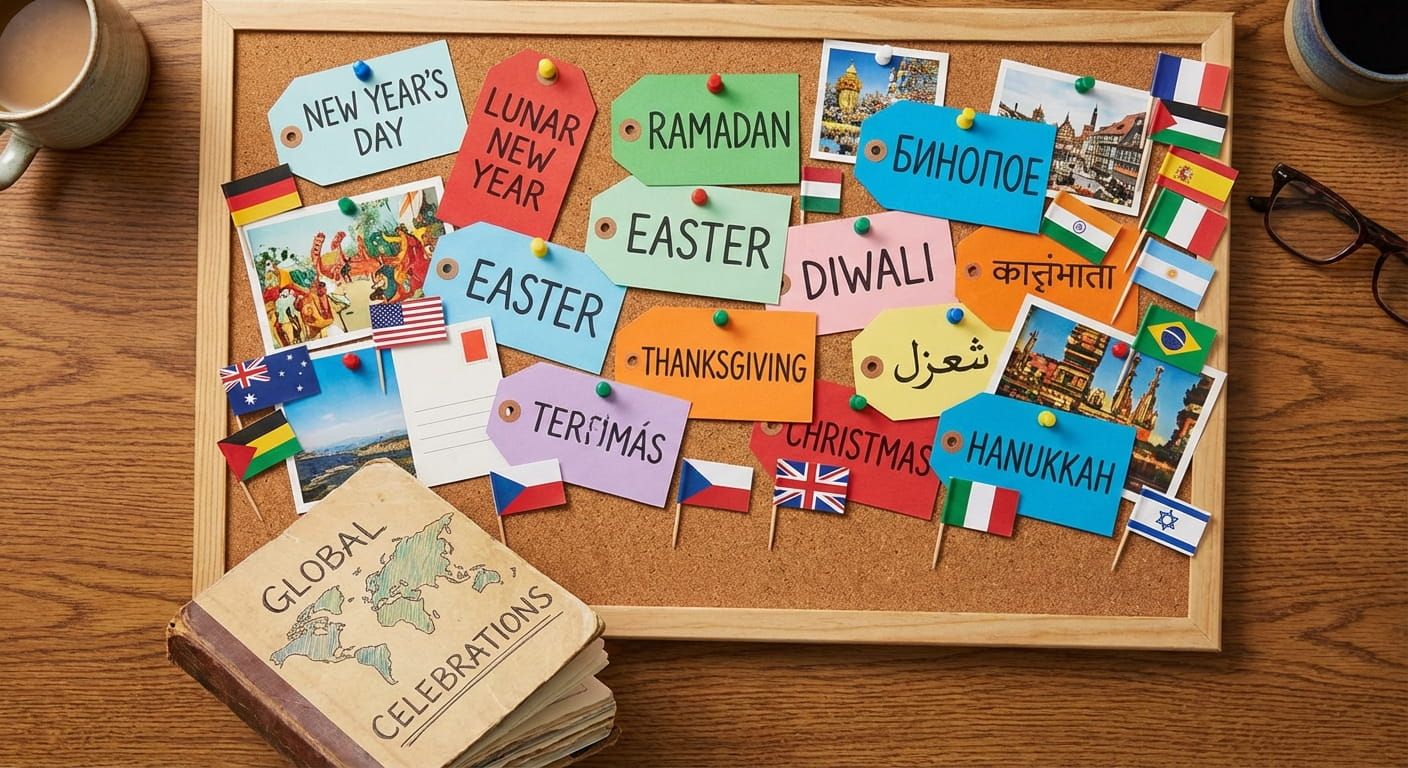
Similar patterns show up in Malaysia, Indonesia, Thailand, Vietnam, China, and India, where a mix of religious, cultural, and national days shape the year. In Europe, you may notice movable Christian holidays, plus national days fixed to dates. In Latin America, you may see a blend of fixed national days and moving religious observances.
What makes a holiday date change
Predict changes without memorizing everything
You do not need to memorize every holiday rule in every country. Use a method that scales. Here is a list you can follow whenever you spot a date that changes from year to year.
- Check if the holiday is fixed date, set to a calendar date like 1 January or 25 December.
- Check if the holiday is a weekday pattern, tied to a Monday, Friday, or a specific weekday count.
- Check the calendar system, lunar, lunisolar, or computed astronomy.
- Look for observed day rules, especially when the holiday falls on a weekend.
- Confirm official updates, some countries publish changes close to the date.
If you like browsing patterns across places, major global public holidays helps you see which observances show up in many countries, and which ones vary widely.
Common misunderstandings that make the calendar feel unreliable
- Name versus day off, a holiday can keep its name date while the day off shifts.
- National versus regional, a “public holiday” in one city might be a normal workday in another.
- Announcement timing, official lists may be updated, especially for lunar based observances.
- Cross border planning, a closure day in Hong Kong might not match Singapore, and Japan might not match South Korea.
Once these are in your head, changes feel less like surprises and more like calendar logic.
How Time.you fits into planning holidays across time zones
Holiday planning is never only about dates. It is also about timing. A public holiday in Tokyo can affect a business day in Singapore, and an early morning call from New York can land on a closed day in London. Time.you focuses on precise time across time zones, with atomic clock synchronized accuracy, which helps you coordinate work, travel, and reminders without guesswork.
It also helps that holiday pages are organized by place, which is practical when your family is split between Australia, Malaysia, India, the United Kingdom, and the United States.
The closing thought you can carry into next year’s calendar
Holiday dates change yearly because they are built from rules, not from vibes. Weekdays move around the calendar, the moon keeps its own rhythm, and countries protect rest days with observed dates. Once you identify which rule a holiday uses, you can predict the pattern, and you can plan with confidence instead of crossing your fingers.