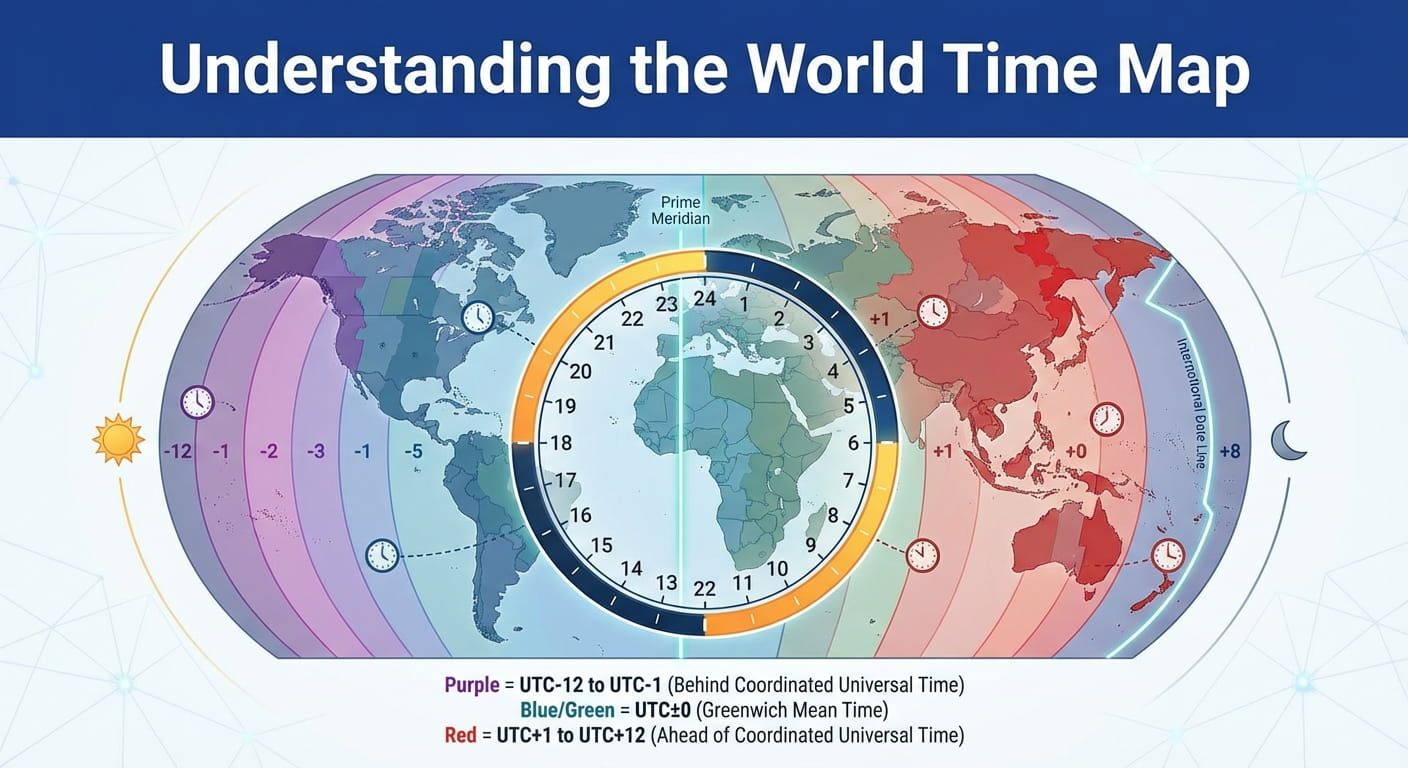
A world time map turns the planet into a shared schedule. You can glance at it and tell who is starting a workday, who is eating dinner, and who is asleep. That single view saves missed calls, late meetings, and confusing messages. It also helps you understand why two places can share the same hour today, then drift apart next month when daylight saving time changes.
Summary
A world time map shows how local clocks line up across regions, using UTC as the baseline. It helps you read offsets, spot time zone borders, and anticipate daylight saving time shifts. Pair the map with city clocks for real moments in places such as Tokyo, Sydney, Auckland, London, New York, and Hong Kong. With a few habits, you can convert times confidently, plan meetings fairly, and avoid mistakes caused by abbreviations.
Knowledge check to warm up
Answer these and you will feel the map click into place. Tap “check answers” to see your score.
What a world time map shows at a glance
A world time map is the big picture view of time zones. It is not just a graphic of lines. It is a model of how local clocks relate to a shared reference. Most maps use UTC as the backbone, then show each region’s offset, for example UTC plus 8 in Hong Kong or UTC minus 5 in parts of North America during standard time.
On time zone map, you can connect the map view with real time readouts and confirm what the map implies. That matters because borders are not perfect vertical stripes, and local rules can change. A map gives you the layout, and live clocks confirm the moment.
The map is your overview. The city clock is your reality check. Use both, and time stops feeling slippery.
City times, the human way to use the map
People do not live in offsets, they live in cities. That is why you should start with city time, then zoom out to the map. If you need to coordinate between Singapore and Tokyo, you care about the exact local hour in each place, not only the math. If you work with Sydney and Auckland, you care about whether one of them is in daylight saving time this week.
Time.you is built for that rhythm. You can open world clock and keep a small set of places visible. Try a mix that reflects real life and real work:
- Singapore for Southeast Asia coordination
- Hong Kong for HKT based schedules
- Tokyo for JST planning
- Seoul for KST updates
- Sydney for AEST or AEDT changes
- Auckland for NZST or NZDT shifts
- London for BST or GMT seasons
- New York for EST or EDT timing
- Los Angeles for PST or PDT timing
Once those are familiar, the map becomes easier. You start to recognize clusters. East Asia is tight, Australia and New Zealand stretch forward, and North America spans several zones at once.
UTC and GMT basics without the confusion
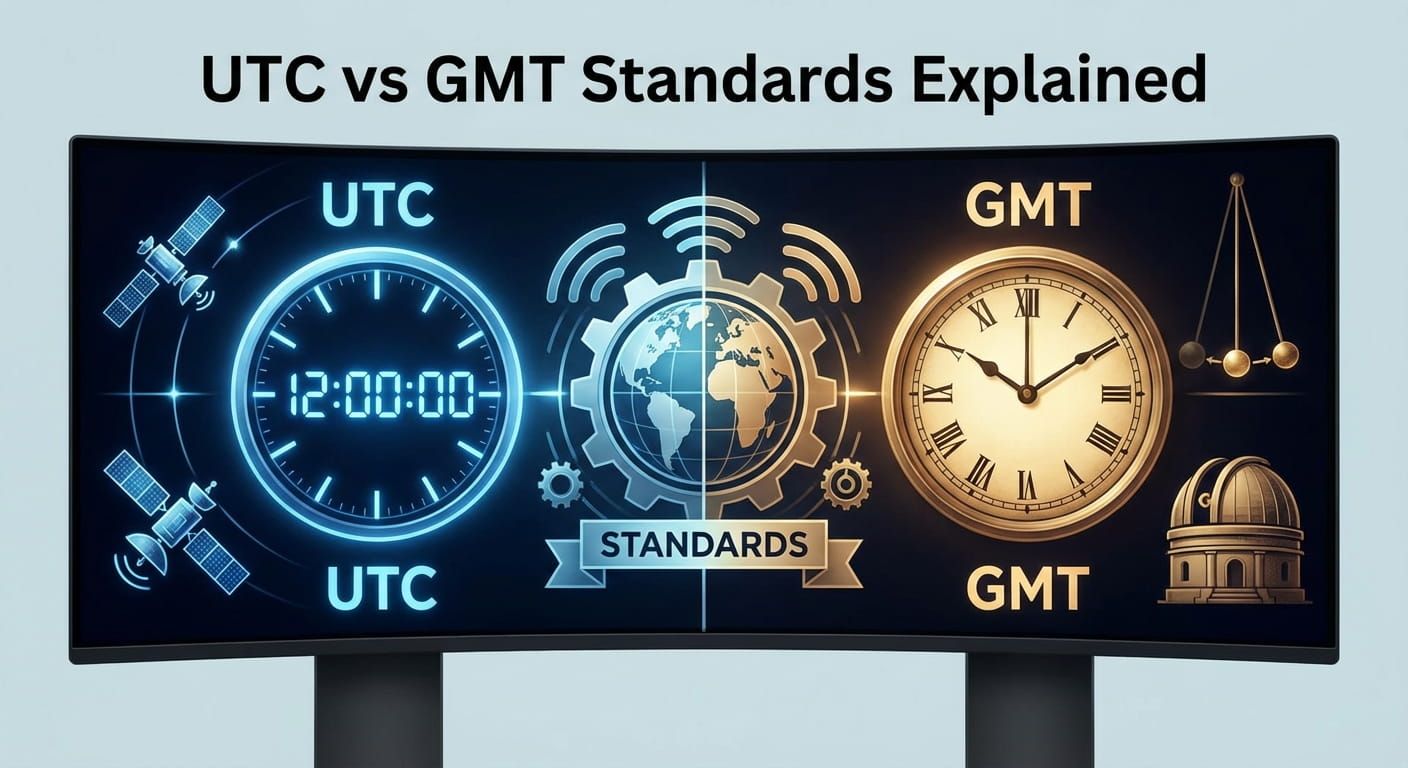
UTC is the modern reference used for civil timekeeping and offsets. GMT is often used informally as a label, especially in conversations and in some tools. In many day to day situations, people treat them as the same. The tricky part appears when someone needs precision, standards language, or time conversion rules that must stay consistent.
If you want the clear differences and how they are used, read UTC vs GMT standards. It explains why UTC is the reference for offsets and how GMT shows up in everyday use. For practical work, the best habit is simple: write times with a date and an offset, or name the city.
These examples make communication safer:
- Write: 09:00 UTC plus 8 on 12 May, Singapore time
- Write: 17:00 JST on 12 May, Tokyo
- Write: 10:00 BST on 5 June, London
- Write: 14:00 EDT on 7 July, New York
How daylight saving time reshapes the map
Daylight saving time is the main reason a world time map can look stable, then surprise you. The boundaries might stay the same, but the offset labels change for places that move their clocks. London shifts between GMT and BST. New York shifts between EST and EDT. Sydney can shift between AEST and AEDT. Auckland can shift between NZST and NZDT.
The safest habit is to stop assuming the offset from memory. Use live tools. If you want to convert times across two locations and see the date rollovers, open time zone converter and check the exact day you care about. A meeting on a Monday might be fine, but the next Monday could change if a DST transition happened in between.
Abbreviations are useful, and also a common trap
Abbreviations look tidy in chat messages, but they can collide. CST can refer to North America, China, and other uses. IST can refer to India, Ireland, or Israel depending on context. Even BST can mean British Summer Time, and it can also appear elsewhere in abbreviations lists, which can confuse new readers.
If you want a reliable reference, world time zone abbreviations list helps you verify what a short label means and where it is used. A better habit for scheduling is to pair the abbreviation with a city, or to include the UTC offset.
Here is a clean way to communicate in a team:
- Use the city name for invites and shared docs
- Use UTC for global deadlines and launch windows
- Use abbreviations only when everyone shares the same meaning
A map guided tour through major regions
Asia and the steady rhythm of HKT, JST, and KST
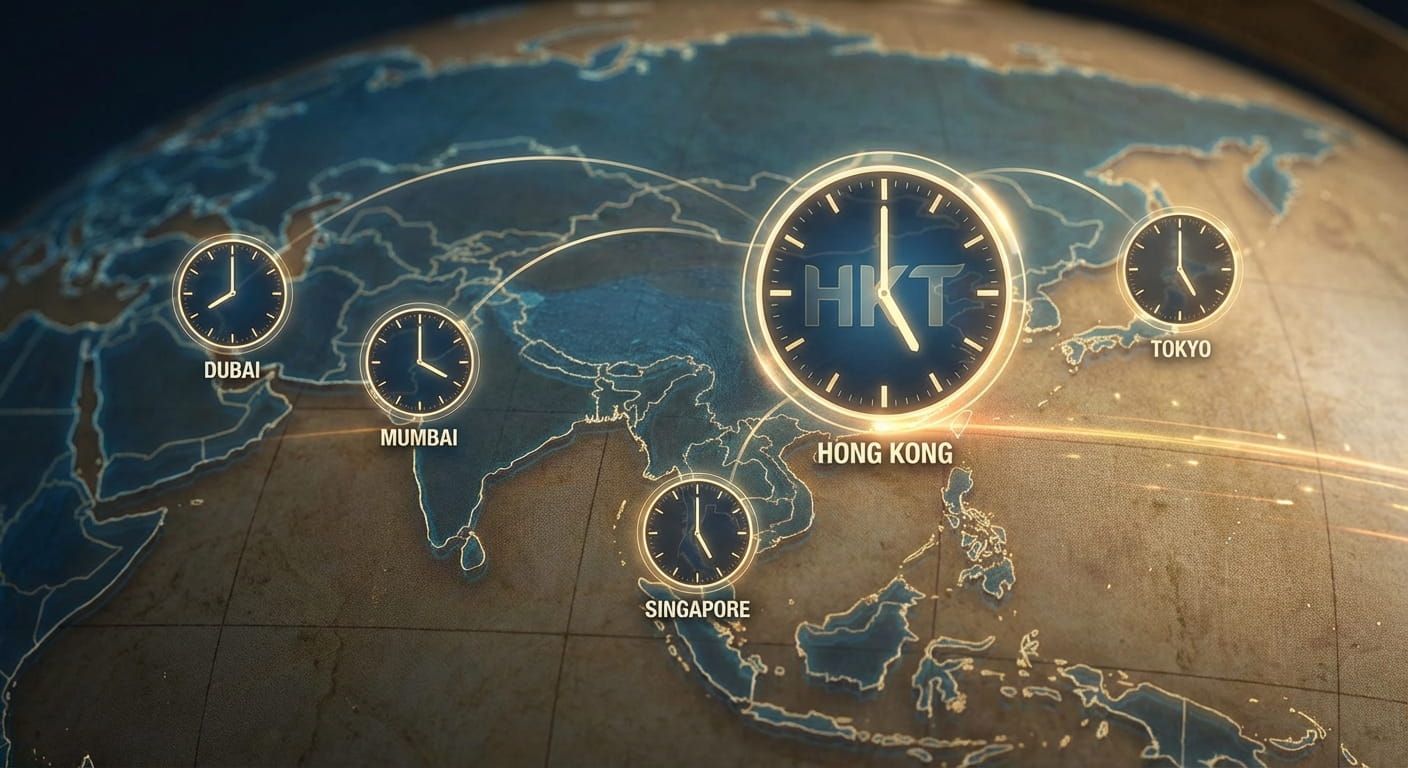
A large part of Asia stays on consistent offsets all year. Hong Kong is commonly referenced with HKT. Tokyo uses JST. Seoul uses KST. Singapore is also consistent through the year, which makes coordination simpler. When you compare Asia to Europe or North America, the big difference is fewer seasonal clock shifts.
If your work touches Hong Kong and neighboring regions, Asian time zones HKT is a helpful context piece. It keeps conversations grounded in what HKT means and how it relates to nearby times.
Europe with BST, CET, and neighbors
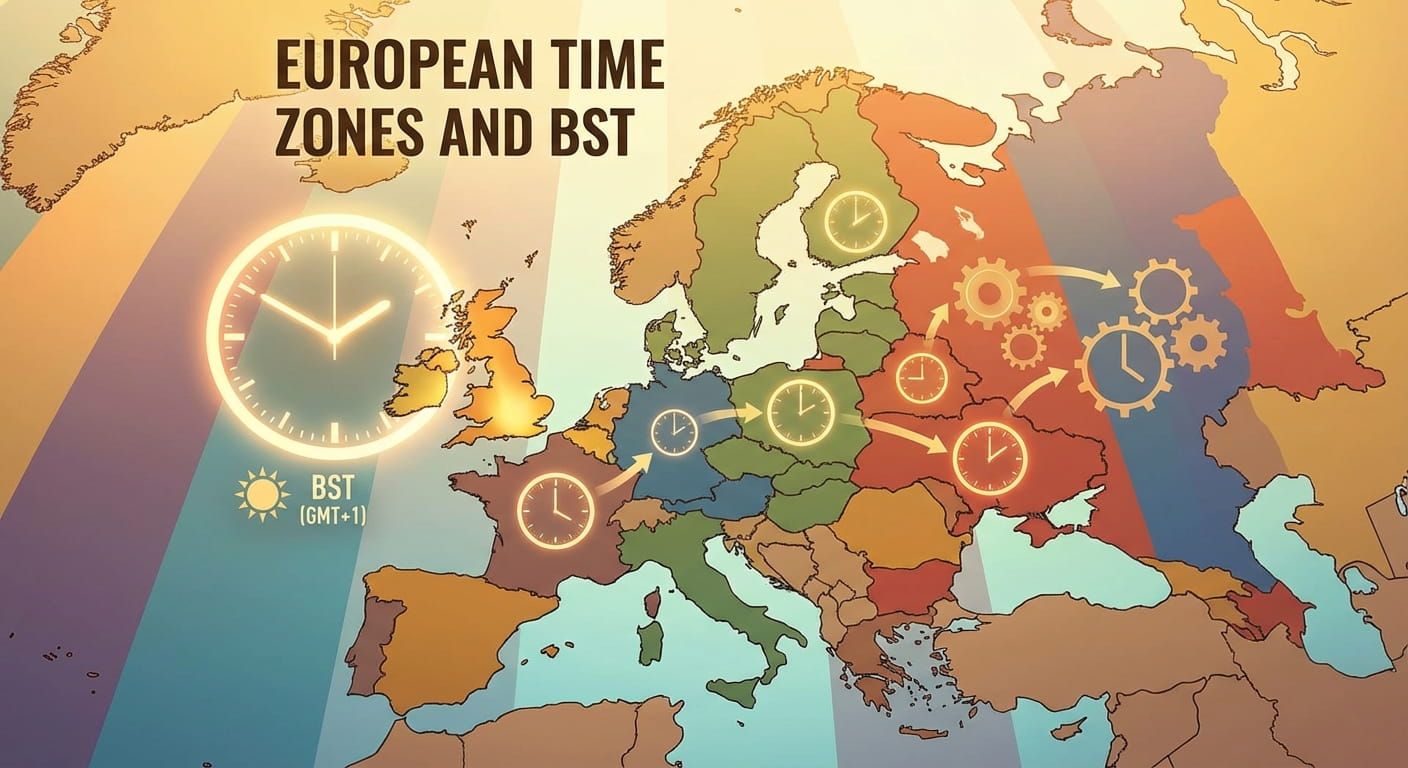
Europe on the map can look compact, but it has meaningful variation. London moves with BST in the summer and GMT in the winter. Many nearby countries use CET or CEST depending on season. The map makes it visible, but the rules explain the why.
For a Europe focused view that fits real planning, European time zones BST helps you connect London to surrounding regions, and understand what changes across the year.
North America and the wide spread from east to west
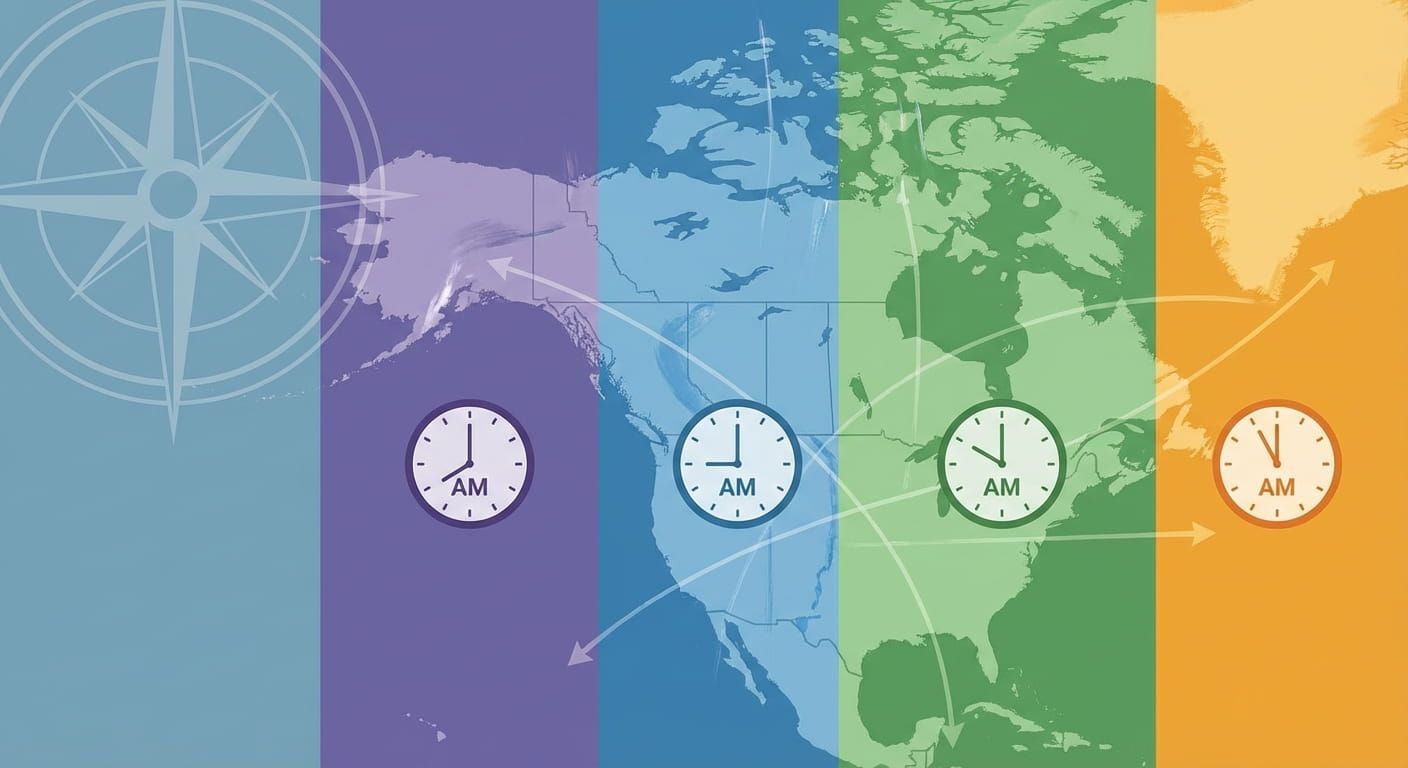
North America is where people most often forget how wide time can be. New York and Los Angeles can be hours apart on the same day. Add Alaska and Hawaii, and the spread becomes even bigger. The map makes this instantly obvious, which is why it is so helpful for planning.
If you often coordinate across the United States and Canada, north american time zones guide gives you a clean walkthrough of the common zones and how they show up in daily life.
Oceania with Australia and New Zealand changes
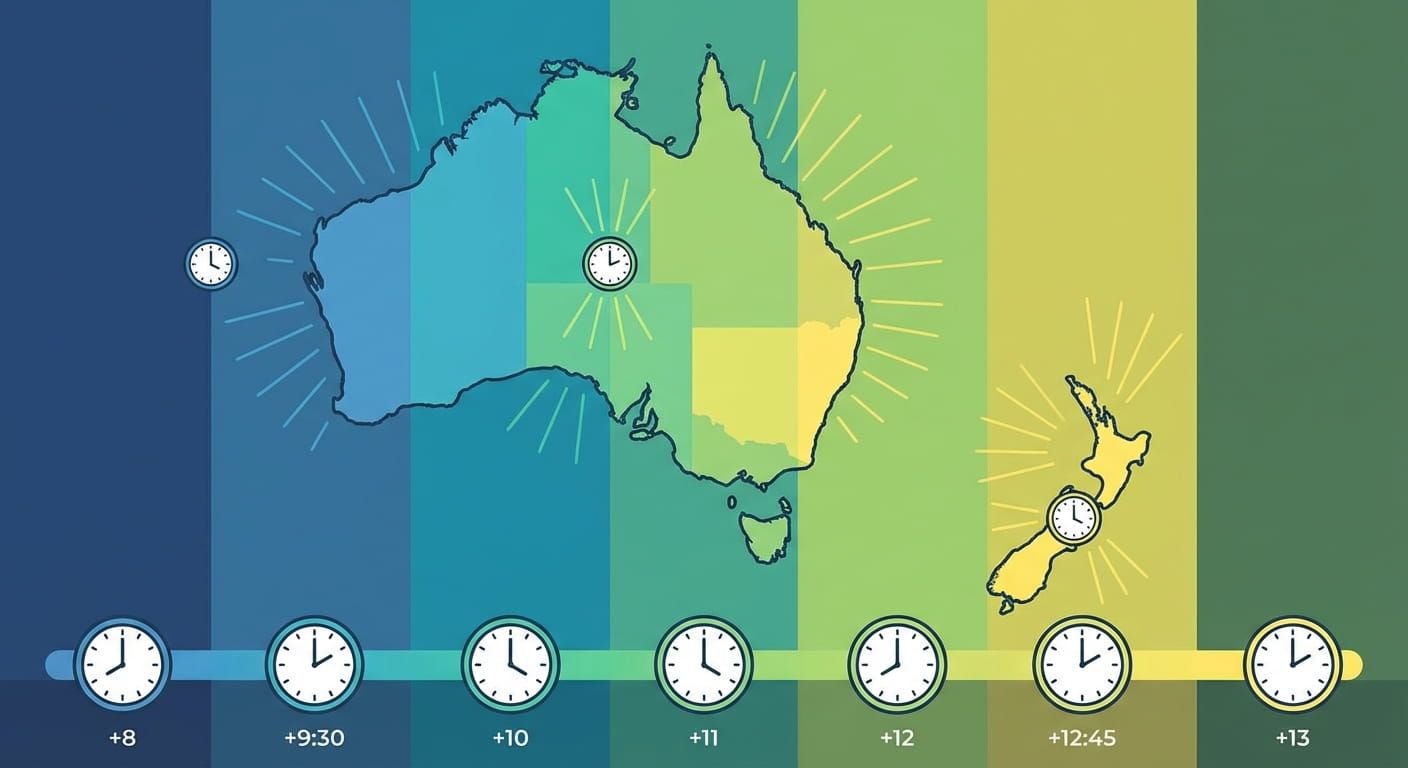
Australia and New Zealand sit far ahead in global time. That means date rollovers are common in cross region planning. Sydney can be on AEST or AEDT depending on season, and Auckland can shift between NZST and NZDT. A world time map helps you see that these places can pull even further ahead when daylight saving time is active.
If you want a focused explanation of the region that you can share with a team, Australian and New Zealand time zones ties it together in a practical way.
Color coded offsets table you can scan fast
Time conversion habits that prevent mistakes
Conversions go wrong for the same reasons again and again. Someone forgets the date. Someone assumes an abbreviation. Someone ignores daylight saving time. A world time map helps, but habits make it reliable.
Use this simple conversion routine
- Start with the city and the date, not just the hour
- Confirm the current zone label for that date
- Convert using UTC as the middle step
- Check whether the target city lands on a different day
- Send the final message with city name plus the local time
If you want a dedicated place to run the math and see the day shift clearly, the time zone converter is the most direct route. For team scheduling where fairness matters, event planner helps you pick times that are not brutal for one side of the world.
One list of practical ways people use a world time map daily
This is the part that makes the map feel personal. Pick the ones that match your life, and ignore the rest.
- Choosing a call time between London and Singapore that avoids late nights
- Planning a launch window that stays stable by writing it in UTC
- Coordinating support coverage across New York, Chicago, and Los Angeles
- Booking travel that crosses midnight, so hotel dates stay correct
- Timing family calls between Sydney and Dublin without waking anyone up
- Scheduling classes or gaming sessions between Tokyo and Vancouver
- Double checking regional changes before a quarterly meeting cycle
Meeting planning across continents without the stress
A world time map gives you empathy. You can see who is in the middle of the night before you ask for a call. A fair schedule rotates the pain. A smart schedule also chooses overlap windows that exist across the year, not just this week.
If you want more structure, global meeting planning tools shares approaches teams use to keep meetings humane. Pair that guidance with your map view, and you can build a pattern that holds up across DST season changes.
Military time and 24 hour clocks on the map
Many international teams prefer 24 hour time, because it removes AM and PM mistakes. It also fits cleanly on timelines and shift schedules. If someone writes 19:30 in Tokyo, nobody wonders whether it is morning. The map still matters, because 19:30 in Tokyo is not the same moment as 19:30 in London.
If you want to read and write 24 hour time with confidence, military time reading gives a friendly explanation that fits everyday use, not only military contexts.
Using Time.you with the map for reliable answers
Time.you provides exact time across the world with atomic clock synchronized accuracy. That means you can trust the displayed time when you are coordinating a handoff, a flight check in, a live stream, or a deadline. The map gives you understanding, and the service gives you precision.
A good workflow looks like this:
- Open the map to see the big picture and likely overlap windows
- Open your saved city set on the world clock for the exact hour
- Convert the meeting time for each attendee using the converter
- Pick a slot using the event planner, then send the invite with city labels
Common questions people ask while reading the map
Why do time zone borders look jagged?
Borders follow political lines, population centers, and local decisions. A straight line would be easier, but it would also break daily life. That is why the map looks uneven. It reflects choices made by governments and communities.
Why do some places share a time even when they are far apart?
Time zones are not only about longitude. They are also about trade ties, commuter patterns, and historical decisions. Two locations can share an hour to reduce confusion, even if the sun position is not identical.
How do I avoid confusion when someone writes only an abbreviation?
Ask for a city or an offset. If you want a compact answer, use UTC plus or UTC minus with the date. If the team uses abbreviations often, agree on a standard set and keep a reference list handy.
Tips for writing time messages that never get misread
Here are small changes that prevent big headaches:
- Always include the date, because the date can differ across the world
- Include the city name, because abbreviations can collide
- Use 24 hour time in written plans, because it avoids AM and PM slips
- For deadlines, write them in UTC and add local equivalents if needed
When the map feels confusing, start with these anchor zones
Pick a few anchor points and the rest becomes easier. UTC is the center. London is a familiar reference for many people. Singapore and Hong Kong anchor East and Southeast Asia. Tokyo anchors Japan. Sydney and Auckland anchor Oceania. New York and Los Angeles anchor North America. Johannesburg anchors southern Africa. Moscow can help you reason about MSK when talking to Eastern Europe and parts of western Asia.
A small set of anchors to memorize
- UTC as the baseline
- London for GMT or BST seasons
- Singapore for a steady Southeast Asia reference
- Tokyo for JST
- Sydney for AEST and seasonal shifts
- Auckland for NZST and NZDT changes
- New York for EST and EDT
- Los Angeles for PST and PDT
If you only memorize one skill, make it this: convert through UTC, and confirm DST for the date. That combination beats guesswork every time.
A final glance at the map, then a confident next step
A world time map is not just geography. It is a kindness tool. It helps you schedule with respect, travel with fewer surprises, and communicate time clearly across cities and countries. Keep a small set of cities on your world clock, check the map when planning, and convert with a date in mind. After a week of using it, you will start to feel time as a shared grid, not a puzzle.