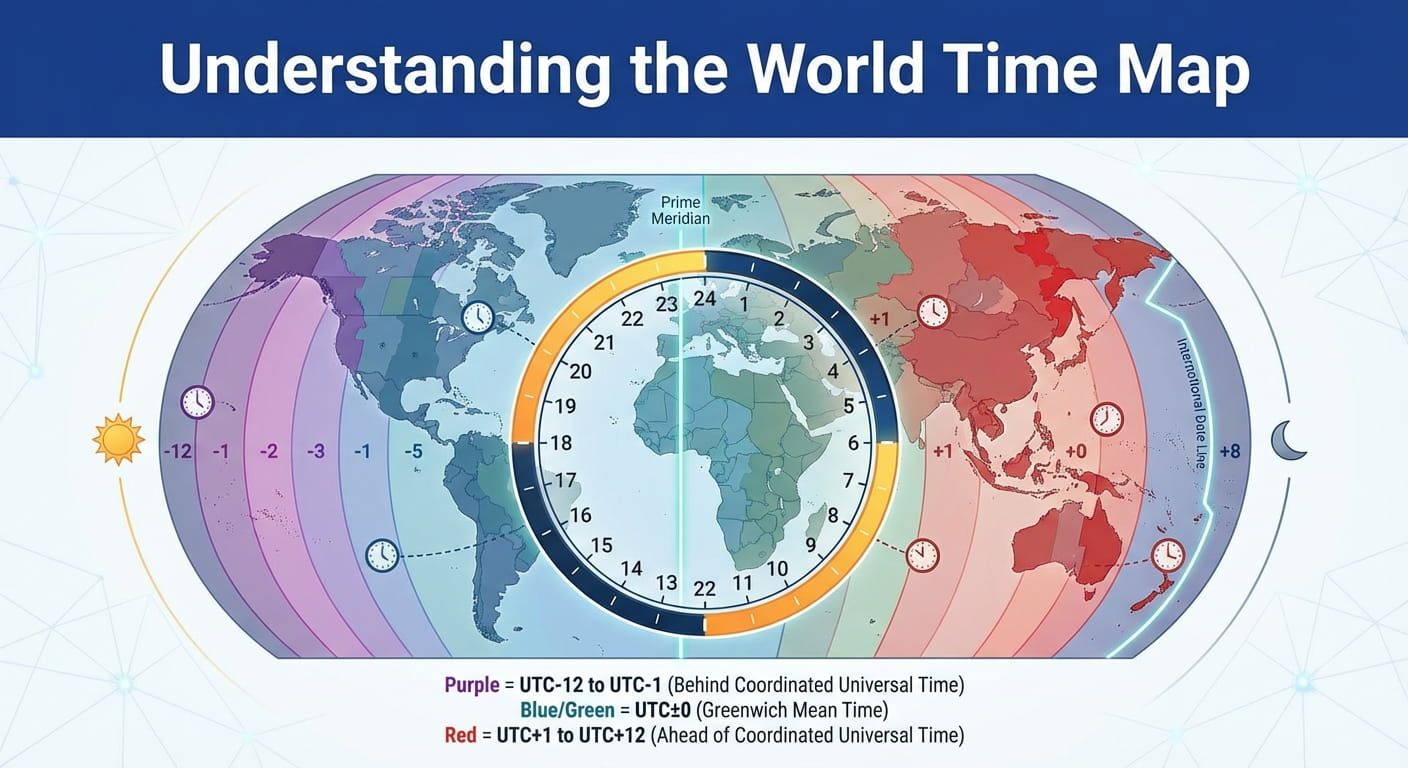
The fastest way to miss a meeting is to trust a three letter time zone label without checking what it means. Some abbreviations are solid. Others are reused in different regions, or change with daylight saving time. This page keeps those labels readable, with plain explanations and examples that match real city clocks.
Key takeaway
Time zone abbreviations are shorthand, not a universal standard. The same letters can mean different offsets in different places, and some shift with daylight saving time. Use abbreviations as a friendly label, then verify the UTC offset and the cities that actually use it. If you convert across countries, confirm both sides with a converter and a map. That turns confusing labels into dependable scheduling.
Mini quiz to check your time zone instincts
3 questions, instant feedback
What time zone abbreviations really represent
Abbreviations are labels people use in emails, calendars, airline tickets, and chat messages. They are meant to be short. They are not meant to carry every detail. The same label can show up in different places with different meanings, especially with three letter sets that look generic. Even within one region, a label can switch depending on whether daylight saving time is active.
To stay safe, treat an abbreviation as a clue. Then confirm two things:
- UTC offset, the number of hours and minutes ahead of or behind UTC.
- Real world location, a country, region, or city that uses that offset at that time of year.
Scheduling habit: write the abbreviation, then add the UTC offset in parentheses. Example: “10:00 AEST (UTC+10)”. It reads well and prevents guesswork.
UTC and GMT, the baseline labels you will see everywhere
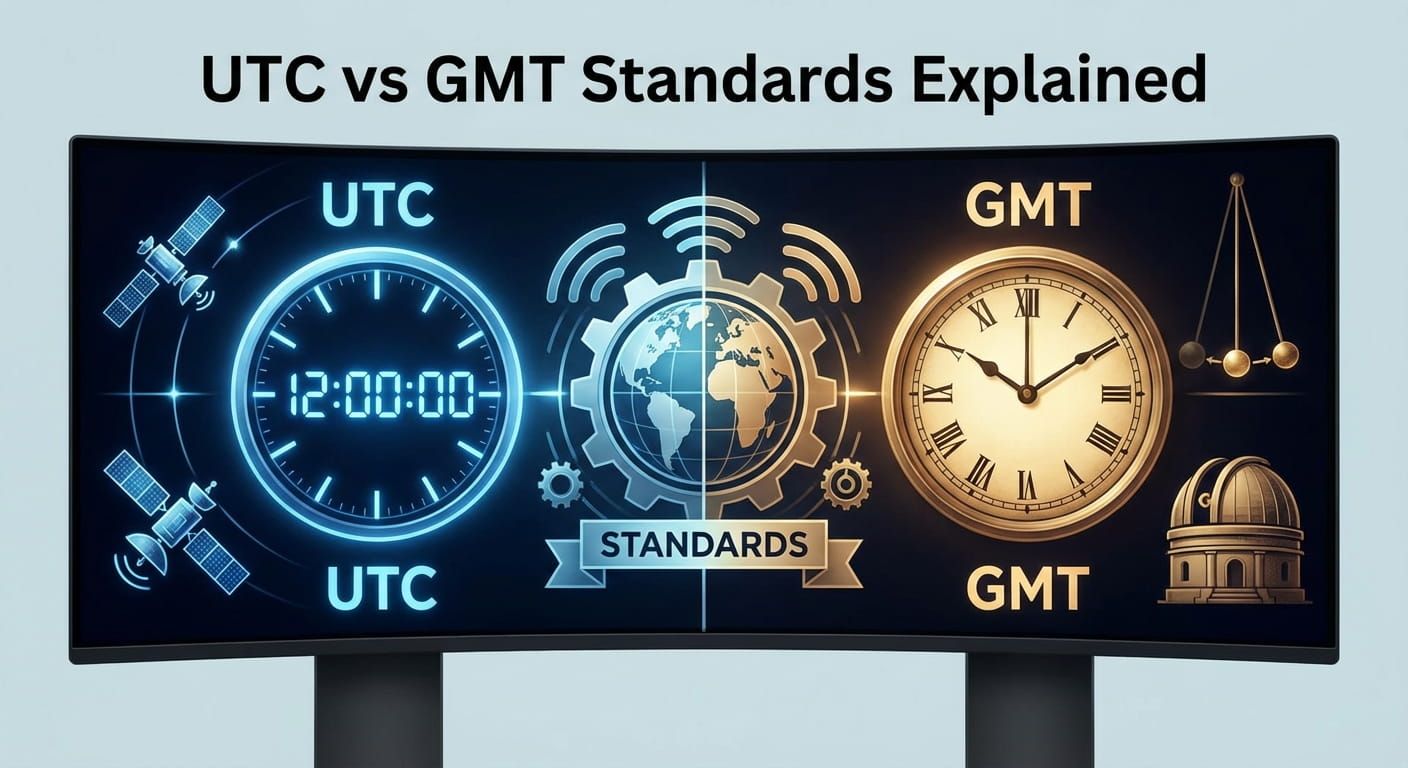
UTC is the modern reference for timekeeping across the globe. It is the anchor for offsets, conversions, and many technical systems. In everyday planning, it is also the cleanest label because it does not switch with daylight saving time. If you work with remote teams, UTC keeps everyone honest about the math.
GMT is also common. Many people use GMT and UTC interchangeably in casual contexts. In strict terms, they are not identical in every scientific nuance, yet for most scheduling, the offset behavior is what matters. If you see GMT in a meeting invite, still confirm the numeric offset and the date, then move on with confidence.
How daylight saving time changes the letters
Daylight saving time often swaps one letter. A standard time zone can become a daylight time zone. That switch changes the abbreviation and the offset. A common pattern is S for standard and D for daylight. Examples include PST and PDT, EST and EDT, and many more. The tricky part is that not every country uses daylight saving time, and the start and end dates vary.
If you are planning across seasons, a tool helps. A good approach is to convert with a dedicated page, then sanity check it on a map. Many readers pair time zone converter with a glance at time zone map to confirm the direction and the size of the jump.
World time zone abbreviations list, grouped in a way that stays readable
This list focuses on widely used abbreviations that appear in real scheduling. Offsets are typical values. Local rules can change the effective offset on certain dates.
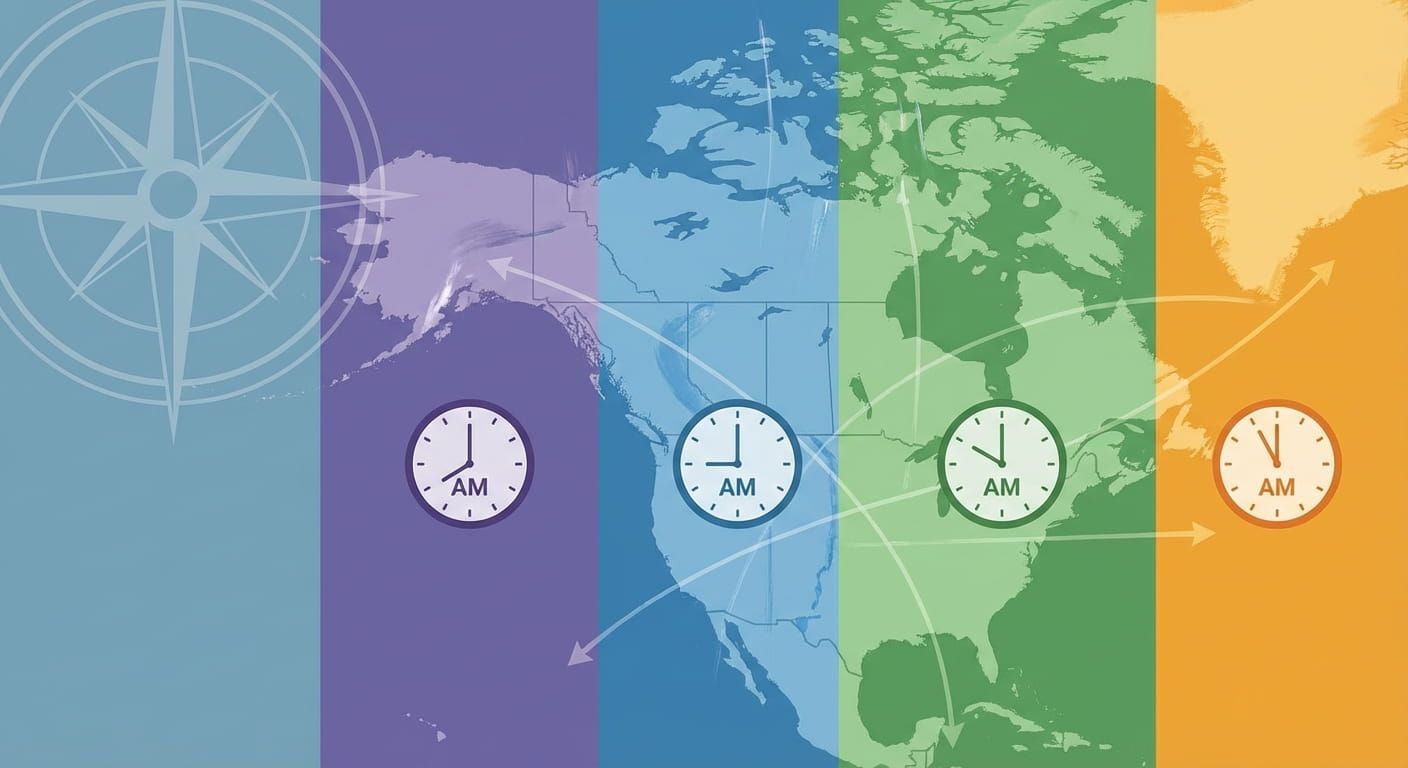
North America, common meeting labels
- EST, UTC minus 5, often used in the eastern United States and parts of Canada during standard time.
- EDT, UTC minus 4, eastern daylight time.
- CST, UTC minus 6 in North America during standard time, also used elsewhere in the world with different meanings, verify location.
- CDT, UTC minus 5, central daylight time.
- MST, UTC minus 7, mountain standard time, not always paired with daylight saving everywhere.
- MDT, UTC minus 6, mountain daylight time.
- PST, UTC minus 8, pacific standard time.
- PDT, UTC minus 7, pacific daylight time.
- AKST, UTC minus 9, Alaska standard time.
- AKDT, UTC minus 8, Alaska daylight time.
- HST, UTC minus 10, Hawaii standard time.
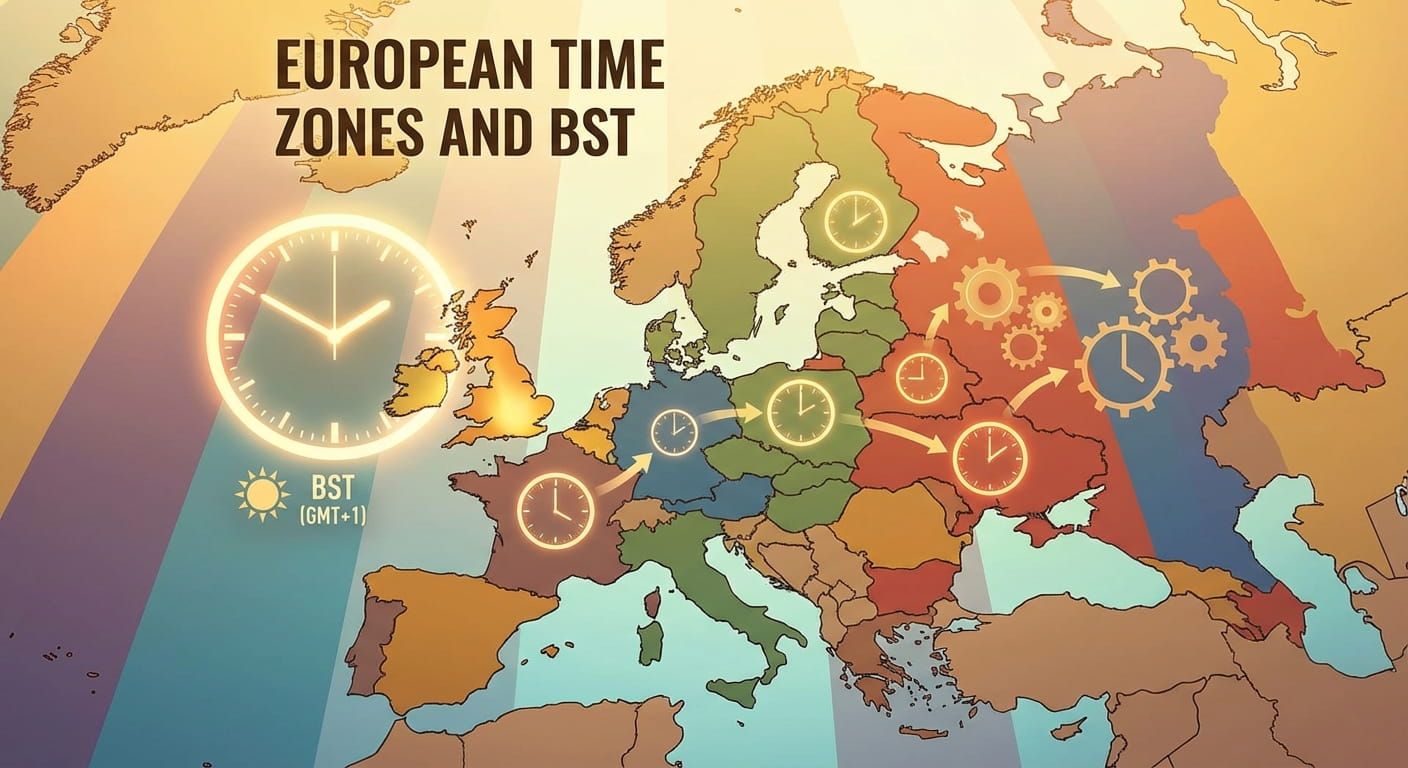
Europe and nearby regions
- WET, UTC plus 0, western European time in some contexts.
- WEST, UTC plus 1, western European summer time.
- CET, UTC plus 1, central European time.
- CEST, UTC plus 2, central European summer time.
- EET, UTC plus 2, eastern European time.
- EEST, UTC plus 3, eastern European summer time.
- BST, UTC plus 1, often used for British summer time, also reused elsewhere, confirm context.
- IST, commonly used for India standard time at UTC plus 5:30, also used for other regions, confirm which one is meant.
- IST, Irish standard time label in local usage, verify the date because seasonal rules matter.
- MET, UTC plus 1 in some older or institutional contexts.
- MEST, UTC plus 2 in summer contexts that pair with MET.
Africa and the Middle East
- WAT, UTC plus 1, west Africa time.
- CAT, UTC plus 2, central Africa time.
- EAT, UTC plus 3, east Africa time.
- SAST, UTC plus 2, South Africa standard time.
- IDT, UTC plus 3, Israel daylight time, seasonal.
- IST, Israel standard time label in some references, confirm because IST has multiple meanings.
- MSK, UTC plus 3, Moscow time, used across parts of Russia.
Asia and the Pacific
- HKT, UTC plus 8, Hong Kong time.
- CST, UTC plus 8, China standard time label in some contexts, different from North American CST.
- JST, UTC plus 9, Japan standard time.
- KST, UTC plus 9, Korea standard time.
- PKT, UTC plus 5, Pakistan time.
- CHST, UTC plus 10, Chamorro standard time.
- WIB, UTC plus 7, western Indonesia time.
- WITA, UTC plus 8, central Indonesia time.
- WIT, UTC plus 9, eastern Indonesia time.
Australia and New Zealand
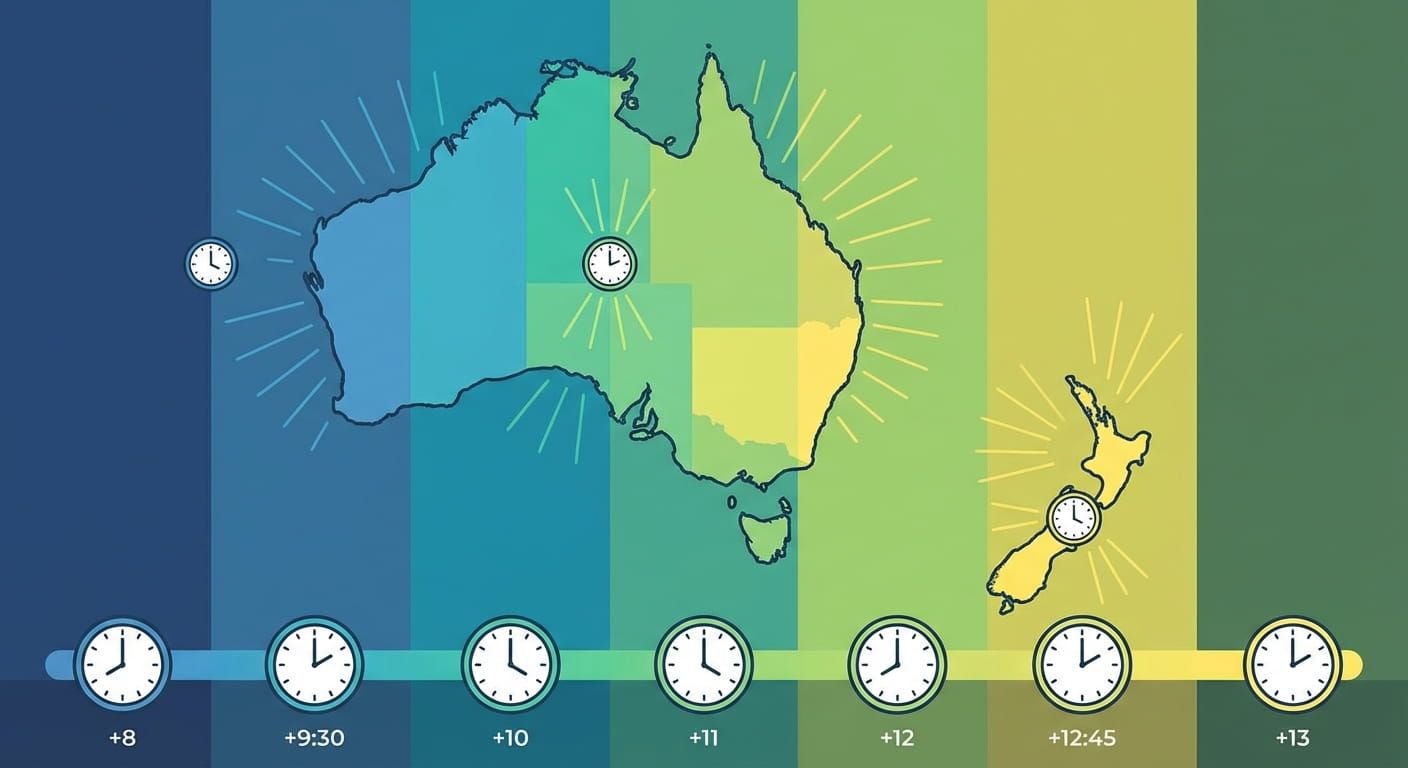
- AWST, UTC plus 8, western Australia standard time.
- ACST, UTC plus 9:30, Australian central standard time.
- ACDT, UTC plus 10:30, Australian central daylight time.
- AEST, UTC plus 10, Australian eastern standard time.
- AEDT, UTC plus 11, Australian eastern daylight time.
- NZST, UTC plus 12, New Zealand standard time.
- NZDT, UTC plus 13, New Zealand daylight time.
Atlantic, island, and regional labels you may see in travel
- AST, UTC minus 4 in many Atlantic contexts, also reused elsewhere, confirm location.
- ADT, UTC minus 3, Atlantic daylight time.
- NST, UTC minus 3:30, Newfoundland standard time.
- NDT, UTC minus 2:30, Newfoundland daylight time.
- HDT, UTC minus 9, Hawaii Aleutian daylight time in some references.
- SST, used in multiple regions, always confirm the offset and the country.
A professional reference table that helps you convert at a glance
This table focuses on abbreviations that show up often in calls and event invites. The colors are muted on purpose, easy on the eyes, still distinct.
Abbreviations that cause the most confusion, and how to handle them
Some labels show up in different regions with totally different offsets. These are the ones that tend to create calendar chaos. The fix is simple: pair the abbreviation with a location, then verify with a conversion tool.
- CST can mean central standard time in North America, or China standard time, plus other uses. If the invite says CST, ask for the city, or rewrite it as “UTC offset plus city”.
- IST can refer to India, Ireland, or Israel depending on the context. If the person is in Dublin or Tel Aviv, do not assume India.
- BST can refer to British summer time, and also appears in other contexts. Add the city name and confirm the offset for the date.
- AST appears in different regions. When you see it, treat it as a label that needs a location attached.
Good rule: if an abbreviation could plausibly refer to more than one country, write the city in the invite title. “CST, Beijing” or “CST, Chicago” ends confusion instantly.
Practical ways to use abbreviations in real schedules
Abbreviations help the reader scan a message. They shine in three situations: announcing a meeting time in chat, labeling a shared calendar, and writing instructions for international events.
These bullets keep messages clean and avoid mistakes:
- Write the local time, then the abbreviation, then the UTC offset in parentheses.
- Add one city name on each side for cross border calls, especially if the labels are ambiguous.
- For large groups, post a link to world clock and name the main cities involved.
- If the group spans more than five time zones, plan it using event planner to prevent missed handoffs.
Military time zone letters, useful when you need zero ambiguity
Military time zones use letters to represent offsets from UTC. They are designed to remove confusion in fast operations. They show up in aviation, shipping, and some global communications. If you see a single letter time zone in a message, treat it as a sign that the sender wanted precision.
If you want a full reference, the military time zones page is a handy lookup. Even if you never use it daily, it is useful context for understanding why some teams avoid three letter abbreviations entirely.
Time conversions that feel effortless, even across many countries
Time.you is built for this exact moment: you have an abbreviation, you have a city, and you need the correct time right now. The service is atomic clock synchronized, which means you can rely on it for precise time display in major cities and time zones worldwide. That precision matters when a deadline hits at midnight in one country and business hours in another.
For the simplest workflow, do it in this order:
- Identify the meeting city for each person, not just the country.
- Check whether the date sits inside a daylight saving period for that location.
- Convert using a single source of truth, then share the result back with both local times and UTC offset.
City and country examples that match common abbreviations
Some labels map cleanly to places people talk about every day. These examples help you picture the clock without doing math in your head.
- JST lines up with Japan, think Tokyo, Kyoto, Sapporo.
- KST lines up with South Korea, think Seoul, Busan.
- HKT lines up with Hong Kong.
- WIB, WITA, WIT help with Indonesia across Jakarta, Bali, and Papua regions.
- SAST helps for South Africa, including Johannesburg and Cape Town.
- CET, CEST appear across much of central Europe, think Berlin and Paris depending on season.
- AEST, AEDT appear across eastern Australia, with seasonal differences by state.
- NZST, NZDT cover New Zealand, think Auckland and Wellington depending on season.
A tidy checklist for sending meeting times without confusion
If you want one repeatable format that works in messages, calendars, and documents, this is it.
- Write the primary city time first: “09:00 Tokyo”.
- Add the abbreviation and offset: “09:00 Tokyo, JST (UTC+9)”.
- Add the second city time if needed: “17:00 Singapore”.
- If daylight saving can affect either city, include the date in words: “on 12 May 2026”.
- For large groups, share a world clock view for the main cities.
Copy ready line: “Call time: 16:00 Singapore, SGT (UTC+8), 09:00 London, GMT (UTC+0) on 12 May 2026.”
Last notes before you trust a three letter label
Abbreviations are helpful, yet they are not a promise. Treat them as a friendly tag, then confirm the offset and the place. If a label has multiple meanings, attach the city name. If daylight saving time can apply, attach the date. With those habits, your messages become self correcting, and your calendar stops surprising people.