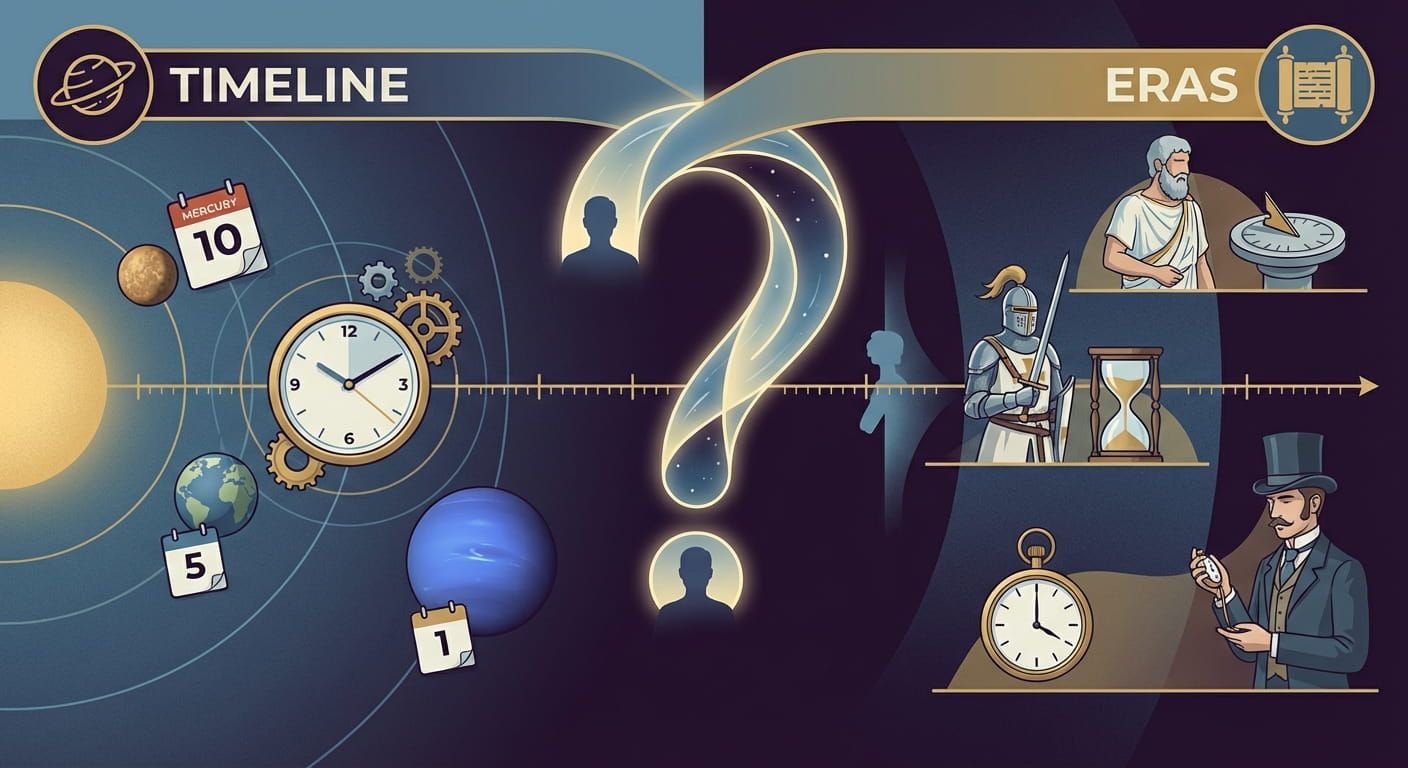
You have one age, but you can tell that story in many time systems. Your body counts days. Your paperwork counts years. Astronomers count orbits. Historians count calendars, reigns, dynasties, and eras. Put them together and you get a fun question with real math behind it, how old are you on other planets, and how old would you be in different moments of human history.
Your age is a count of elapsed time. Change the unit, and the number changes. On other planets, a year means one orbit around the Sun, so your age becomes your Earth age divided by that planet’s orbital period. In history, the same birthday can land in different calendar dates because calendars define months, leap days, and year starts differently. With the right tools, you can switch between years, days, seconds, and even eras, while keeping one truth, the time you have actually lived.
Quiz time, test your planetary and historical age instincts
Pick an answer for each question, then tap “Check my score”. This stays on the page, no sign in, no data sent.
What age means, before we change planets or centuries
Age is elapsed time since a starting point. For most of us, that starting point is birth. In science, it can also be “time since an event”, time since launch, time since sunrise, time since a lab sample was made. The idea stays the same, you measure duration.
Two details matter more than people expect.
- Which unit you count in. Years, months, days, hours, seconds all give different numbers.
- Which rules define that unit. A calendar year has leap rules. A planet year is an orbit. A “month” can be lunar or calendar based.
That is why an “age calculator” can have many modes. On time.you, the main age section gives you a clean baseline, then you can branch into more specific views.
Your age on other planets is a unit conversion problem
The core formula is friendly.
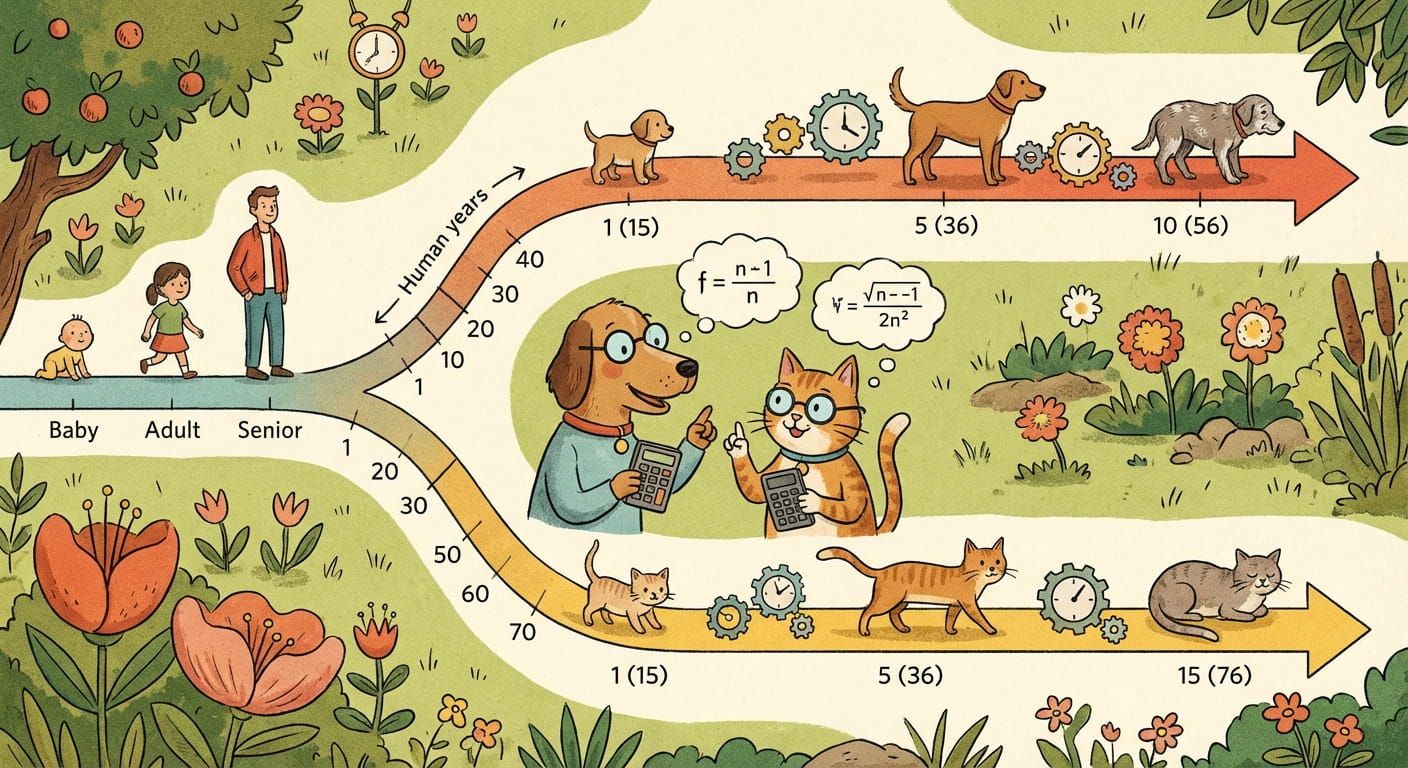
Planet age in planet years equals Earth age in Earth years divided by planet orbital period in Earth years.
If you are 20 Earth years old, and a planet year is 2 Earth years, then you are 10 planet years old there. Same elapsed time, different sized year.
Why orbital period is the right yardstick
A planet year is defined by an orbit around the Sun. A planet day is defined by one rotation of the planet. Those are separate clocks. Some planets spin fast but orbit slow. Others spin slowly but orbit faster.
That difference is why “age on other planets” articles sometimes feel confusing. They jump between day and year. For age, most people mean years. When you want a deeper view, you can also compare days lived on that planet, which depends on rotation length.
How calculators keep it accurate
A good calculator uses your exact birth date and time, then converts your elapsed time to a precise duration. From there it can present:
- years lived using a chosen year definition
- months lived using calendar rules
- days lived as a raw count
- seconds lived as a raw count
If you want to see the method as a tool, you can run the numbers through the time calculator to add or subtract durations and sanity check your conversions.
Planetary year lengths and what they do to your age
Use this table as a map. The “Year length” column tells you the conversion factor. The “Age effect” column tells you how the number feels. Shorter year, bigger age number. Longer year, smaller age number.
How to calculate your planetary age step by step
Here is a practical path you can follow by hand, then compare with a calculator.
- Start with your Earth age as elapsed time. If you only know your age in years, that is fine for a rough result. If you know your birth timestamp, even better.
- Convert that elapsed time into Earth years. If you are using a birthday based age, you already have it. If you are using a precise duration, you will compute years as days divided by 365.2425 for a mean solar year estimate.
- Pick the planet year length. Use the orbital period in Earth years from the table.
- Divide. Planet age equals Earth age divided by the planet year length.
- Decide how to present the number. You can round to two decimals, or show years and fractions.
A worked example you can follow
Imagine someone is 18.5 Earth years old.
- On Mercury, 18.5 divided by 0.2408 is about 76.8 Mercury years.
- On Mars, 18.5 divided by 1.8808 is about 9.8 Mars years.
- On Neptune, 18.5 divided by 164.79 is about 0.11 Neptune years.
This does not mean they have “lived less” on Neptune. It means Neptune’s year is a giant unit.
Planetary birthdays, and why some feel frequent while others never arrive
A “birthday” is a moment when you cross an integer number of years in a chosen system. If you celebrate on Mercury years, you will celebrate often. If you celebrate on Uranus years, many people will never see their first Uranus birthday.
Birthday planning with countdowns
If you want to watch a specific planetary birthday approach, treat it like an event time in the future. A good way to make it feel real is to set a live countdown to that moment. The countdown tool is a simple way to do it without turning it into a spreadsheet project.
Two kinds of planetary birthday
People mix these up, so it helps to name them.
- Orbit birthday. An integer number of planet years since birth. This uses orbital period.
- Local day birthday. An integer number of planet days since birth. This uses rotation period.
Orbit birthdays are what most “age on other planets” pages mean. Local day birthdays can be fun too, but they need extra data because day lengths vary wildly across planets.
Time zones matter less than you think, until you care about the exact minute
If you only care about your age in years, a time zone shift rarely changes the number. Your age is based on elapsed time since birth. That elapsed time is the same everywhere.
Time zones start to matter when you care about the exact moment of a birthday in local time. If you were born at 23:30 in one city, the local time elsewhere could be a different date. That can shift which calendar date you call your birthday celebration day, even though the elapsed time is identical.
That is also why time.you focuses on exact time across cities and zones. You can check the current time anywhere and keep your event timings consistent with an atomic clock approach.
Age in seconds, a clean bridge between planets and history
Seconds are a helpful neutral ground. They ignore months, ignore leap day conventions, and ignore the storytelling of calendars. A second count is just elapsed time.
If you want to see your age expressed that way, the age in seconds view is a satisfying reality check. It also makes it easier to connect with computing time formats and historical timelines.
Why second counts make calculators trustworthy
Most time tools do their work in a small set of stable units, often seconds or milliseconds. They take your input date and time, translate it into a timestamp, then subtract. After that, everything else is formatting.
That approach prevents many subtle errors. It is easy to add 90 days. It is trickier to add 3 months because months have different lengths. Seconds based math makes those distinctions explicit.
Unix time, the modern era’s date stamp for humans and machines
If you have ever seen a long number like 1700000000 and wondered what it is, you have met Unix time. It is a count of seconds from a fixed starting moment. It is popular because it is simple and portable.
This matters for age tools in two ways.
- It is a direct way to represent “time since” anything, including time since birth.
- It helps software avoid calendar confusion when sending times across systems.
If you want to connect the concept to a broader guide, the unix section is a friendly hub for timestamp tools.
History changes your age story through calendars, eras, and social rules
Now for the other half of the title, history. Your biology does not care about dynasties. Your daily life often did, because laws and customs defined adulthood, schooling, work, marriage, voting, retirement, and even how birthdays were recorded.
There are three lenses that make “your age in history” meaningful.
- Calendar lens. What date would your birth correspond to in another calendar system.
- Era lens. How people labeled years, like regnal years, eras, or religious year counts.
- Life stage lens. What your age meant socially, legally, and culturally at that time and place.
Calendar lens, the same day can wear different labels
A calendar is a rulebook that maps days to month names and year numbers. The day itself is real, sunrise happened, the label changes.
That is why historical date conversion is a specialized tool. One reason is that calendar reforms did not happen everywhere at the same moment. Another reason is that some calendars start the year on different dates than January 1.
Era lens, counting years from a chosen anchor
Many societies anchor their year counts to a meaningful event. A founding. A reign. A religious moment. A revolution. That does not change your age. It changes how a document would describe the year you were born in.
Life stage lens, age as a role, not just a number
A 15 year old today might be in school, have a phone, and live under child labor protections. In another century, a 15 year old could be a full time worker, an apprentice, a parent, or a soldier. Context changes the meaning of the number.
How age milestones have shifted across time
This is not a single global timeline. Different places changed at different speeds. The point is to show how the idea of “adult” and “responsibility” shifts, even when human development stays fairly stable.
How calendars reshape your birthday in old records
If you take your birth date and try to “place it” in a different historical setting, the first question is, which calendar is in use there.
A few calendar features tend to cause the biggest shifts:
- Leap rules. Which years get an extra day, and how often.
- Year start. Some systems start the year in spring, autumn, or on a religious date.
- Month system. Lunar months drift unless corrected, solar months need leap structures to stay aligned.
This is also where “age in years” gets tricky. If a year label starts at a different time of year, then “I turned 10 this year” depends on the local year boundary, not only on your birthday.
Julian and Gregorian, a familiar example
In many regions, the calendar reform that introduced the Gregorian system changed date labels. Some dates were skipped in the labels to realign the calendar with seasons. People did not skip time. They changed the naming.
If you are doing family history research, it helps to store the original record label and a normalized modern date. That way you do not lose the meaning of the document.
Historical age is also about milestones, not just birthdays
Ask someone “how old would I be in history” and they may secretly mean “what would my life look like at my age in that era”.
That is where milestones help. A milestone is a typical age when society expects something, school start, work, marriage, military service, voting rights, retirement, and so on.
If you want a modern framework for this lens, the guide on retirement life milestones ties age numbers to life stages in a clear, human way.
One paragraph of bulletpoints, how to compare your age across eras
To make a fair comparison, try this approach.
- Pick a place and a date range, not “the past” in general.
- List the local rules that mattered, schooling, work age, legal adulthood, voting, military service.
- Check health expectations, infant mortality, common diseases, typical family size.
- Check technology and travel time, daily life is shaped by how long tasks take.
- Compare your current responsibilities with what your age group commonly carried then.
A list of the most satisfying ways to view your age
This is the part people actually use. It is not about a single answer. It is about choosing the view that matches your curiosity.
- Age in planet years. Great for the headline number and party conversation.
- Age in days. Great for habits, journaling, training plans, and long streaks.
- Age in seconds. Great for precision, software, and reality checks.
- Age at a past event. Great for history, family timelines, and perspective.
- Age difference between two people. Great for planning, siblings, teams, and fun trivia.
- Age milestones. Great for life planning and legal thresholds.
If you want to compare two birthdays without mental math, the age difference tool is a clean way to do it and it keeps the result readable.
How to build your own “age on other planets” result without getting lost
It is easy to overcomplicate this. Here is a clean workflow that stays accurate and stays calm.
Step one, pick the precision level you need
Ask yourself a simple question, is this for fun, or for an exact timestamp. Fun math can use a rounded Earth age. Exact work should use your birth date and time.
Step two, choose the time basis that matches the claim
If you say “I am 10 on Mars” you are probably counting Mars years. If you say “I have lived 7000 Mars days” you need rotation length too. Keep the claim aligned with the basis.
Step three, keep a common baseline
Use one baseline unit, days or seconds. Do your subtraction there. Then convert outward. This keeps you consistent across planets and history.
Step four, show rounding honestly
A number like 9.83 Mars years is real. Rounding it to 10 is also fine, if you say it is rounded. If you are writing a bio or making a graphic, a one decimal place choice often reads best.
How historical “age counting” differed from modern habits
Even if two societies share the same calendar, they may count age differently.
Some systems count a newborn as age one at birth. Some count age by the year number you are in, not by the birthday moment. Some count age by seasons or harvest cycles in rural settings.
That means you have to read historical statements carefully. “He was 20” in one record can map to 19 by modern birthday counting, depending on the method used.
Putting planets and history together with time tools
Planets give you alternate years. History gives you alternate labels and milestones. Both require time conversion.
That is why time tools sit at the center of this topic. A timer, an alarm, a stopwatch, a countdown, they all teach the same skill, measuring time cleanly.
If you are studying, training, or doing deep work while you play with time ideas, a timer can help keep your sessions structured. The guide on timers and stopwatches improve focus connects time measurement to daily attention in a grounded way.
A small checklist for clean inputs
- Use the correct birth date and time, including minutes if you care about exactness.
- Confirm the time zone at birth if you have it, especially for hospital records near midnight.
- Keep one “source of truth” format, like a timestamp or a UTC based record.
- Only round at the final display step.
Frequently asked questions people actually ask
Can my planetary age change if I move to another time zone
No. Your elapsed time since birth does not change. What can change is the local clock time when your next birthday moment occurs, which can affect celebration timing.
Does time dilation matter for my age on other planets
For everyday life on Earth, time dilation effects are tiny. For high precision physics and satellite systems, it matters a lot. For a fun planetary age number, it is safe to ignore.
Why does my age in years sometimes disagree between tools
Different tools may define “year” differently. Some use a mean solar year length. Some count birthdays. Some show years and months by calendar boundaries. None are “wrong” if they state their method. The trick is to pick the method that matches your question.
Is “age in months” a clean number
It can be, but it depends on the rule. Calendar months vary in length. A “month” can also mean one twelfth of a year as an average. Decide which one you want before you compare results.
A final thought for your next birthday, wherever it lands
You do not need a spaceship to feel how flexible time labels are. Change the unit, the number shifts. Change the calendar, the date label shifts. Your lived time stays steady. Use planets for wonder. Use history for perspective. Use time tools for clarity. Then choose the view that makes you smile, and the one that helps you plan the next week with confidence.